
Modern Android products often connect with backend systems, business workflows, cloud services, connected devices, and other digital experiences. Against this background, Clutch recognized 15 companies in its Summer 2026 Global Honorees in Android App Development. The group brings together companies with different backgrounds and approaches, offering an interesting look at how Android development is increasingly connected to broader product and software development.
1. 15 Android app development companies recognized by Clutch for Summer 2026
Clutch’s Summer 2026 Global Honorees in Android App Development include 15 companies with different backgrounds, service models, and areas of expertise. PowerGate Software is among the recognized companies, alongside firms specializing in mobile development, MVPs, product studios, custom software, and digital transformation. The list therefore reflects a range of approaches to Android app development rather than a single development model.
| Company | Founded | Focus |
|---|---|---|
| You Are Launched | 2016 | MVP and full-cycle product development |
| Hyperlink Infosystem | 2011 | Mobile apps and digital solutions |
| Suffescom Solutions | 2013 | Digital transformation and software consulting |
| Brainvire | 2000 | Digital transformation and product and platform development |
| Atomic Object | 2001 | Custom software and product development |
| Empat | 2013 | Full-cycle software development |
| AppMakers USA | 2014 | Cross-platform mobile applications |
| PowerGate Software | 2011 | Software product development and AI-powered workflows |
| The NineHertz | 2013 | Product, cloud, operations, and AI |
| Droids On Roids | 2011 | Mobile, web, and backend development |
| Tapptitude | 2013 | Product studio and startup development |
| Wolfpack Digital | 2015 | Product strategy and app development |
| EB Pearls | 2004 | Web and mobile application development |
| Infinum | 2005 | Software design, development, and scaling |
| Konstant Infosolutions | 2003 | AI-driven mobile and web development |
Looking across the full list, the recognition provides more than a collection of company names. It also offers a useful snapshot of how Android app development increasingly overlaps with product strategy, UX, backend engineering, AI, cloud infrastructure, and long-term software development.
Source: LinkedIn
2. What businesses should consider when choosing an Android app development partner
A recognition can provide a useful reference point, but it should not be the only factor in selecting a development partner. Businesses evaluating Android development companies can consider several areas.
- Product and business understanding: A technically functional application may still fail to solve the underlying business problem. A development partner should understand what the product is intended to achieve, who will use it, and how the application fits into the wider business.
- Technical capabilities beyond Android: Android applications frequently depend on APIs, databases, authentication, cloud infrastructure, third-party services, and administrative systems. The ability to work across these components can matter as much as mobile development itself.
- Quality assurance and long-term maintenance: Launching an application is only one stage of its lifecycle. Android versions, devices, dependencies, security requirements, and user expectations continue to change. Testing, monitoring, bug fixing, and regular improvements therefore need to be considered from the beginning.
- Development flexibility: No single technology stack fits every Android product. Depending on the requirements, teams may use native development or cross-platform technologies such as Flutter or React Native. The important question is whether the technology supports the product’s performance, maintenance, integration, and delivery requirements.
3. PowerGate Software’s approach to Android app development
PowerGate Software approaches Android app development as part of a broader software product lifecycle. Its work covers different industries and application types, while its current positioning combines software product development with AI-powered development workflows.
4.1 Building around the product, not only the mobile interface
An Android application often needs to work as part of a larger software ecosystem. PowerGate has developed Android applications for healthcare, business management, social networking and messaging, IoT, eCommerce, and retail use cases.
For example, its business application experience includes areas such as construction management, customer management, and automotive sales management. Its Android work has also included healthcare-related applications and social or messaging solutions for healthcare environments.
This broader perspective is important because the mobile interface is rarely the entire product. It may need to connect with backend services, business processes, data, or other platforms.
4.2 A range of development technologies
Android app development often connects with cross-platform frameworks, backend systems, APIs, and cloud infrastructure. PowerGate Software’s project experience reflects this broader technical scope.
For example, its mobile projects include a personal training platform in New Zealand using Android, iOS, Ionic, and REST APIs; a live-event food delivery app in the US combining Android, Ionic, Angular, AWS, and REST APIs; and an on-demand services marketplace in Saudi Arabia built with Android, iOS, Ionic, Node.js, Azure, and REST APIs.
These projects show experience across mobile platforms, backend technologies, APIs, and cloud services, allowing Android development to be approached as part of a wider software product rather than as a standalone app.
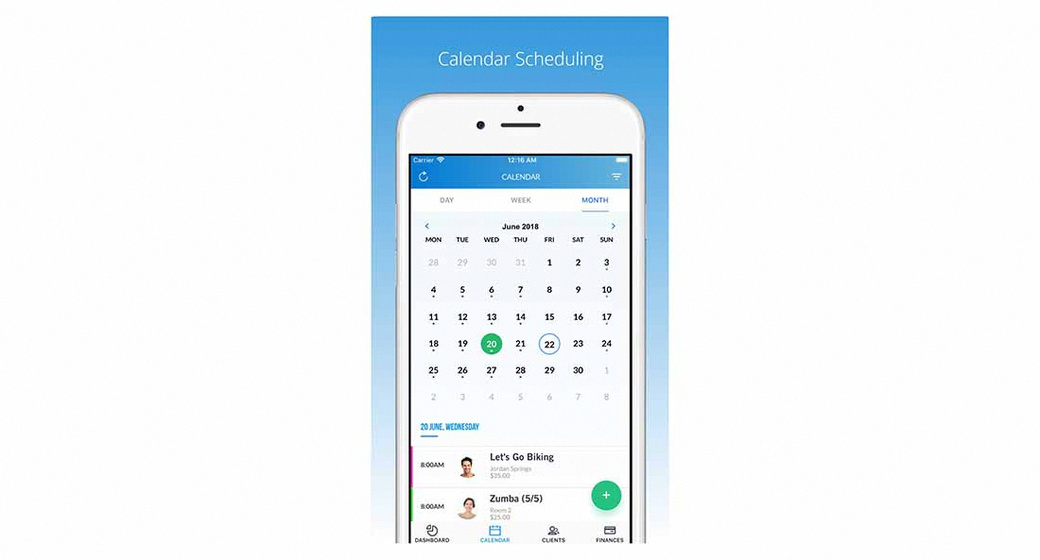
Mobile app for personal trainers and fitness in New Zealand by PowerGate Software
4.3 AI-powered development workflows
AI is also becoming part of mobile product development, particularly in features that rely on large amounts of user or content data. PowerGate Software has applied AI to a content platform for Japanese manga and anime enthusiasts, developing an AI-powered recommendation engine across its Android, iOS, and web applications.
The engine processes content and user data to provide personalized manga recommendations, while cloud technologies support the underlying system. This project illustrates how AI can be integrated into an existing mobile product to improve a specific user-facing function, rather than being treated as a separate technology layer.
4.4 Full-cycle product development
Android development can also connect with PowerGate Software’s broader capabilities across product discovery, UI/UX design, software development, backend and API integration, quality assurance, deployment, and maintenance.
This full-cycle approach is consistent with the wider direction visible across several of the companies recognized by Clutch. For many businesses, building an Android application is not the final goal. The larger objective is to create a software product that can be launched, used, maintained, and developed as the business evolves.
5. Frequently asked questions
1. What is the Clutch Summer 2026 Global Honorees list?
It is a Clutch recognition that includes companies selected within specific service categories for the Summer 2026 period. Android App Development is one of the categories represented by the recognition.
2. Is PowerGate Software included in the Summer 2026 Android App Development recognition?
Yes. PowerGate Software is included among the 15 companies recognized by Clutch in the Summer 2026 Android App Development Global Honorees.
3. What should businesses look for in an Android app development company?
Businesses can consider Android experience, product and industry understanding, backend and integration capabilities, quality assurance, technology choices, communication, and post-launch maintenance.
4. Does Android app development require backend development?
Not every application requires a complex backend, but many business applications depend on APIs, databases, authentication, cloud services, or administrative systems. The required architecture depends on the product’s functionality and business model.
Clutch’s Summer 2026 recognition brings together 15 companies with different approaches to Android app development, from mobile and MVP specialists to broader product and software development firms. PowerGate Software’s inclusion in the recognition reflects its presence in this wider Android development landscape, supported by a software product studio approach, cross-platform and mobile expertise, industry experience, and AI-powered development workflows.