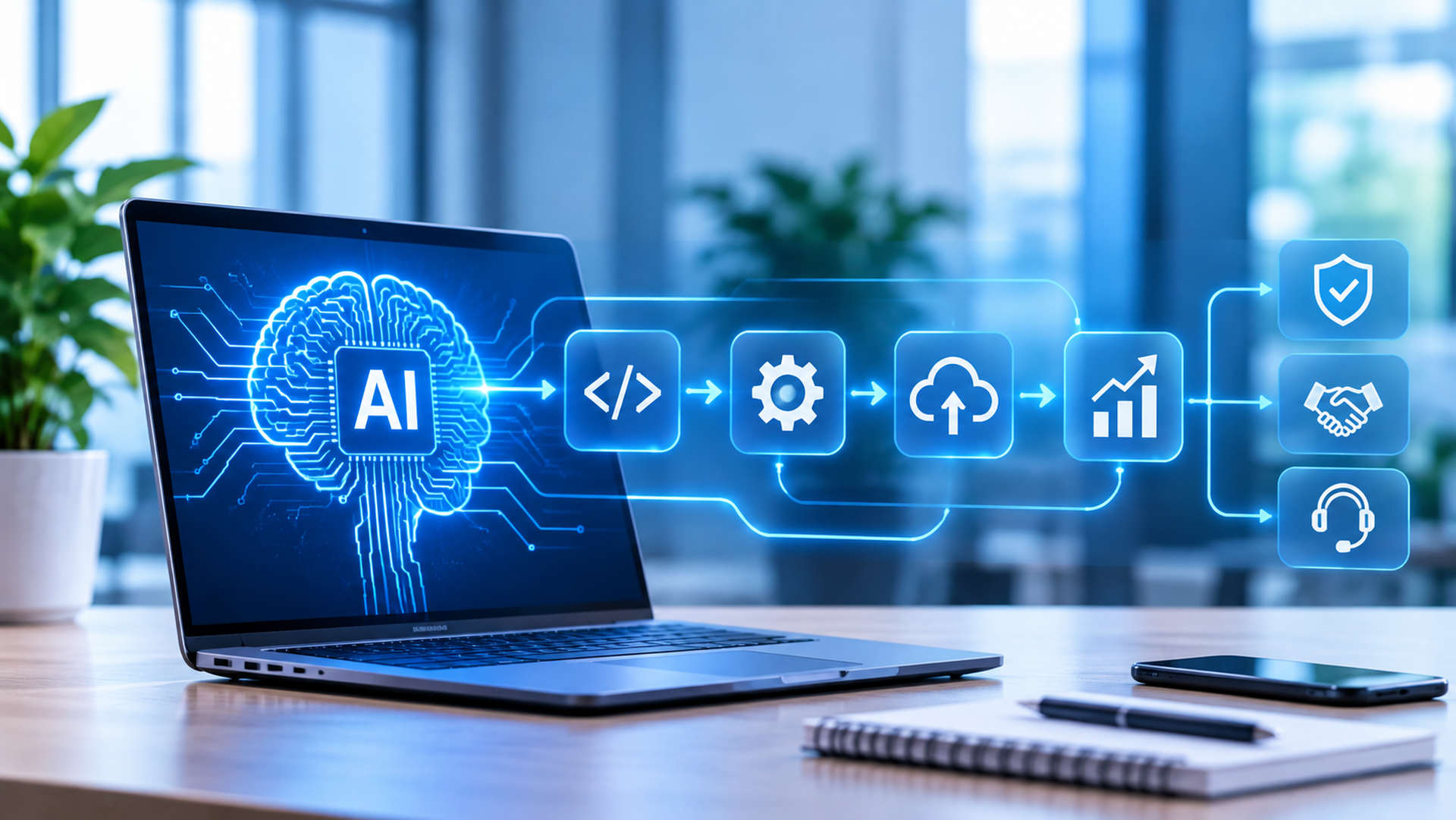

Businesses looking to implement custom AI integration workflows need a development partner that can connect AI models, APIs, and enterprise systems while supporting solutions after deployment. However, providers differ in their integration capabilities, engagement models, and security practices. This article compares five software studios based on these factors to help businesses evaluate their suitability for custom AI integration workflows.
An overview of 5 software studios for robust AI integration support
|
EPAM Systems |
Focuses on enterprise API and platform integration, with AI agents for software development and customer calls. Its Data & AI Managed Services cover ongoing platform operations and improvement. |
|
PowerGate Software |
Develops AI-enabled applications for business workflows, including healthcare solutions with real-time analytics, automated reporting, and EHR integration. Its published portfolio also includes LLM-powered applications for education and financial services. |
|
Thoughtworks |
Develops AI agents and RAG workflows that connect LLMs with enterprise data, APIs, and tools. Its MCP architecture standardizes agent-to-tool connections, while DAMO and Agent/works support application operations and AI governance. |
|
HatchWorks AI |
Integrates ML models and develops RAG and text-to-SQL assistants for business systems and workflows. Its support services include managed RAG, LLM updates, and production monitoring. |
|
LeewayHertz |
Develops custom AI applications and agents that connect with enterprise systems through APIs, connectors, and microservices. Its AgentOps services cover monitoring, model evaluation, incident handling, and maintenance. |
1. How we evaluated software studios for robust AI integration support
We compared each studio across four areas, using publicly available information and documented project examples:
- AI integration: Demonstrated experience connecting AI models and agents with enterprise applications, APIs, databases, and existing business systems. Published case studies were assessed based on the systems connected and workflows supported.
- Post-deployment support: Services covering production monitoring, maintenance, troubleshooting, model or prompt updates, and ongoing integration improvements.
- Engagement models: Available options, including consulting, dedicated teams, team extension, project-based delivery, and managed services.
- Security and compliance: Published certifications, independent audit reports, standards alignment, and technical data-protection controls, with formal certifications distinguished from company-reported practices.
Source: HDWEBSOFT
2. Five software studios for custom AI integration
The five studios below offer different approaches to connecting AI with existing business systems and supporting solutions after deployment.
Note: Company information and project details in this article were last verified on November 13, 2026, based on the official websites of the respective providers and B2B service listing platforms. The order in which companies appear does not represent a ranking or endorsement.
2.1. EPAM Systems
Founded in 1993, EPAM is a global software engineering and consulting company with approximately 62,850 employees and a presence in more than 55 countries and regions. Its services span enterprise software engineering, cloud, data, AI transformation and digital platform development.
AI integration capabilities
- API integration: API strategy, program development and platform integration connect new systems, legacy assets, vendors and partner data.
- PostNL: Deployed more than 20 types of AI agents across multiple teams and business units to automate software development tasks, including test case creation, coding and documentation. The documentation workflow integrates with Jira, Git, Confluence and other tools.
- 1&1: Built AI voice agents using Microsoft Azure, deploying more than 20 agents in six months to handle over 100,000 customer calls weekly. EPAM’s DIAL platform provides unified access to LLMs through a single API.
Support and engagement models
- Data & AI Managed Services: Cover reliability engineering, proactive anomaly detection, infrastructure cost optimization and continuous platform improvement.
- Post-launch support: Includes monitoring, alerting, continuous optimization and new capability integration for agentic platforms.
- Contract duration: 12-36 months for Data & AI Managed Services.
Security and compliance: Internal security, privacy and quality controls are aligned with ISO 27001, ISO 27701 and ISO 9001 standards. Independent SOC 1, SOC 2 and/or SOC 3 audit reports are available for certain services.
Best suited for: Large enterprises integrating AI across complex business systems or automating multi-step workflows with AI agents.
Considerations
- Confirm whether ongoing support covers model evaluation, updates and maintenance.
- Define incident response responsibilities and agree on response and resolution SLAs.
- Verify the scope of applicable ISO controls and SOC reports for the contracted services.
Web: https://www.epam.com/
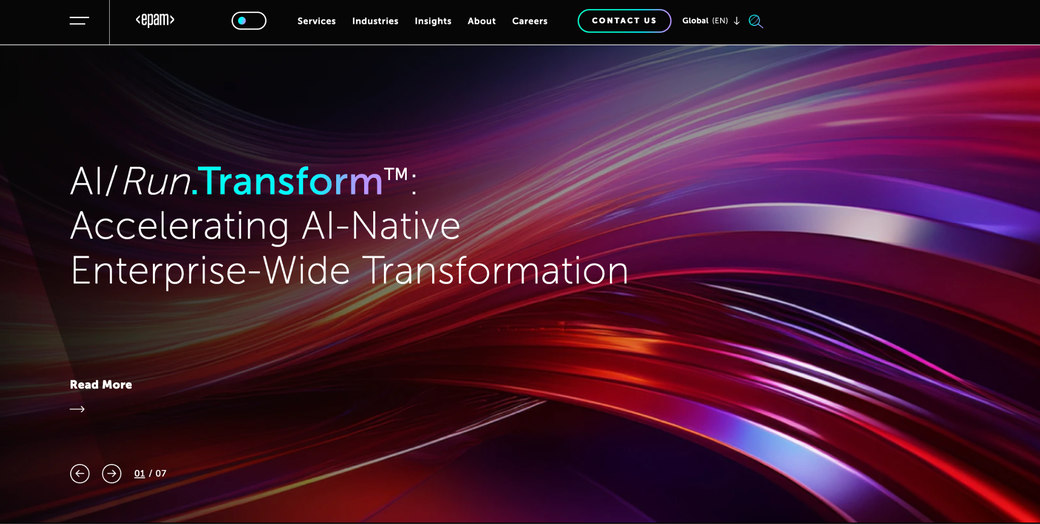
EPAM is a global software engineering and consulting company
Read more: Top companies for end-to-end AI agent workflow design and implementation
2.2. PowerGate Software
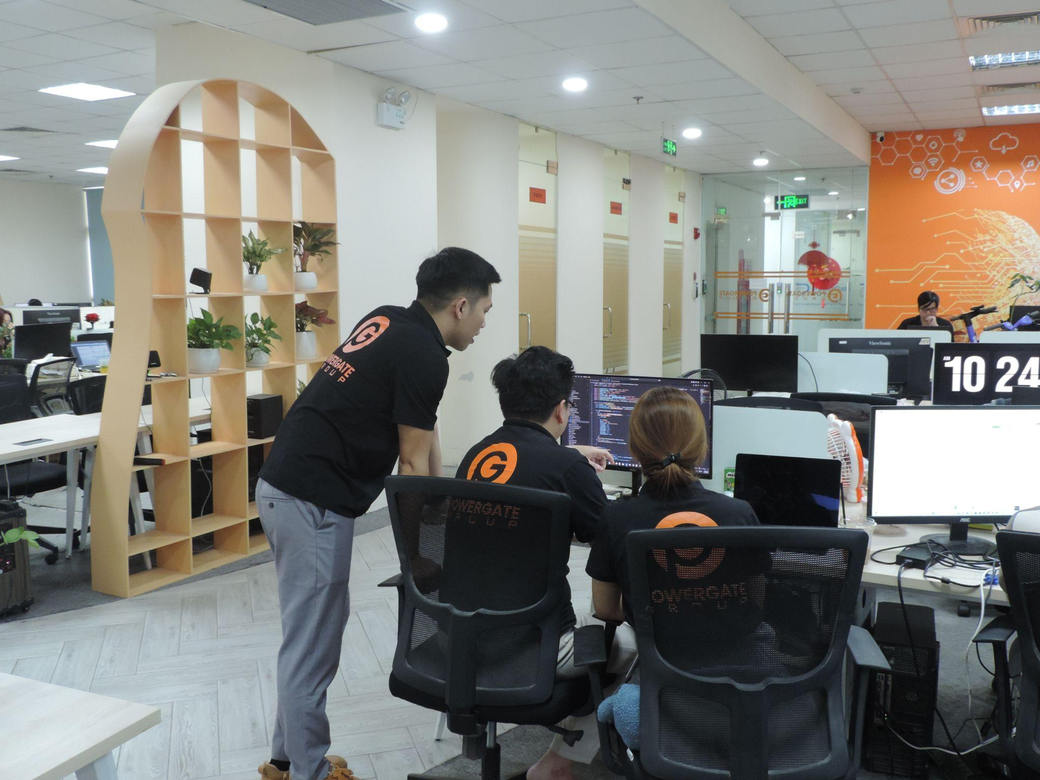
Founded in 2011, PowerGate Software is a global AI-powered software product studio serving clients across healthcare, fintech, and education.
AI integration capabilities: Powere Software partnered with a digital health and fitness technology company operating in Hong Kong and Japan to develop an AI-driven health management platform. The solution includes real-time health analytics, automated reporting, and EHR integration for fitness assessments. It also supports remote patient monitoring, virtual fitness coaching, and tele-rehabilitation workflows.
Support and engagement models
- Post-launch AI support: Includes model, prompt, and integration updates, agent hosting, and team onboarding, along with live dashboards that track user interactions, issue resolution, and satisfaction.
- Engagement models: Clients can extend their teams with dedicated engineers for ongoing development, choose fixed-price projects with defined scopes and set deliverables, or use managed services covering maintenance, QA, and DevOps.
Security and compliance: ISO 27001:2022 and ISO 9001:2015 certifications. Security controls include encryption, role-based access controls, and audit logs. Hosted and private LLM deployment options are available. Client NDAs cover confidentiality, while the Privacy Policy outlines data retention and third-party data sharing.
Best suited for: Businesses developing custom AI-enabled products, particularly healthcare platforms requiring analytics, EHR connectivity, and digital patient engagement capabilities.
Considerations
- Confirm whether 24/7 monitoring covers AI models and integrations, and define AI-specific SLA response times, uptime commitments, and model-update responsibilities in the contract.
- Clarify third-party LLM providers’ access to client prompts and connected data, data-retention periods, and minimum engagement terms.
- For fixed-price projects, agree on project scope, deliverables, acceptance criteria, and change-request procedures before work begins.
Web: https://powergatesoftware.com/
2.3. Thoughtworks
Founded in Chicago in 1993, Thoughtworks is a global technology consultancy specializing in software engineering, digital transformation, data, and AI. It has more than 10,000 employees and operates 47 offices across 18 countries..
AI integration capabilities: Builds custom AI agents and RAG workflows that connect LLMs with enterprise data, APIs, and existing business systems. Its MCP architecture provides standardized connections between agents and tools such as Jira, GitHub, and databases. Verified examples include:
- Automotive: Embedded a Claude-powered AI assistant into an existing defect management platform used by a global automotive manufacturer handling 12,000 defect tickets per software release. The assistant summarizes, deduplicates, classifies, and routes tickets within the existing development workflow.
- Financial services: Evolved a RAG-based chatbot into an autonomous mortgage policy-rule agent using MCP, code generation, automated testing, and notifications. The workflow includes immutable audit trails and human approval, with policy-rule tickets resolved approximately 40% faster.
- Pharmaceuticals: Connected an LLM to SharePoint and Databricks SQL, enabling researchers to query structured and unstructured data, generate SQL, and automate summarization. Time-to-insight fell from hours to minutes.
Support and engagement models
- Support: DAMO (Digital Application Management and Operations) covers application deployment, maintenance, monitoring, troubleshooting, and ongoing improvements. Agent/works adds AI-specific governance, observability, audit trails, cost controls, and model switching with automatic retuning against quality tests. Public materials do not specify AI-specific SLA commitments or scheduled model updates.
- Engagement models: Provides consulting and engineering-led delivery, with forward-deployed engineers configuring Agent/works within client environments. DAMO also supports ongoing application and infrastructure operations. Standard fixed-scope packages and team-extension arrangements are not clearly documented publicly.
Security and compliance: ISO/IEC 27001:2022 certification, TISAX labels, Cyber Essentials, and Cyber Essentials Plus certifications. Its AI governance framework aligns with ISO 42001 principles and includes vendor due diligence and AI-specific contractual provisions. Technical controls include permissions-aware RAG, access restrictions, and auditable agent actions.
Best suited for: Enterprises integrating AI agents with internal data, APIs, and complex business workflows.
Considerations
- Public case studies focus on enterprise-scale workflows; confirm scope and costs for smaller integrations.
- Clarify AI-specific SLA commitments and responsibilities for post-launch model monitoring and updates.
- Confirm data residency, integration boundaries, and human approval requirements before signing.
Web: https://www.thoughtworks.com/
3.4. HatchWorks AI
Founded in 2016 by Brandon Powell and headquartered in Atlanta, Georgia, HatchWorks AI specializes in AI and data transformation. Its operations span the United States, Costa Rica, Colombia, and Brazil.
AI integration capabilities
- Grandview Homes: Integrated three machine learning models into Salesforce to support real estate underwriting decisions. The solution connects seven third-party data sources through Azure-based data pipelines, allowing underwriters to access model-generated predictions within their existing workflow.
- K9 Resorts: Integrated operational data from Gingr and financial data from ProfitKeeper into a centralized Databricks platform serving more than 52 franchise locations. HatchWorks AI then developed K9 Chat, an AI assistant using RAG and natural-language-to-SQL to let users query validated business data.
- Aero Star Aviation: Connected the Corridor maintenance system to AVA, a RAG and text-to-SQL assistant that retrieves aircraft maintenance records through APIs and automated data pipelines.
- Manufacturing: Integrated NetSuite, Microsoft Outlook, and OpenAI through n8n to automate customer email workflows. The solution retrieves order information from NetSuite and generates draft responses in Outlook, achieving 47% automation coverage for emails requiring responses and up to 70% send-ready responses for routine inquiries.
Support and engagement models
- Support: The RAG Accelerator includes managed support and routine LLM updates as new models become available. Production delivery also covers monitoring, error handling, security reviews, and model evaluation. Standard maintenance SLAs are not publicly specified.
- Engagement models: Offers three models: Forward Deployed Engineers embedded in client teams, Agentic AI Pods for cross-functional AI delivery, and AI & Data Transformation Programs covering strategy through implementation and scale.
Security and compliance: SOC 2 Type I attestation and HIPAA-aligned practices for healthcare projects. The RAG Accelerator supports private cloud and on-premises deployment with permission-based access controls. Clients retain ownership of their intellectual property and AI roadmap.
Best suited for: Mid-market and enterprise businesses integrating AI into existing CRM, ERP, and operational systems.
Considerations
- Confirm post-launch SLAs, maintenance responsibilities, and model-update schedules.
- Clarify client data usage, retention, and third-party model provider policies.
- Define ownership of code, prompts, and AI agents, including third-party components.
- Healthcare projects should confirm BAA requirements and PHI handling procedures.
Web: https://hatchworks.com/
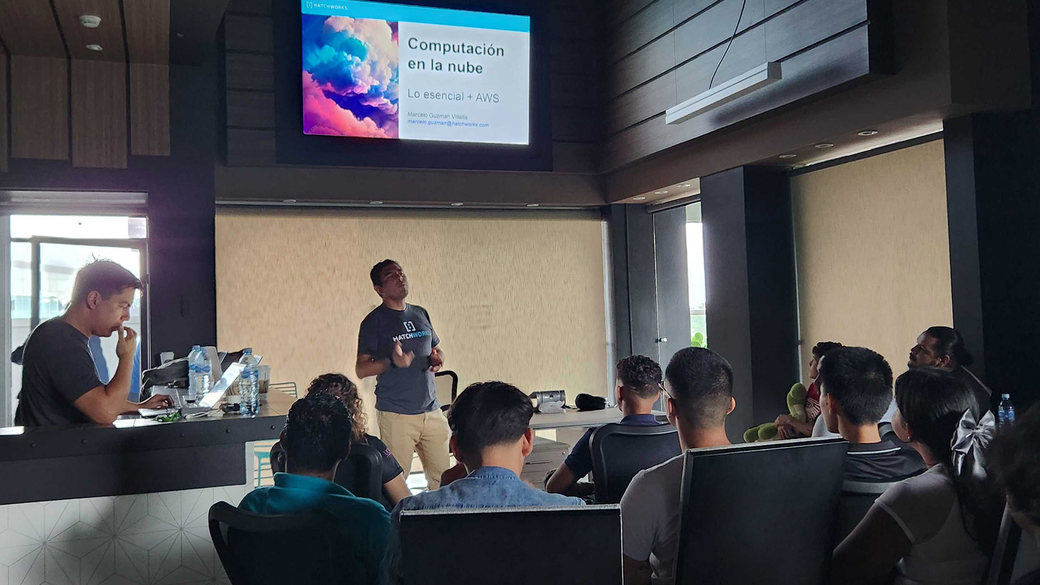
A HatchWorks-branded technical session on cloud computing and AWS
You may need: Top 10 Vietnamese companies for AI agent development & workflow automation
3.5. LeewayHertz
Founded in 2007, LeewayHertz is an AI consulting and software development company. The Hackett Group acquired the company in September 2024, combining LeewayHertz’s generative AI development capabilities with its enterprise transformation expertise.
AI integration capabilities: Builds custom AI applications and agents that connect enterprise data and systems through APIs and integrations. For URC, it integrated historical support tickets, Jira data, and CRM information into a ZBrain chatbot to answer dealer inquiries. The solution also supports voice interactions, providing dealers with another way to access product support information.
Support and engagement models
- Support: Provides AgentOps for production monitoring, model evaluation, incident handling, and ongoing maintenance. Post-launch updates cover models, prompts, retrieval pipelines, integrations, and workflow logic. Standard contractual SLAs and incident response times are not publicly specified.
- Engagement models: Offers dedicated development teams, team extension, and project-based delivery.
Security and compliance: ISO/IEC 27001:2022 and ISO/IEC 42001:2023 certifications, SOC 2 Type II attestation, and HIPAA- and GDPR-aligned practices. AI governance controls include least-privilege access, approved data sources and tools, human approval workflows, and audit trails.
Best suited for: Startups, scale-ups, and enterprises developing custom AI applications and integrating AI agents into business operations.
Considerations
- Confirm contractual SLAs, incident response times, and post-launch maintenance responsibilities.
- Clarify data retention, residency, and third-party model provider policies.
- Healthcare projects should confirm BAA requirements and PHI handling procedures.
Web: https://www.leewayhertz.com/
3. Frequently asked questions
1. Do software studios publish AI-specific support SLAs?
Not always. Some providers describe monitoring and maintenance services but do not specify AI-specific response times, uptime commitments, or model-update schedules. Businesses should confirm these terms and incident responsibilities before signing a contract.
2. Does AI integration include ongoing maintenance after deployment?
Not necessarily. Some providers include maintenance in managed services, while others offer it separately. The agreement should specify who monitors the integration, handles API or model changes, and resolves production incidents.
3. How much does custom AI integration cost?
Costs vary depending on several factors:
- Number of systems and applications to connect.
- API complexity and integration requirements.
- Data quality and readiness.
- AI model selection.
- Security and compliance requirements.
- Post-launch maintenance and support.
4. What should businesses confirm when using third-party AI models?
Before adopting a third-party AI model, businesses should understand how their prompts and connected data are accessed, stored, and protected. Key questions include:
- Which providers can access prompts and connected data.
- How long data is retained and whether it is used for model training.
- Where data is stored and processed (data residency).
- What access controls protect sensitive information.
- Who is responsible for handling security incidents.
There is no single approach to AI integration services that fits every business. The right solution depends on how well a provider can adapt its technical capabilities to existing systems, project requirements, and future operational needs. Beyond the initial implementation, clear responsibilities for maintenance, security, and ongoing improvements are equally important to the long-term success of an integration project.