
With AI-powered development tools accelerating coding, testing, and prototyping, startups can launch software products faster than ever before. The challenge, however, is no longer finding a team that can build software quickly. It is finding a software development partner for startups that can make sound product decisions, adapt to changing priorities, and support long-term growth. In this guide, we’ll explore what founders should look for when choosing a technology partner in the AI era, and how the right partnership can influence the success of a startup far beyond the first product launch.
1. Why choosing the right software partner matters more in the AI era
1.1. Speed is no longer a meaningful differentiator
A few years ago, development speed was one of the biggest factors when evaluating a software company. Today, AI coding assistants, code generation tools, and automated testing have significantly reduced the time required to build many types of applications. As a result, many development companies can promise faster delivery. Some can even produce an MVP within a matter of weeks.
While this is good news for startups, it also creates a new challenge: speed is no longer a meaningful differentiator. The real question founders should ask is not: “Can this team build my product quickly?” Instead, it should be: “Can this team help me build the right product?”
Launching quickly only creates value if the product solves a real problem, can evolve with customer feedback, and remains maintainable as the business grows. A poorly planned product built in six weeks can easily become more expensive than a well-designed product built in ten.
The role of a software development partner has therefore changed. Instead of simply executing requirements, the best partners contribute to product decisions, challenge assumptions when necessary, identify technical risks early, and help founders prioritize what creates the greatest business value.
For startups with limited budgets and short runways, these conversations often matter more than writing code a little faster.
1.2. AI cannot replace product thinking
AI can generate code, write unit tests, suggest database schemas, and even create UI components. Used correctly, these capabilities can significantly improve development efficiency. However, AI still cannot answer questions such as:
- Which features should be included in the MVP?
- What can be postponed until later?
- Is the current architecture suitable for future growth?
- Will this feature actually solve the customer’s problem?
- Should the team build this capability at all?
These decisions require product thinking, business context, and engineering experience. This is why many successful startups no longer look for a vendor that simply follows specifications. They look for a partner that combines technical expertise with product thinking, who can think like a product owner, not just a software engineer.

Source: cloudester.com
Read more: How AI is helping software developers work smarter, not harder
2. What startups should look for in a software development partner
Here are seven qualities worth evaluating before making a decision:
2.1. They challenge ideas, not just implement them
Many founders assume that providing a detailed feature list is enough to start development. In practice, the first version of a product almost always changes once real users begin interacting with it. A good development partner should not accept every requirement without discussion. Instead, they should ask questions such as:
- Why is this feature important?
- Is there a simpler way to solve the same problem?
- What happens if we postpone this feature until after launch?
These conversations are not about slowing the project down. They help reduce unnecessary development effort and keep the team focused on features that deliver real value. Partners with strong product thinking understand that every feature has a cost, not only during development but also in future maintenance.
2.2. They know how to build an MVP without overbuilding
One of the most common mistakes startups make is trying to launch with too many features. Adding more functionality often increases development time, testing effort, and technical complexity. It also delays the moment when real users can validate the product. An experienced software development partner helps define a realistic MVP by separating essential features from ideas that can wait.
Read more: Avoid these 7 common mistakes when building your MVP
2.3. They use AI to improve productivity, not replace engineering discipline
AI has become part of modern software development. It can generate code, automate repetitive tasks, assist with testing, and speed up documentation. However, faster development should never come at the expense of software quality. Ask potential partners how AI fits into their engineering process.
For example:
- How is AI-generated code reviewed?
- What coding standards are followed?
- How do they protect confidential business data when using AI tools?
- Which tasks still require manual review?
A mature AI-powered development workflow combines automation with experienced engineering oversight. The goal is not simply to produce code faster, but to deliver software that remains secure, maintainable, and reliable over time.
2.4. They can scale with your product
An MVP is only the beginning. If the product gains traction, the technical challenges change quickly. New users, larger datasets, third-party integrations, and higher security requirements all place additional demands on the system.
This is why founders should ask how a development partner approaches scalability from the start.
A team that thinks beyond the first release will consider questions such as:
- Can this architecture support future growth?
- Will new features become increasingly difficult to add?
- How will the system perform as traffic increases?
- Are there unnecessary technical shortcuts that could become expensive later?
Not every startup needs enterprise-grade architecture on day one. However, every startup benefits from a technical foundation that can evolve without requiring a complete rebuild.
2.5. They communicate risks early
Every software project encounters uncertainty. Requirements change, estimates shift, and unexpected technical challenges appear. What separates a reliable partner from an average one is not whether problems occur, but how they are handled. A trustworthy development partner communicates risks as early as possible, explains available options, and works with founders to make informed decisions.
Be cautious if a company promises that every feature can be delivered exactly as planned without discussing assumptions, dependencies, or trade-offs. Software development rarely works that way, especially in a startup environment. Transparent communication builds trust and helps founders make better business decisions throughout the project.
2.6. They have experience working with startups
Building software for startups is different from delivering software for large enterprises. Enterprise projects often begin with stable requirements, established processes, and dedicated internal teams. Startups rarely have those advantages. Instead, they operate with limited budgets, evolving product ideas, and pressure to validate assumptions quickly.
A partner with startup experience understands these constraints. They know when to move quickly, when to simplify, and when investing additional development effort is worthwhile. More importantly, they understand that success is not measured by the number of completed features, but by whether the product helps the business move forward.
2.7. They build partnerships, not just software
For many founders, choosing a development company is one of the earliest strategic decisions they make. The relationship often lasts far longer than the initial MVP. Instead of acting as an external vendor, a strong software development partner becomes part of the product journey, contributing technical expertise while supporting business goals over the long term.

Source: corals.io
3. Common warning signs to watch for
Just as there are signs of a strong technology partner, there are also indicators that founders should approach with caution. Some common warning signs include:
- Promising fixed timelines before fully understanding the product.
- Focusing only on development cost while ignoring business objectives.
- Accepting every requirement without asking questions.
- Having no clear process for code review or quality assurance.
- Using AI tools without explaining governance, security, or human review.
- Offering no clear support plan after launch.
None of these issues automatically mean a project will fail. However, they often suggest that the relationship will be transactional rather than collaborative. For startups, collaboration usually creates far more value than simply completing a list of features.
4. Why PowerGate Software is a trusted partner for startups
Choosing a software development partner is about more than technical capability. Founders need a team that can move quickly, think strategically, and continue supporting the product as the business grows. That philosophy has shaped how PowerGate Software works with startups around the world.
As an AI-powered Software Product Studio, PowerGate Software combines experienced product consultants, designers, engineers, and AI-powered development workflows to help founders move from idea to launch with greater confidence. Rather than acting solely as a software vendor, our teams work closely with clients to challenge assumptions, prioritize features, and make product decisions that balance speed with long-term maintainability.
Our approach is supported by internationally recognized ISO 9001 and ISO 27001 certifications, a product-first mindset, and cross-functional teams that include technology and business experts across the United States, Australia, the United Kingdom, and Vietnam. This allows us to provide both engineering execution and strategic product guidance throughout the development journey.
The results can be seen across the startups we have partnered with:
- An OKR platform that raised US$76 million before being acquired by Microsoft: PowerGate Software partnered with the startup to develop its web and mobile applications, supporting integrations with Slack, Microsoft Teams, and other enterprise platforms. Today, the product is trusted by organizations including Slack, Remitly, Ticketmaster, and Urban Company.
- A live event food ordering platform in the US increasing average order values by up to 25%: By extending the client’s engineering team, PowerGate Software helped accelerate product delivery while creating a seamless ordering experience for both customers and venue operators.
- An AI-powered telehealth platform for mental health professionals in Australia achieving a 95% satisfaction rate: Working alongside the client’s internal team, PowerGate Software delivered a secure platform featuring AI-powered capabilities, real-time analytics, and HIPAA-compliant security.
Although these startups operate in different industries, they faced similar challenges: moving quickly, managing limited resources, and building products that could continue evolving after launch. Our role was not simply to write code, but to help create a stronger foundation for long-term product growth.
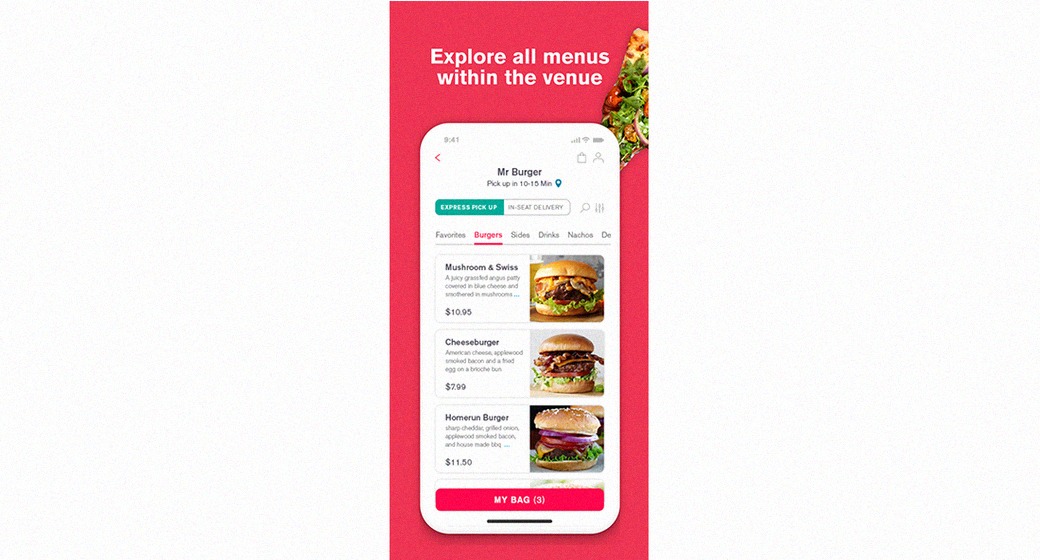
In-seat food delivery mobile app for live events in the US by PowerGate Software
In the AI era, choosing the right software development partner for startups is not about finding the team that promises the fastest delivery. It is about finding a partner that can help you build the right product, reduce risk, and support your growth long after the first release. The right partnership can become one of the strongest competitive advantages a startup has.