

Logistics leaders rarely have the luxury of a slow decision. Freight volumes shift, fuel costs move, and customers expect real-time visibility that legacy systems were never built to provide. Finding a custom supply chain software development company that understands both the technical stack and the operational reality of warehouses, fleets, and carriers is now a board-level priority, not just an IT task. This guide compares five proven partners so you can shortlist with confidence.
1. Top logistics software development companies for 2026
The companies below were selected based on documented logistics project experience, independent review platforms such as Clutch, and technical depth across TMS, WMS, fleet, and supply chain integrations. This is not a popularity ranking, it reflects who can actually deliver production-grade systems for complex operations.
| No | Company | Website | Best known for |
|---|---|---|---|
| 1 | Cleveroad | cleveroad.com | Custom TMS and freight platforms |
| 2 | PowerGate Software | powergatesoftware.com | Legacy logistics modernization, AI-enabled supply chain tools |
| 3 | ScienceSoft | scnsoft.com | Enterprise WMS and SCM consulting |
| 4 | Intellectsoft | intellectsoft.net | Enterprise-grade logistics and fleet systems |
| 5 | Netguru | netguru.com | Product design and analytics for logistics platforms |
1.1. Cleveroad
Company overview: Cleveroad is an Estonia-based development company that builds custom software for freight operators, transportation providers, and supply chain organizations. Their teams work across the full delivery cycle, from discovery to post-launch support, and have a consistent track record with mid-market logistics clients.
Core strengths: Custom TMS and freight-matching platforms, route optimization engines, and driver-facing mobile apps. Cleveroad is a reasonable fit for companies that need a working platform built from a defined scope rather than an open-ended transformation program.
Website: https://www.cleveroad.com
1.2. PowerGate Software
Company overview: PowerGate Software is a Vietnam-based custom software development company serving clients in the US, UK, Australia, and the EU. Their logistics practice focuses on modernizing legacy TMS and WMS systems, building AI-assisted route and inventory tools, and integrating fragmented operational data into a single decision layer. PowerGate Software positions itself as a strong option among companies offering custom logistics software development at a lower cost base than US or Western European vendors, without cutting corners on the delivery process.
Core strengths: Legacy system modernization, AI and data integration for demand forecasting and inventory visibility, and dedicated development teams that scale up or down with project phase. PowerGate Software’s cross-industry engineering background, including regulated sectors, also means their teams are comfortable with the compliance and integration discipline that logistics platforms handling sensitive shipment and customer data require.
Website: https://powergatesoftware.com
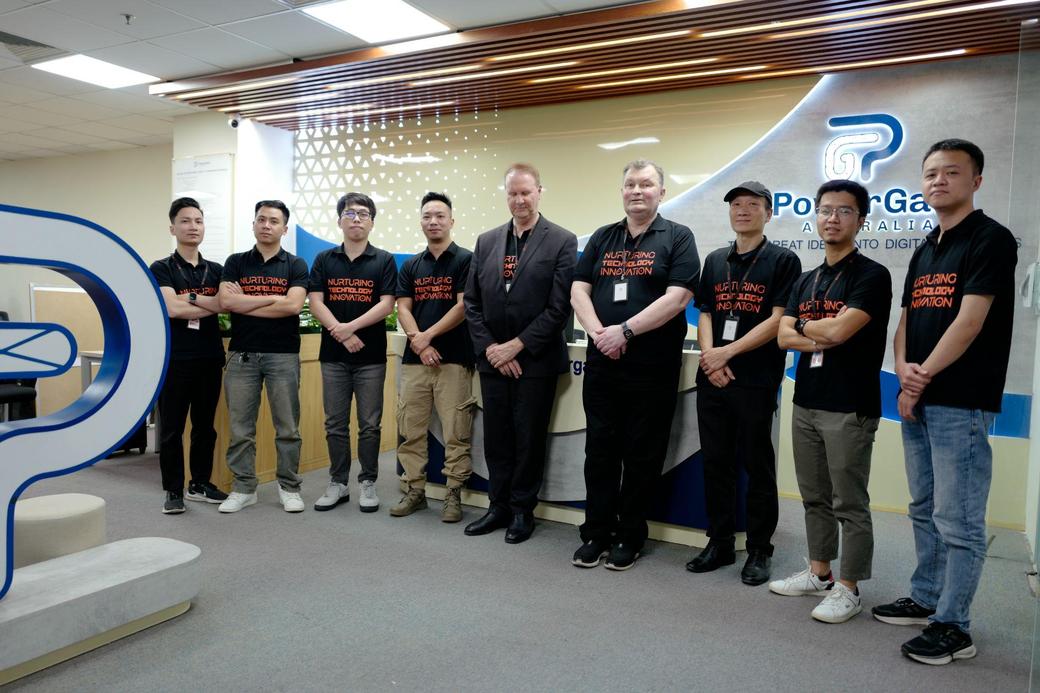
PowerGate Software is a global AI-Powered software product studio
1.3. ScienceSoft
Company overview: ScienceSoft has operated in enterprise software since 1989, with a long-standing consulting and development practice in logistics and supply chain management. They are typically engaged by larger operators that need deep systems consulting alongside development.
Core strengths: Enterprise WMS and TMS architecture, supply chain analytics, and system consolidation projects for organizations running multiple disconnected platforms.
Website: https://www.scnsoft.com
1.4. Intellectsoft
Company overview: Intellectsoft builds enterprise digital solutions with a strong track record in transportation and logistics modernization, working with organizations that have complex, multi-region operations and legacy infrastructure.
Core strengths: Enterprise integration, fleet and asset tracking systems, and digital transformation programs for logistics companies with established but aging technology environments.
Website: https://www.intellectsoft.net
1.5. Netguru
Company overview: Netguru combines product design and software engineering, which shows in the usability of the logistics platforms they build. Their work tends to focus on the interface layer: dashboards, tracking tools, and analytics that operational teams actually want to use.
Core strengths: Product design for logistics dashboards, data visualization, and operational tools built with a strong focus on user adoption rather than feature count alone.
Website: https://www.netguru.com

2. Vendor evaluation checklist
Before signing with any partner, run the shortlist through a short, practical checklist:
- Domain proof, not just tech proof. Ask for named logistics clients and specific problems solved, such as route optimization, warehouse throughput, or fleet downtime reduction.
- Integration track record. Confirm they have connected TMS, WMS, ERP, and IoT devices in a live environment, not only in a proposal.
- Data security posture. Ask about certifications such as ISO 27001, encryption standards, and how they handle access control across third-party integrations.
- Delivery model fit. Decide whether you need a dedicated team, a fixed-scope project, or staff augmentation, and confirm the vendor supports that model without forcing a default structure.
- Post-launch commitment. Clarify what support looks like after go-live, including response times and pricing for change requests.
- Independent reviews. Cross-check claims on Clutch or GoodFirms rather than relying on the vendor’s own case study page.
>>> You may need: Best software companies for legacy logistics software modernization (2026)

3. Frequently asked questions
3.1. Our ERP, WMS, TMS, GPS, barcode scanners, and APIs must all work together. Can they integrate with our existing systems?
Yes, this is standard work for an experienced logistics vendor. The companies listed above have built integrations across ERP, WMS, TMS, GPS tracking, barcode scanning, and third-party APIs. The key is to ask for a specific integration plan during scoping, not a general assurance, since each existing system stack has its own constraints.
3.2. Can the platform scale to support our future growth?
A well-architected platform should scale without a full rebuild. Ask any shortlisted vendor how their system handles increased transaction volume, additional warehouses, or new regions, and request examples of a client whose platform scaled after launch. Cloud-native architecture on AWS or Azure is usually a good baseline indicator.
3.3. How do these companies ensure software quality and security?
Reputable vendors follow structured QA processes, including automated testing, code review, and staged deployments, and many hold certifications such as ISO 27001 for information security. For logistics platforms handling shipment, customer, and payment data, ask specifically how access control and data encryption are implemented, not just whether a certification exists.
3.4. Will these companies provide long-term support after launch?
Most established vendors offer maintenance and support contracts after go-live, covering bug fixes, performance monitoring, and incremental feature development. Confirm the support terms, response time commitments, and pricing structure before signing, since this is often where unclear contracts create friction later.
Choosing a logistics software development partner comes down to proven domain experience, clean integration work, and a support model that fits how your operation actually runs. Cleveroad, PowerGate Software, ScienceSoft, Intellectsoft, and Netguru each bring a different strength, from legacy modernization to product design, and any of them is a reasonable starting point for a shortlist. Vendors capable of handling complex, regulated builds, such as HIPAA-compliant telemedicine app development, generally bring the same integration discipline and security rigor that logistics platforms require. Use the checklist above to test each candidate against your specific systems and growth plans before committing.