Building AI products today requires more than choosing the most popular AI framework. Whether you’re evaluating Agno vs LangChain for a multi-agent system, an AI assistant, or an enterprise AI application, understanding their strengths, limitations, and ideal use cases can help you make better architectural decisions from the start. In this article, we’ll take a closer look at Agno vs LangChain, compare their capabilities, and help you determine which framework is the best fit for your AI product.
1. Agno vs LangChain at a glance
1.1. What is Agno?
Agno is a lightweight AI agent framework designed to simplify the development of AI-powered applications. It focuses on developer experience and makes it easy to build multi-agent systems, integrate tools, manage memory, and create production-ready AI workflows with minimal boilerplate code.
One of Agno’s biggest strengths is its agent-centric approach. Developers can define an agent’s instructions, tools, memory, and knowledge base in a simple and intuitive way, making it particularly suitable for teams that want to build AI products quickly without dealing with unnecessary complexity.
1.2. What is LangChain?
LangChain is one of the most mature frameworks in the AI ecosystem for building LLM applications. Rather than focusing solely on AI agents, LangChain provides a broad set of tools and libraries for building complex AI workflows, RAG applications, and enterprise-grade systems.
The LangChain ecosystem includes LangGraph for workflow orchestration, LangSmith for observability and debugging, and LangServe for deployment. Its flexibility and extensive integrations make it a popular choice for teams building large-scale AI applications.
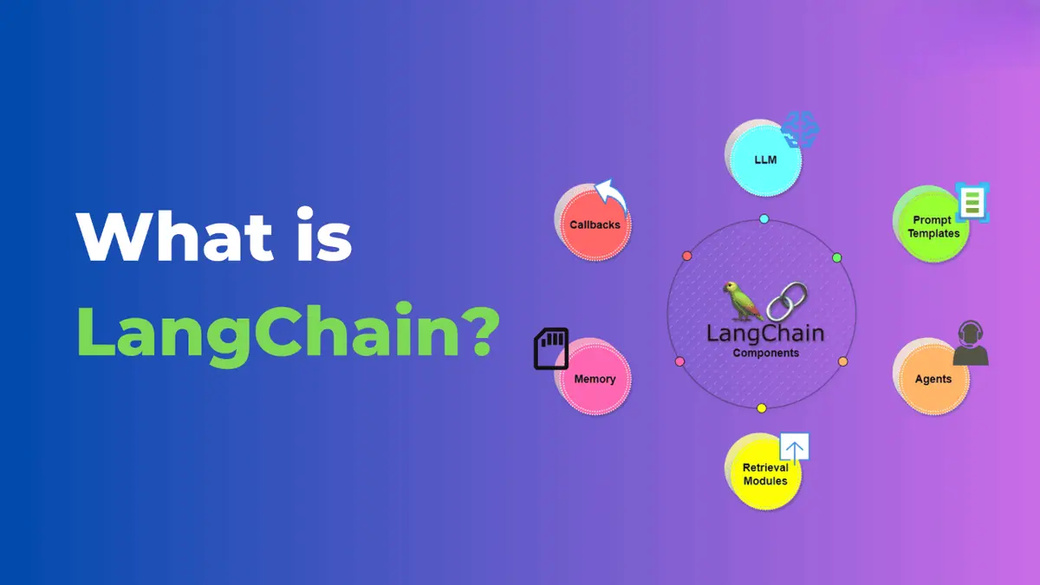
LangChain is a mature framework in the AI ecosystem for building LLM applications – Source: 200lab.io
2. A comparison between Agno and LangChain
| Criteria | Agno | LangChain |
|---|---|---|
| Design philosophy | Lightweight and agent-centric | Modular and ecosystem-driven |
| Developer experience | Simple and beginner-friendly | Flexible but more complex |
| Multi-agent capabilities | Excellent | Good |
| Workflow orchestration | Good | Excellent |
| RAG capabilities | Good | Excellent |
| Performance and scalability | Lightweight and scalable for most AI applications | Highly scalable for enterprise-grade systems |
| Ecosystem and integrations | Growing ecosystem with essential integrations | Extensive ecosystem and third-party integrations |
| Programming language support | Python | Python and TypeScript |
In the next sections, we’ll explore how Agno and LangChain compare across key technical and practical considerations.
2.1. Design philosophy
- Agno is designed to simplify AI product development through an agent-centric approach. It focuses on reducing complexity and enabling developers to build AI applications quickly.
- LangChain adopts a modular architecture that offers greater flexibility and customization. While it requires more setup, it is well suited for building sophisticated AI systems with evolving requirements.
2.2. Developer experience
- Agno offers a simple and beginner-friendly developer experience with minimal boilerplate code, making it ideal for rapid prototyping.
- LangChain has a steeper learning curve due to its broader ecosystem and multiple components. However, it provides more control for teams building complex AI applications.
2.3. Multi-agent capabilities
- Agno is particularly strong in building multi-agent systems. Developers can easily create and manage teams of collaborating AI agents with shared memory and workflows.
- LangChain also supports multi-agent architectures, especially when combined with LangGraph, but implementation is generally more complex.
2.4. Workflow orchestration
- Workflow orchestration is one of LangChain’s biggest strengths. Through LangGraph, it supports branching logic, human-in-the-loop processes, checkpointing, and stateful workflows.
- Agno supports AI workflows and agent collaboration but is better suited for lightweight and moderately complex applications.
2.5. RAG capabilities
Both frameworks support Retrieval-Augmented Generation (RAG) and tool integrations.
- Agno provides a simpler development experience for common RAG use cases.
- LangChain offers a more mature ecosystem with extensive support for vector databases, retrievers, and external services, making it suitable for advanced RAG applications.
2.6. Performance and scalability
- Agno is lightweight and performs well for AI assistants, multi-agent systems, and AI product MVPs.
- LangChain is designed with scalability in mind and is better suited for enterprise-grade applications that require complex workflows and long-term architectural flexibility.
2.7. Ecosystem and integrations
- LangChain currently has one of the largest AI development ecosystems, offering extensive integrations, documentation, and community support.
- Agno’s ecosystem is smaller but growing rapidly, with a strong focus on simplifying AI agent development without introducing unnecessary complexity.
2.8. Programming language support
- Agno currently supports Python, making it a good choice for Python-based AI teams.
- LangChain supports both Python and TypeScript, providing greater flexibility for organizations working across different technology stacks.
You may need:
- Agno vs AutoGen: Which AI agent framework should you choose in 2026?
- LangChain vs LangGraph: Choosing the right framework for modern AI applications
3. When should you choose Agno? When should you choose LangChain?
3.1. Best use cases for Agno
Agno is an excellent choice for:
- AI assistants
- Multi-agent applications
- AI product MVPs
- Internal productivity tools
- Research agents
- Customer support assistants
- AI copilots
- Rapid prototyping projects
Teams that prioritize speed of development and developer productivity will likely benefit from Agno’s lightweight approach.
Agno may not be the ideal choice when:
- Complex workflow orchestration is required
- Enterprise integrations are extensive
- Human-in-the-loop processes are critical
- Large-scale workflow management is necessary
- TypeScript support is required
While Agno is highly capable, it is not designed to solve every AI engineering challenge.
3.2. Best use cases for LangChain
LangChain is particularly well suited for:
- Enterprise AI applications
- Large-scale RAG systems
- Complex AI workflows
- AI platforms
- Stateful agent architectures
- Multi-system integrations
- AI products requiring advanced orchestration
Organizations building sophisticated AI products often benefit from LangChain’s ecosystem and flexibility.
LangChain’s primary challenges include:
- Higher complexity
- Steeper learning curve
- More boilerplate code
- Longer development time for smaller projects
Overengineering is a common issue when using powerful frameworks for relatively simple AI products.
5. 4 Common mistakes when choosing an AI framework
Choosing based on popularity alone: A popular framework is not necessarily the right framework for your product. Many teams choose technologies based on GitHub stars or community discussions without considering their actual requirements.
Overengineering your AI product: Not every AI application requires enterprise-level orchestration. If you are building a simple AI assistant or an internal productivity tool, introducing unnecessary architectural complexity can slow development and increase maintenance costs.
Ignoring scalability requirements: Some teams optimize only for short-term development speed and overlook future scalability. Questions worth considering include:
- Will the product support multiple AI agents?
- Will workflows become more complex over time?
- Will enterprise integrations be required later?
Focusing only on development speed: Rapid prototyping is important, but it should not come at the expense of maintainability and scalability. Choosing the right framework means balancing development speed, flexibility, and long-term product goals.
There is no universal winner in the Agno vs LangChain debate. Both frameworks are powerful, but they are designed with different priorities in mind. The right choice depends on the type of AI product you are building, your workflow requirements, and your long-term scalability goals.
|
At PowerGate Software, we help businesses design and build AI-powered products with the right technical foundation from day one. Whether you’re developing an AI assistant, a multi-agent system, or an enterprise-grade AI application, our team combines product thinking and engineering expertise to deliver scalable, production-ready solutions. Contact PowerGate Software today to discuss your project! |