
Appointment scheduling software has moved well beyond the basic task of letting patients choose a time slot online. In healthcare, scheduling now sits at the intersection of patient access, communication, payments, administrative workflows, and operational reporting. As clinics look for ways to make care easier to access while managing limited staff and resources, the role of appointment scheduling software is expanding from a booking tool into a broader operational platform.
1. The changing role of appointment scheduling software
1.1. From phone calls to digital self-scheduling
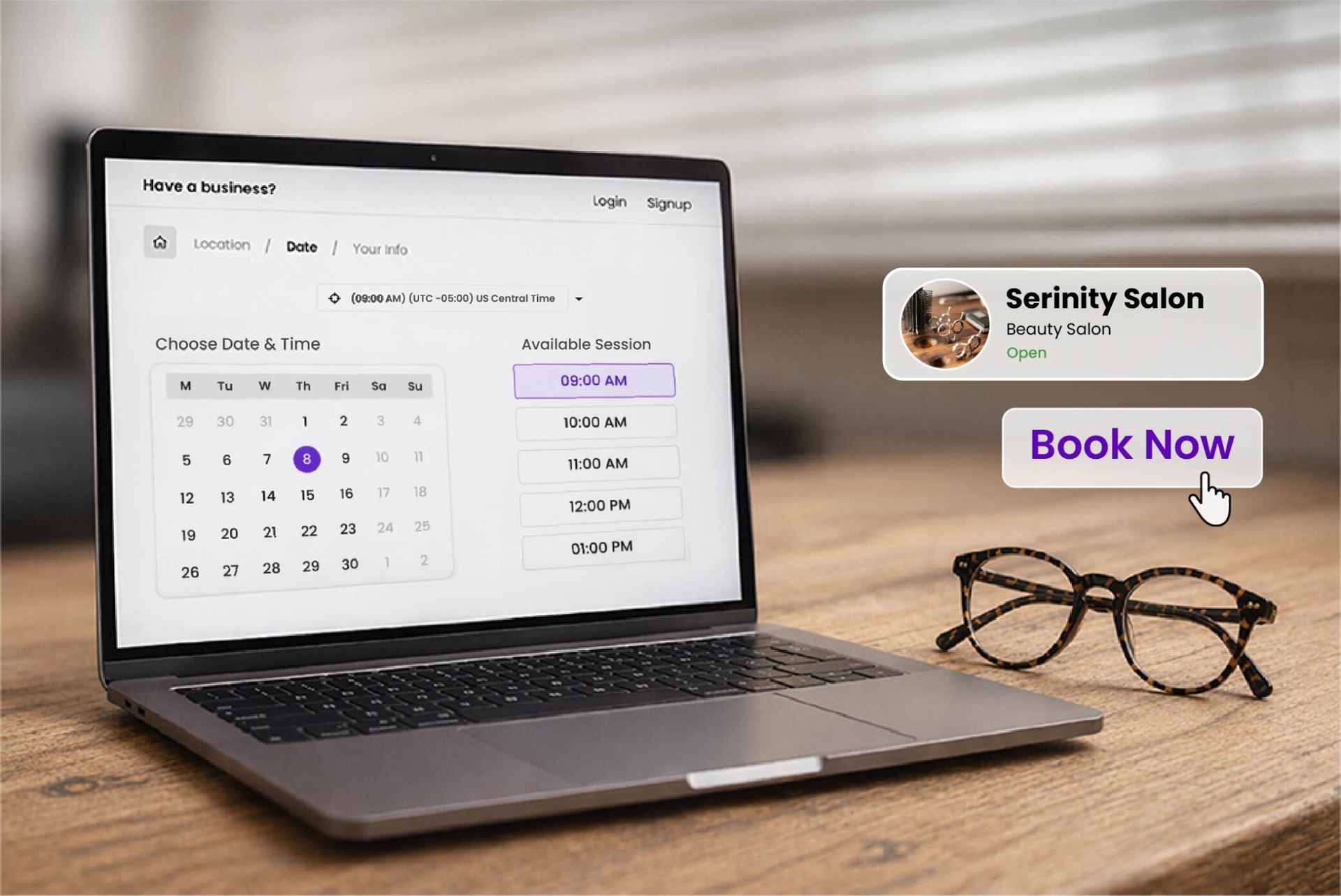
For many years, booking a healthcare appointment meant calling a clinic, waiting for a staff member to check availability, and confirming a suitable time. This process still exists, but digital scheduling gives patients another option: checking available appointments and completing the booking process themselves.
The appeal is straightforward. Patients can schedule at a time that suits them, while clinic staff can spend less time handling routine booking requests. Research into automated self-scheduling has also found that adoption can increase over time when patients are given direct access to suitable appointment slots. One study examining nearly two million appointments across more than 30 practice sites found that the share of kept appointments booked through automated self-scheduling increased from 4.1% to 14.9% during the study period.
However, online booking is only the starting point. Recent industry data suggests that healthcare organizations are still working through the practical challenges of digital scheduling.In a July 2025 MGMA Stat poll of 244 applicable respondents, 71% of practices reported that fewer than 25% of their patients used digital tools to self-schedule. Capacity constraints, scheduling rules, and the technical setup required to expose suitable appointment slots can all affect adoption.
This points to a broader issue: building a scheduling interface is relatively straightforward. Building a scheduling workflow that works for both patients and healthcare providers is much harder.
1.2. Scheduling is part of the patient access experience
An appointment is not an isolated event. It is one step in a longer patient journey that may include finding the right service, choosing a provider, receiving confirmation, completing payment, attending the appointment, and managing follow-up activities.
For this reason, a scheduling platform needs to account for more than whether a time slot is technically available. It also needs to consider factors such as appointment type, provider availability, location, scheduling rules, cancellations, and rescheduling.
A 2024 study of a large multisite medical practice illustrates this complexity. Its self-scheduling program included several different processes, from direct scheduling and self-rescheduling to automated waitlists and scheduling based on predefined rules. The researchers noted that successful scheduling is not only about completing a booking but also about matching the patient with the appropriate provider, location, and appointment duration.

Source: relatient.com
>>> You may need: Top software development companies for building appointment scheduling platforms
2. What does a modern appointment scheduling platform include?
A useful appointment scheduling software solution typically combines several capabilities rather than relying on a single booking interface.
2.1. Core scheduling and availability management
At the center is the scheduling engine. It needs to determine which appointments are available and under what conditions. Depending on the organization, this can involve:
- Appointment types and durations
- Provider availability
- Working hours
- Locations
- Booking rules
- Cancellations and rescheduling
- Patient-facing availability
The complexity increases when different providers offer different services or when certain appointment types require specific time slots or staff. This is why scheduling software should not be treated simply as a calendar with a nicer interface. The underlying business rules are often what determine whether the system works reliably.
2.2. Patient communication and account management
Booking is only one interaction between a patient and a clinic. Patients may need confirmation messages, reminders, account access, appointment history, or information about changes to their appointments. Bringing these interactions into the same system can reduce fragmented communication and give clinic staff better visibility.
This is also where automated notifications can become useful. Rather than requiring staff to manually contact every patient, a platform can trigger predefined communications based on scheduling events.
2.3. Payments and administrative workflows
For some healthcare providers, scheduling and payment are closely connected. Patients may need to pay when booking, while administrators need access to payment information alongside appointment records.
A broader platform can therefore connect booking with payment processing and other administrative workflows instead of forcing staff to move between unrelated systems. This integration does not mean every scheduling platform needs every possible feature. The right scope depends on the business model and the operational requirements of the healthcare provider.
2.4. Reporting and analytics
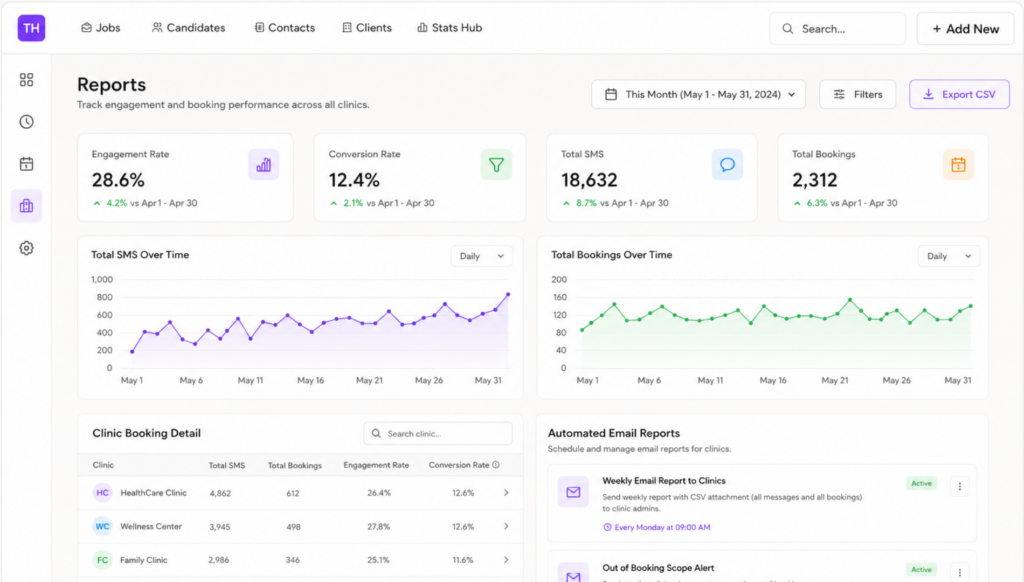
Digital scheduling also creates a valuable source of operational data. A clinic can potentially use scheduling data to understand booking patterns, patient engagement, appointment activity, and broader operational performance. The objective is not simply to produce more dashboards, but to give decision-makers a clearer view of what is happening across the scheduling process.
That distinction matters. Analytics becomes useful when it helps answer practical questions: Are appointment slots being used effectively? Where are patients dropping out of the booking process? Which services generate the most demand? How is scheduling activity changing over time?

Source: myshyft.com
3. Why workflow integration matters
3.1. The value is in the connection between features
The individual components of a scheduling platform are useful, but their greater value often comes from how they work together. Consider a simple workflow: Booking → confirmation → reminder → appointment → payment → history → reporting.
Each step generates information that can support the next one. A booking can trigger a notification. An appointment can create a payment record. A completed interaction can become part of the patient’s appointment history. Aggregated scheduling data can then contribute to operational reporting.
This is an important shift in how appointment scheduling software should be viewed. The objective is not simply to replace the phone with a web form. It is to reduce friction across the processes surrounding an appointment.
3.2. A real-world example from healthcare software development
PowerGate Software encountered this broader requirement while developing an intelligent appointment scheduling platform for a healthcare service provider.
Rather than focusing only on online booking, the platform brought appointment management, patient communication, payment processing, appointment history, and operational reporting into a unified environment. Clinic administrators could manage booking activities, coordinate patient interactions, monitor appointment histories, and oversee clinic operations through a management portal.
The project illustrates a practical point: a scheduling platform can become significantly more useful when the workflows around the appointment are considered as part of the same product. It also shows why requirements gathering is important at the beginning of a scheduling project. A business may initially ask for “an online booking system,” but the actual operational need may involve communication, payments, reporting, and administration as well.
4. Where automation and AI fit
4.1. Automation can remove repetitive scheduling work
Automation is one of the most practical ways to extend the value of scheduling software. Routine actions such as booking confirmations, reminders, workflow updates, and notifications can be triggered automatically. This can reduce repetitive administrative work while giving patients more timely information.
Research has also explored automated rescheduling and waitlist processes. One study of an automated waitlist system found that patients could receive offers for earlier appointments when suitable slots became available, with accepted appointments moved earlier by an average of 22.6 days in the study population.
These examples show that automation does not have to mean replacing human decision-making. In many cases, its role is simply to handle predictable processes more consistently.
PowerGate Software’s healthcare scheduling project followed a similar principle, incorporating automated workflow management and notifications to support more efficient booking workflows and patient communication.
4.2. AI should solve a different problem
AI deserves a separate discussion because it is often confused with automation. A rule-based workflow might send a reminder when an appointment is booked. AI, by contrast, could help interpret a patient’s natural-language request, answer routine questions, or assist with navigating a scheduling process.
For example, a patient might describe the type of care they need rather than selecting a specific appointment category. A patient might describe the type of appointment they are trying to book rather than selecting a predefined category. An AI assistant could help interpret the request and direct the user to an appropriate booking workflow, subject to the provider’s predefined scheduling rules.
The important point is that AI should have a clear job. A scheduling platform does not become more useful simply because AI has been added to it. The underlying scheduling rules, availability logic, and operational workflows still need to work correctly.
AI can potentially support conversational scheduling, for example by interpreting natural-language booking requests or answering routine scheduling questions. These are general use cases and should not be assumed to be features of every scheduling platform. PowerGate’s public case study identifies AI/ML and chatbot capabilities alongside the scheduling infrastructure, but the specific AI functionality should be described only to the level disclosed in the project case study.
5. What businesses should consider when building an appointment scheduling platform
Before developing an appointment scheduling solution, businesses should define the operational problem rather than starting with a feature list. Key questions include:
- Who will use the platform: patients, staff, providers, or all three?
- What types of appointments need to be supported?
- How complex are availability and booking rules?
- How should cancellations and rescheduling work?
- Which communications should be automated?
- Does the booking flow need payment processing?
- What information should administrators see?
- Which reports are genuinely useful to the business?
- Where could AI improve the user experience?
- What systems need to connect with the platform?
The answers will determine the product architecture, user experience, integrations, and development priorities.
There is also an important accessibility consideration. Digital self-scheduling should expand access rather than assume that every patient prefers or can use the same digital channel. Research has found differences in self-scheduling adoption across patient groups, reinforcing the need for healthcare providers to retain appropriate alternatives rather than treating digital scheduling as a universal replacement for other access channels.
Appointment scheduling software is becoming more than a digital replacement for the receptionist’s calendar. Its role increasingly extends into patient communication, workflow automation, payment processing, reporting, and, where appropriate, AI-assisted interactions. The key lesson is not that every clinic needs a highly complex platform. It is that the right scheduling solution should reflect the workflows surrounding an appointment. When those workflows are designed as one connected system, appointment scheduling software can support both a smoother patient experience and more efficient healthcare operations.