
As more development teams adopt agentic AI, choosing the right framework has become an important architectural decision. Among the growing number of options, Agno and CrewAI stand out for different reasons. While both simplify AI agent development, they are built around different design philosophies and use cases. This Agno vs CrewAI comparison explores their key differences, strengths, and ideal applications to help you choose the framework that best fits your next AI project.
1. What is Agno?
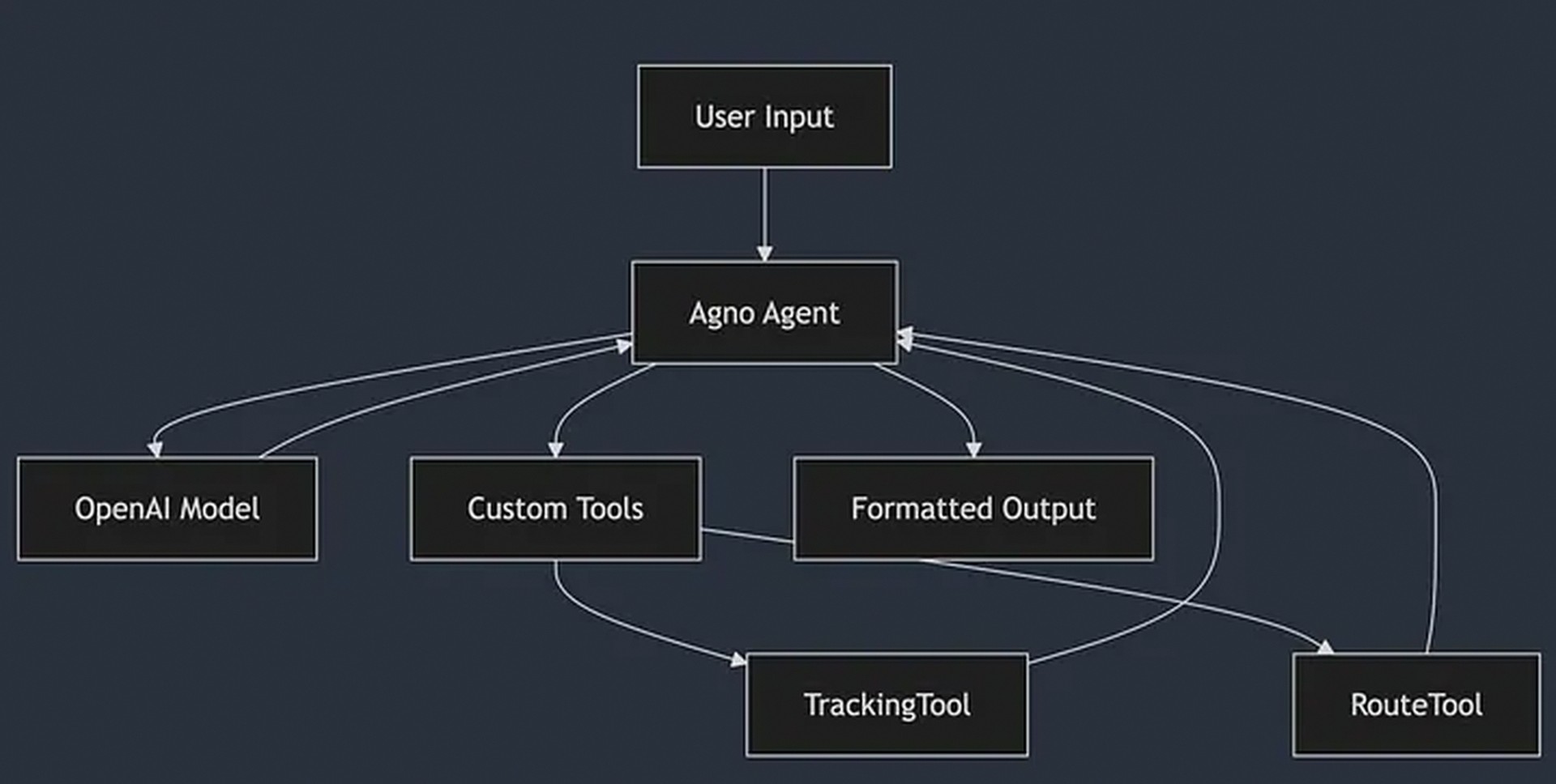
Agno is an open-source Python framework for building AI agents and agentic workflows. It provides the building blocks needed to create AI applications that can reason, use external tools, access knowledge, and maintain memory across interactions.
Rather than focusing solely on conversations with large language models (LLMs), Agno is designed to help developers build complete AI-powered applications. It combines LLMs with retrieval systems, APIs, databases, and workflow orchestration, making it suitable for production environments where AI agents need to perform real business tasks.
6 key characteristics of Agno:
- Lightweight and developer-friendly architecture
- Native support for tools, memory, and knowledge bases
- Strong integration with Retrieval-Augmented Generation (RAG)
- Flexible workflow orchestration
- Suitable for production-ready AI applications
- Compatible with multiple LLM providers and deployment environments
2. What is CrewAI?
CrewAI is an open-source framework designed to build systems where multiple AI agents collaborate to accomplish a shared objective. Instead of relying on a single intelligent agent, CrewAI organizes several specialized agents, each responsible for a different task within a workflow.
For example, one agent may gather information, another analyzes the findings, while a third writes the final report. This role-based approach makes CrewAI particularly useful for projects that involve complex workflows requiring planning, delegation, and collaboration.
6 key characteristics of CrewAI:
- Designed for multi-agent collaboration
- Role-based agent architecture
- Task delegation and coordination
- Sequential and hierarchical workflows
- Flexible orchestration for complex business processes
- Supports integration with external tools and LLMs
CrewAI is a multi-agent framework for collaborative AI workflows – Source: deepfa.ir
3. A side-by-side comparison between Agno and CrewAI
Although both frameworks are built for AI agent development, they solve different problems.
- Agno focuses on building intelligent AI applications around one or more capable agents.
- CrewAI specializes in coordinating multiple agents with distinct responsibilities.
The table below summarizes the key differences between Agno and CrewAI:
| Feature | Agno | CrewAI |
|---|---|---|
| Primary focus | AI-powered applications | Multi-agent collaboration |
| Core architecture | Agent-centric | Crew-centric |
| Learning curve | Easier | Moderate |
| Multi-agent support | Supported | Core capability |
| Workflow orchestration | Built-in workflows | Agent collaboration workflows |
| Memory support | Native | Supported |
| RAG integration | Excellent | Good |
| Tool integration | Extensive | Extensive |
| Production readiness | High | High, with additional implementation considerations |
| Best suited for | Chatbots, AI assistants, RAG systems, enterprise applications | Research automation, AI teams, content generation, business workflows |
Neither framework is objectively better than the other. Their strengths simply lie in different areas.
- Agno takes an application-first approach. It is well suited for AI assistants, customer support bots, enterprise search, document intelligence, and other products where a single agent can access tools, retrieve knowledge, and execute tasks. Its architecture also makes it relatively straightforward to integrate AI into existing software systems.
- CrewAI, on the other hand, approaches AI from a collaboration perspective. Instead of giving a single agent many capabilities, it distributes responsibilities among multiple specialized agents. This makes it a natural choice for workflows involving planning, research, writing, reviewing, or other tasks that benefit from multiple AI roles working together.
You may need:
- CrewAI vs LangGraph: Which AI agent framework should you choose in 2026?
- Agno vs LangGraph: Choosing the right framework for building AI agents
4. When should you choose Agno? When should you choose CrewAI?
The answer to the Agno vs CrewAI debate depends less on features and more on the type of AI application you want to build.
4.1. Choose Agno if…
Here are some scenarios where Agno is often the better option:
| Scenarios | Key takeaways |
|---|---|
| Build AI chatbots and virtual assistants | Many business applications only need one intelligent agent to answer questions, perform actions, and interact with users. For example, a customer support chatbot may need to search internal documentation, check order information, and create support tickets. These tasks can all be handled efficiently by a single agent equipped with the right tools and knowledge sources. |
| Develop RAG applications | Retrieval-Augmented Generation has become one of the most common enterprise AI use cases. Agno provides native support for connecting AI agents to vector databases, document repositories, and other knowledge sources, making it a practical choice for building document assistants, internal knowledge bases, and enterprise search solutions. |
| Create enterprise AI assistants | Many organizations are developing AI assistants that help employees retrieve information, automate repetitive tasks, or interact with internal business systems. Examples include:
|
| Deploy AI applications to production | Production systems require more than just generating responses. They need reliable workflows, maintainable code, integrations with existing infrastructure, and the flexibility to evolve. Because Agno is designed around AI applications rather than only agent collaboration, it is often a good fit for teams building production-ready software. |
4.2. Choose CrewAI if…
Here are some scenarios where CrewAI is often the better option:
| Scenarios | Key takeaways |
|---|---|
| Build multi-agent systems |
If your application requires different AI agents to perform separate responsibilities, CrewAI provides a structured way to organize that collaboration. A typical workflow might include:
|
| Automate research workflows | Research often involves collecting information from multiple sources, filtering irrelevant content, summarizing key findings, and producing a final report. Rather than relying on one agent to perform every step, CrewAI enables each stage to be handled by a dedicated agent with a specific responsibility. |
| Build AI content pipelines | Content creation is another area where multi-agent collaboration can be useful. For example, one agent may generate an outline, another expands each section, while a final reviewer checks clarity and consistency before publishing. Although similar workflows can be implemented with a single agent, separating responsibilities may improve maintainability for larger content operations. |
| Simulate cross-functional AI teams |
Some organizations want AI systems that mimic how human teams work. Instead of asking one assistant to complete an entire business process, they assign different roles to different agents, allowing each one to specialize in planning, analysis, execution, or quality assurance. CrewAI was designed specifically for these collaborative workflows. |
5. Frequently asked questions
1. Is Agno better than CrewAI?
Answer: Not necessarily. Agno and CrewAI are designed for different purposes. Agno focuses on building AI-powered applications, while CrewAI specializes in coordinating multiple AI agents. The better choice depends on your project’s architecture and business requirements.
2. Does Agno support multi-agent systems?
Answer: Yes. Agno supports multi-agent workflows, but they are not its primary focus. Its greatest strength lies in building production-ready AI applications centered around capable agents with access to tools, memory, and knowledge.
3. Is CrewAI suitable for enterprise applications?
Answer: Yes. CrewAI can be used for enterprise software, particularly when business processes involve multiple stages of planning, analysis, and execution. However, teams should also consider factors such as observability, deployment, and long-term maintenance when moving to production.
4. Which framework is easier to learn?
Answer: For most developers, Agno has a gentler learning curve because it focuses on building AI applications around a simpler architecture. CrewAI introduces additional concepts related to agent roles, task delegation, and workflow coordination that may take more time to master.
5. Which framework is better for RAG?
Answer: Agno is generally a stronger choice for RAG applications because knowledge retrieval is a core part of its architecture. While CrewAI can also support RAG through external integrations, it primarily focuses on orchestrating multiple agents rather than on retrieval itself.
5. Can Agno replace CrewAI?
Answer: Not entirely. Although there is some overlap, the two frameworks address different architectural needs. Agno is better suited to AI applications built around intelligent agents, whereas CrewAI is designed for scenarios where collaboration between multiple agents is a core requirement.
Choosing between Agno and CrewAI ultimately comes down to selecting the architecture that best fits your AI application. Agno excels at building production-ready AI assistants, chatbots, and RAG systems, while CrewAI shines in workflows that require multiple AI agents to collaborate. Instead of looking for a universally better framework, focus on your project’s goals, workflow complexity, and long-term scalability before making a decision.
>>> Building successful AI software involves more than choosing the right framework. It requires the right architecture, development approach, and integration strategy. At PowerGate Software, we help businesses turn AI ideas into production-ready products by combining modern AI technologies with proven software engineering practices to deliver scalable, AI-powered solutions.