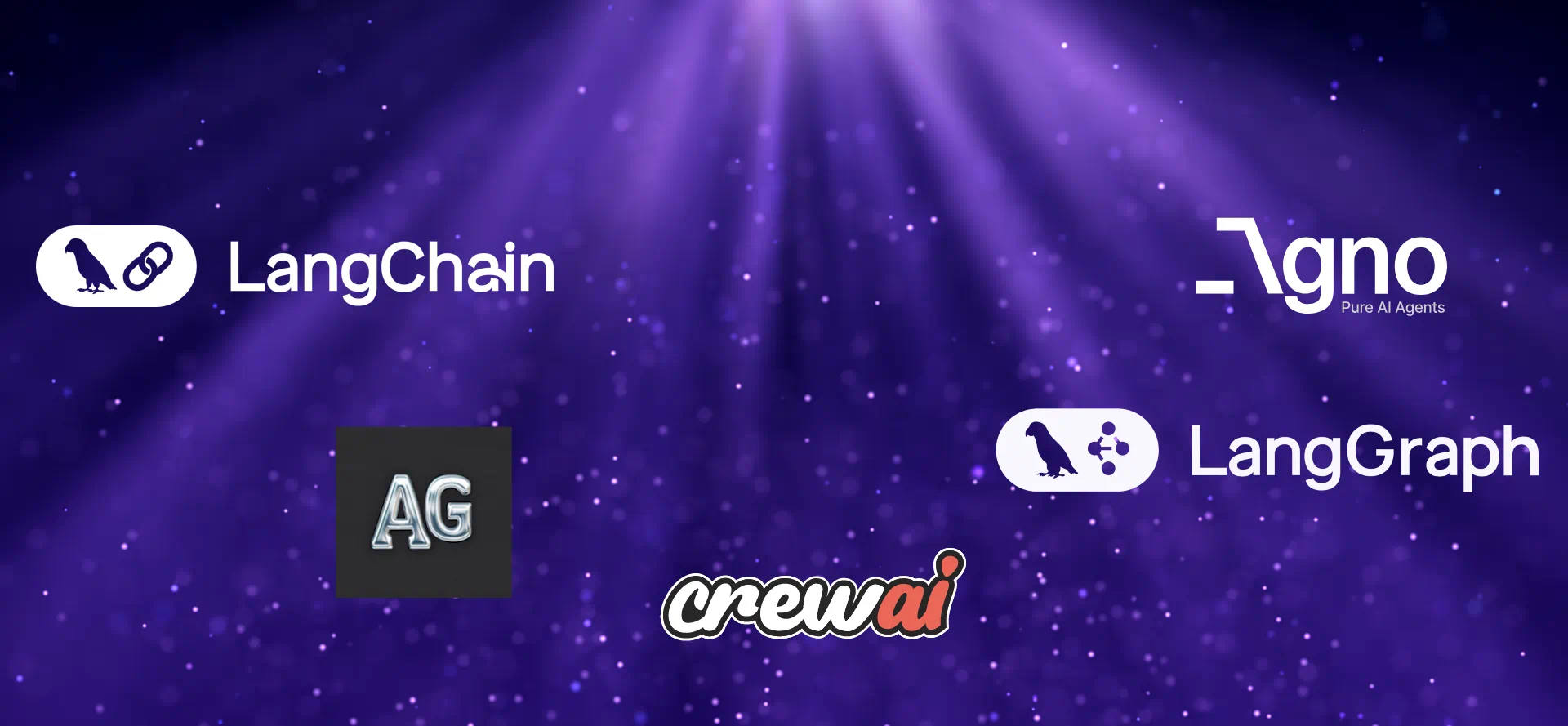

As AI agents become more common in modern software systems, choosing the right framework is no longer a technical detail but a strategic decision. This is where the comparison of Agno vs LangGraph becomes highly relevant for teams building AI-driven products. While both frameworks support agent-based workflows, they differ in how they handle complexity, scalability, and control. Understanding these differences can help businesses avoid costly rework and select a solution that aligns with their development stage and long-term goals.
|
Quick table Agno
LangGraph
|
1. What is Agno?
Agno is designed with one main goal: to reduce friction when building AI agents. It provides a simplified developer experience. You can define an agent, connect it to tools, and get it running quickly without worrying too much about internal flow or state handling. Agno works best when speed matters more than structure. If your goal is to validate an idea or build a quick demo, it allows you to move fast and focus on outcomes instead of architecture.
4 Key characteristics of Agno:
- Minimal setup and fast implementation
- Built-in abstractions for tools and workflows
- Less code is required to create a working agent
- Suitable for rapid prototyping and experimentation
2. What is LangGraph?
LangGraph takes a different direction. Instead of hiding complexity, it makes it explicit. It models an AI agent as a graph, where each node represents a step such as a model call, a tool execution, or a decision point. This approach gives you full control over how the agent behaves. LangGraph is not as quick to set up as Agno. But it becomes very valuable when your agent needs to handle more complex logic or operate in production environments.
4 Key characteristics of LangGraph:
- Graph-based workflow design
- Clear state management between steps
- Support for loops, branching, and retries
- Better visibility into how decisions are made
3. A conceptual comparison Agno vs LangGraph
Instead of listing features side by side, it is more useful to look at how they differ in philosophy.
Speed vs control:
- Agno focuses on speed. You can build something functional in a short time, often with very little code.
- LangGraph focuses on control. You define each step in the workflow, which takes more effort but gives you a clearer understanding of what is happening inside the system.
Abstraction vs transparency: This difference becomes important when debugging. With Agno, it can be harder to trace why an agent produced a certain output. With LangGraph, the flow is explicit, so issues are easier to diagnose.
- Agno hides many internal details. This makes development easier, especially at the beginning.
- LangGraph exposes those details. You see how data flows between steps and how decisions are made.
Simplicity vs structure:
- Agno keeps things simple. That is its strength.
- LangGraph introduces structure. It may feel heavier at first, but that structure helps when systems grow and require consistency.
4. The lifecycle perspective
One of the most common mistakes is choosing a single framework for the entire lifecycle of an AI product. In reality, most teams go through three stages:
Stage 1: Prototype: At this stage, the goal is simple. You want to answer one question: Does this idea work? Agno is a strong fit here. You can quickly build an agent that connects to a model, uses a few tools, and produces meaningful output. There is no need to over-engineer anything yet.
Stage 2: Validation: Now the focus shifts to business value. You may start refining prompts, adding more tools, or improving user interaction. The system is still evolving, and flexibility is important. Agno can still work well in this stage, especially if the workflows are not too complex.
Stage 3: Production: This is where things change. The agent is no longer a demo. It becomes part of a real system. It may handle customer requests, process internal data, or support critical workflows. At this point, new requirements appear:
- Reliability and error handling
- Clear execution flow
- Observability and debugging
- Consistent behavior across different scenarios
This is where LangGraph becomes a better fit. Its graph-based structure allows teams to define and control each step of the agent’s behavior. That level of control is difficult to achieve with more abstract frameworks.
| For most software teams, a hybrid approach works best. Start with Agno to move quickly. Use it to test ideas, validate assumptions, and demonstrate value. Once the system proves useful and starts to grow, consider transitioning to LangGraph for better control and scalability. >>> This approach balances speed and stability. It also aligns with how businesses typically invest in new technology: small at first, then expanding once results are clear. |
A practical example: Imagine you are building a customer support AI agent. In the early stage, you might use Agno to:
- Connect to a language model
- Add a few tools (knowledge base, ticket system)
- Create a basic conversational flow
Within a short time, you have a working prototype. But as the system evolves, you may need to:
- Route requests based on intent
- Handle multi-step interactions
- Retry failed API calls
- Maintain conversation state across sessions
At this point, the logic becomes more complex. You need to define how each step works and how they connect. This is where LangGraph provides a clearer and more maintainable structure.
5. Common pitfalls to avoid
When choosing between Agno and LangGraph, teams often run into a few issues.
- Choosing based on popularity: Just because a tool is trending does not mean it fits your use case. Always start with your requirements, not the tool.
- Over-engineering too early: It is tempting to build a fully structured system from the beginning. In many cases, that slows down progress without adding real value.
- Ignoring long-term complexity: On the other hand, sticking with a simple setup for too long can create problems later. As workflows grow, a lack of structure can make systems difficult to manage.
There is no universal answer to the question “Agno or LangGraph?” Each framework solves a different problem. Agno helps you get started. It reduces complexity and allows you to build working agents quickly. LangGraph helps you move forward. It gives you the structure and control needed to run those agents in real-world systems. A simple way to think about it: Agno proves that your AI agent can work, and LangGraph ensures that it continues to work when it matters
| At PowerGate Software, we work with businesses across different stages of AI adoption, from early exploration to production deployment. Our teams understand how to select the right tools based on your goals, not just trends. Whether you are building your first AI agent or scaling an existing system, we focus on creating solutions that are practical, stable, and aligned with your business needs. If you are planning to develop AI-driven applications, choosing the right framework is only the first step. The real value comes from how that technology is applied in your specific context. |