
Software development teams today are expected to deliver faster while maintaining quality and controlling costs. This pressure has led many organizations to explore how AI can support their development processes. From requirement analysis and system design to testing and maintenance, AI is becoming part of every stage of the software development life cycle. This article from PowerGate Software explores the growing role of AI in software development life cycle and how it helps teams build software more efficiently.
1. How AI is used across the software development life cycle
1.1. Requirements gathering and analysis
Modern AI tools can analyze meeting notes, summarize stakeholder discussions, and identify missing information. They can also generate user stories, acceptance criteria, and feature lists based on initial project descriptions.
By reducing manual documentation work, business analysts can spend more time validating requirements with stakeholders and ensuring project goals are clearly defined.
1.2. Project planning and estimation
AI-powered tools can help estimate effort, predict potential risks, monitor project progress, and identify tasks that may cause delays. These insights support better decision-making and allow teams to respond to issues before they become major problems.
In addition, AI can automate reporting and meeting summaries, helping project managers spend less time on administrative work.
1.3. System design and architecture
AI tools can suggest database structures, API designs, and system components that fit specific use cases. They can also help teams quickly create design drafts and prototypes, allowing stakeholders to review concepts earlier in the project.
While final architecture decisions still require human expertise, AI can significantly speed up the initial design process.
1.4. UI and UX design
Design teams are also benefiting from AI technology. Many AI-powered tools can generate wireframes, interface layouts, and design concepts based on simple text descriptions. Designers can use AI to create early mockups, explore multiple design directions, and receive recommendations for improving consistency across user interfaces.
AI can also help generate icons, illustrations, and reusable design assets. In addition, specialized AI image editing tools, such as image enlargers, photo enhancers, and background editing solutions, help designers quickly optimize visual assets without using complex desktop software. This reduces the time spent on repetitive editing tasks and allows designers to focus on creating better user experiences.

AI-assisted design workflows help teams create, refine, and validate UI concepts faster – Source: ilounge.com
1.5. Software development and coding
Coding is one of the most visible applications of AI in software development today. AI-powered coding assistants can generate code suggestions, complete repetitive code structures, and help developers solve technical problems more quickly.
Tools such as GitHub Copilot, ChatGPT, and Cursor are widely used to support daily development activities. They can help developers:
- Generate code snippets
- Explain complex code
- Create API integrations
- Write documentation
- Refactor existing code
- Identify potential performance improvements
AI can also support front-end development by converting UI designs into code, reducing manual implementation work. Although AI-generated code still requires review and validation, it can significantly increase developer productivity when used appropriately.
1.6. Testing and quality assurance
Testing is another area where AI delivers substantial value. Creating and maintaining test cases often requires significant effort, especially for large applications. AI can automatically generate test scenarios based on requirements and application behavior. It can also help identify edge cases that may be overlooked during manual testing.
For QA teams, AI supports:
- Test case generation
- Regression testing
- Requirement analysis
- Impact analysis
- Defect detection
By automating routine testing activities, teams can improve software quality while reducing testing costs and effort.
1.7. Deployment and operations
Once software is ready for release, AI can continue providing value during deployment and operations. AI tools can support CI/CD processes, monitor application performance, and analyze system logs. They can identify unusual behavior, detect performance bottlenecks, and alert teams to potential issues before they affect users.
This proactive approach helps organizations maintain stable systems and reduce downtime.
1.8. Maintenance and continuous improvement
Software development does not end after deployment. Applications require ongoing maintenance, updates, and optimization.
AI can assist by analyzing user feedback, reviewing system performance data, and identifying areas for improvement. It can also help teams understand legacy codebases, making maintenance activities faster and more efficient.
As software systems become larger and more complex, AI is becoming increasingly useful for long-term application management.
2. 5 benefits of using AI in the software development life cycle
Organizations that successfully integrate AI into their development processes can achieve several important benefits.
- Faster delivery: AI reduces the time spent on repetitive tasks such as documentation, coding assistance, testing, and reporting. This allows teams to move projects forward more quickly.
- Improved productivity: Developers, testers, designers, and project managers can focus on higher-value activities instead of routine work. As a result, overall team productivity increases.
- Better software quality: AI-assisted code reviews, automated testing, and continuous monitoring help identify issues earlier in the development process, reducing defects and improving reliability.
- Lower development costs: Automation reduces the amount of manual effort required throughout the SDLC, helping organizations control development and maintenance costs.
- Better collaboration: AI tools make information easier to access and share, improving communication between different teams involved in software delivery.
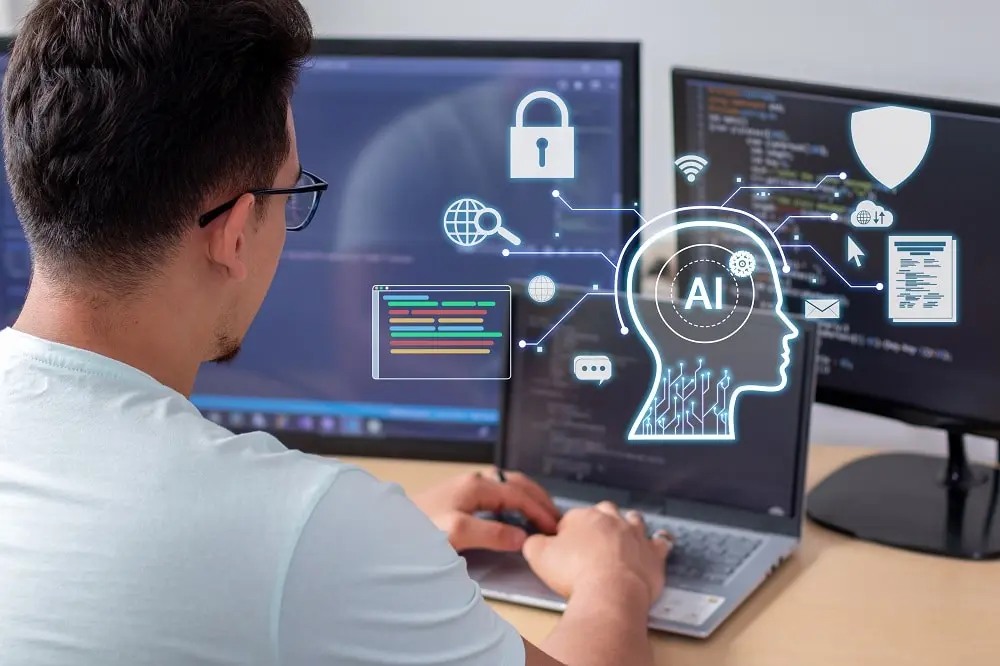
Source: cloudester.com
3. Challenges and limitations of AI in SDLC
Despite its advantages, AI is not a perfect solution.
- AI-generated outputs can sometimes be inaccurate or incomplete. Code suggestions may introduce security vulnerabilities or fail to follow business requirements. Automated recommendations should always be reviewed by experienced professionals.
- Organizations must also consider data privacy, compliance requirements, and responsible AI usage policies. Successful AI adoption requires clear governance and human oversight.
Rather than replacing software teams, AI works best as a tool that supports decision-making and execution.
How PowerGate Software applies AI across the development lifecycle
At PowerGate Software, AI is integrated into multiple stages of the software development process to improve efficiency and quality.
- For business analysts, AI supports requirement gathering, requirement clarification, feature generation, and competitive research. Designers use AI to create initial UI concepts, maintain design consistency, and generate reusable design assets.
- Software developers leverage AI tools such as ChatGPT, GitHub Copilot, and Cursor to support system design, coding, debugging, optimization, documentation, and code reviews.
- QA teams use AI to generate test cases, analyze requirement changes, and improve test coverage.
- Project managers also benefit from AI-powered progress tracking, risk prediction, scheduling support, and performance monitoring.
The impact of these improvements can be significant. Industry research and practical implementation have shown that AI-assisted development can contribute to faster delivery, fewer bugs, lower testing costs, improved code quality, and stronger team productivity.
By combining experienced engineering talent with AI-powered workflows, PowerGate Software helps clients accelerate software delivery while maintaining quality and reliability.
>>> For more information, please visit: Utilize AI in Software Development
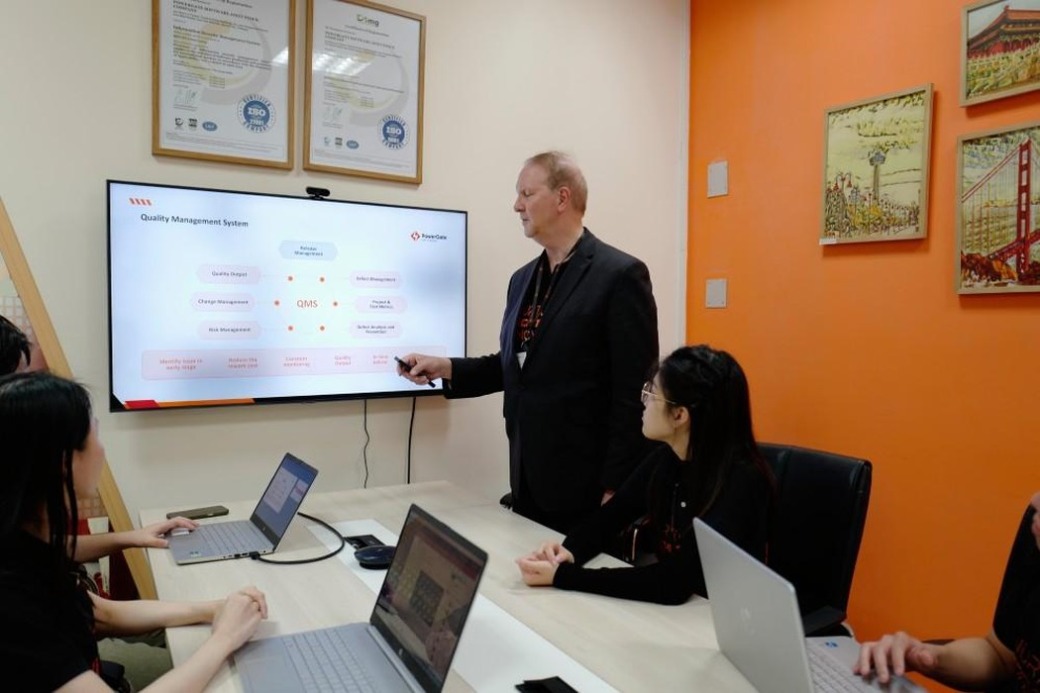
PowerGate Software is a global AI-powered software development studio
The role of AI in software development life cycle continues to expand beyond coding assistance. From requirements analysis and system design to testing, deployment, and maintenance, AI helps software teams work more efficiently and deliver better results. While human expertise remains essential, organizations that effectively integrate AI into their development processes can improve productivity, reduce costs, and enhance software quality. As AI technology continues to evolve, its influence on the software development life cycle will become even more significant.