
Australia’s startup ecosystem is becoming increasingly competitive across fintech, healthcare, education, and digital marketplaces. For many startups, the mobile app is no longer just a supporting channel. It is the product itself. That is why mobile app development today is not only about coding. Startups need partners that can help them launch faster, scale efficiently, and build products that are ready for long-term growth. Here are the mobile app development services that matter most for Australian startups in 2026.
1. MVP development for early-stage startups
One of the biggest challenges for startups is balancing speed with scalability. Launching too slowly means losing market opportunities. Building too much too early creates unnecessary costs and product risk.
The goal of an MVP is not just to launch quickly. It is to test the product efficiently while keeping room for future growth. A good mobile app development partner should help startups:
- Define core product features
- Prioritize fast validation
- Reduce unnecessary complexity
- Build scalable foundations from day one
PowerGate Software’s case study: PowerGate Software partnered with a leading digital health and fitness technology company across Hong Kong and Japan to build a comprehensive health management platform. The solution supported more than 100,000 users, significantly improving patient engagement and enabling the client to scale operations five times more efficiently.
>>> View case study: AI-powered fitness management system designed for enhanced efficiency
2. Cross-platform mobile app development
For most startups, building separate native teams for iOS and Android is difficult to justify early on. Cross-platform development has therefore become a practical approach for reducing cost and accelerating time-to-market.
Frameworks like Flutter and React Native allow startups to:
- Launch on multiple platforms faster
- Maintain a more consistent experience
- Simplify maintenance and updates
- Optimize development budgets
However, success depends heavily on architecture quality and mobile performance optimization.
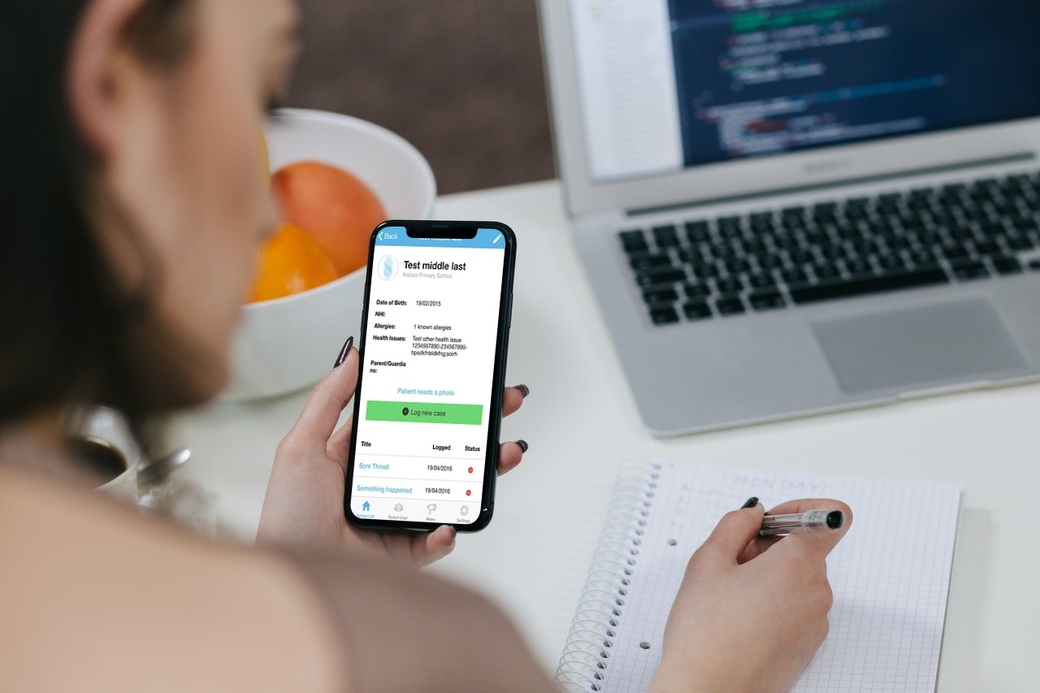
PowerGate Software’s case study: PowerGate Software developed a mobile healthcare application designed to improve access to children’s healthcare services in New Zealand. The cross-platform solution allowed users to access healthcare support seamlessly across devices while helping the client scale the platform more efficiently.
>>> View case study: Mobile app to democratize New Zealand children’s health services
3. AI-powered mobile experiences
AI is becoming an important differentiator for startups looking to improve engagement and personalization. Instead of static user experiences, modern mobile apps increasingly use AI to adapt content, automate workflows, and improve recommendations.
For startups, AI-powered mobile development often includes:
- Recommendation systems
- Intelligent search
- Personalized content delivery
- AI-assisted automation
The objective is not simply to add AI features, but to improve retention and user experience through smarter interactions.
PowerGate Software’s case study: PowerGate Software integrated an AI recommendation engine into a large-scale content platform serving anime and manga communities. The mobile experience became significantly more personalized through AI-driven content recommendations based on user behavior and preferences.
>>> View case study: Integrating an AI recommendation engine into a content-rich hub for Japanese anime and manga enthusiasts
4. Scalable backend development for growing platforms
As startups scale, backend performance often becomes a major bottleneck. Applications that work well during early launch stages may struggle once transaction volume and user activity increase.
Strong mobile app development services should therefore include:
- Scalable cloud infrastructure
- API integrations
- Modular backend systems
- Secure authentication
- Performance optimization
Building the right backend foundation early helps startups avoid expensive rebuilding later.
PowerGate Software’s case study: PowerGate Software helped develop a large-scale digital marketplace platform in the US that required scalable backend infrastructure, secure transaction management, and support for growing user activity. The system was designed to handle increasing operational complexity while maintaining stable platform performance.
>>> View case study: Innovative marketplace for farmland
5. UX/UI design focused on user retention
For startups, user retention is often directly tied to product experience. Poor onboarding, confusing navigation, or inconsistent mobile interfaces can quickly reduce engagement.
Good design is not only visual. It directly impacts adoption and long-term growth. Modern mobile app development services should include:
- Mobile-first UX strategy
- User journey optimization
- Rapid prototyping
- Accessibility improvements
- Conversion-focused design
PowerGate Software’s case study: PowerGate Software partnered with an Australian e-learning platform to improve the mobile learning experience for students. The project focused on creating simpler navigation, improving accessibility, and making the platform more engaging across mobile devices.
>>> View case study: E-learning platform for Australia’s learners with courses appropriate to professional objectives

Choosing the right mobile app development partner
For Australian startups, choosing the right development partner is about more than technical delivery. The right partner should understand startup challenges, scalability requirements, and product growth priorities. That includes:
- Strong communication
- Product thinking
- Scalable architecture expertise
- Flexible delivery models
- Long-term technical support
>>> You may need: A practical guide to choosing the right software development partner for your 2026 project
As competition continues to increase, startups that invest early in scalable mobile products will be better positioned to grow and adapt. The right mobile app development partner can play a significant role in helping startups move faster while building stronger long-term technical foundations.