
The fitness industry is rapidly evolving beyond traditional gyms and personal training services. Today, businesses are investing in digital platforms that support workout tracking, virtual coaching, wellness management, and user engagement at scale. However, successful fitness software development involves much more than building a mobile app with basic fitness features. This article from PowerGate Software explores the key considerations, challenges, and lessons businesses should understand before developing a fitness software platform.
1. Understanding the different types of fitness software
Before defining features or selecting technologies, it is important to understand what type of fitness platform you are building. Different business models come with different technical and operational requirements. Although these platforms serve different audiences, they share a common objective: helping users maintain healthy habits while improving operational efficiency for businesses.
Common types of fitness software include:
- Gym and studio management platforms that support membership management, class scheduling, attendance tracking, and payment processing.
- Fitness apps for end users that help individuals track workouts, monitor progress, set fitness goals, and maintain healthy habits.
- Personal trainer management platforms that enable trainers to manage clients, create workout programs, schedule appointments, track performance, and communicate with customers.
- Digital health and wellness platforms that combine fitness coaching, health monitoring, telehealth services, wellness programs, and wearable device integration.
- Corporate wellness solutions that help organizations promote employee well-being through fitness challenges, activity tracking, rewards, and health initiatives.
2. 4 Features that matter most
Many fitness software projects start with long lists of desired features. While functionality is important, successful platforms usually focus on solving a few core problems exceptionally well.
2.1. User and profile management
Every fitness platform needs a reliable user management system. Users should be able to create profiles, set fitness goals, track progress, and manage personal information securely. For businesses, detailed user profiles provide valuable insights that can be used to personalize experiences and improve retention.
2.2. Workout and program management
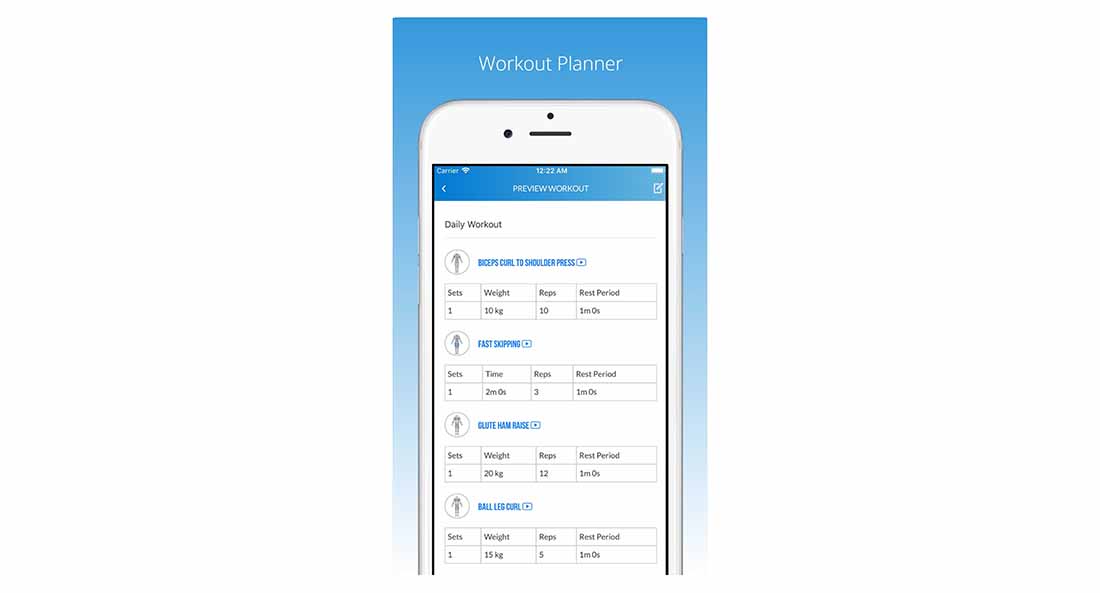
Workout tracking remains one of the most common requirements across fitness applications. Users often expect the ability to:
- Access personalized workout plans
- Record exercises, sets, and repetitions
- Monitor training history
- Track performance improvements over time
For trainers and coaches, administrative tools are equally important. They need efficient ways to create programs, assign workouts, and review client progress without spending excessive time on manual tasks.
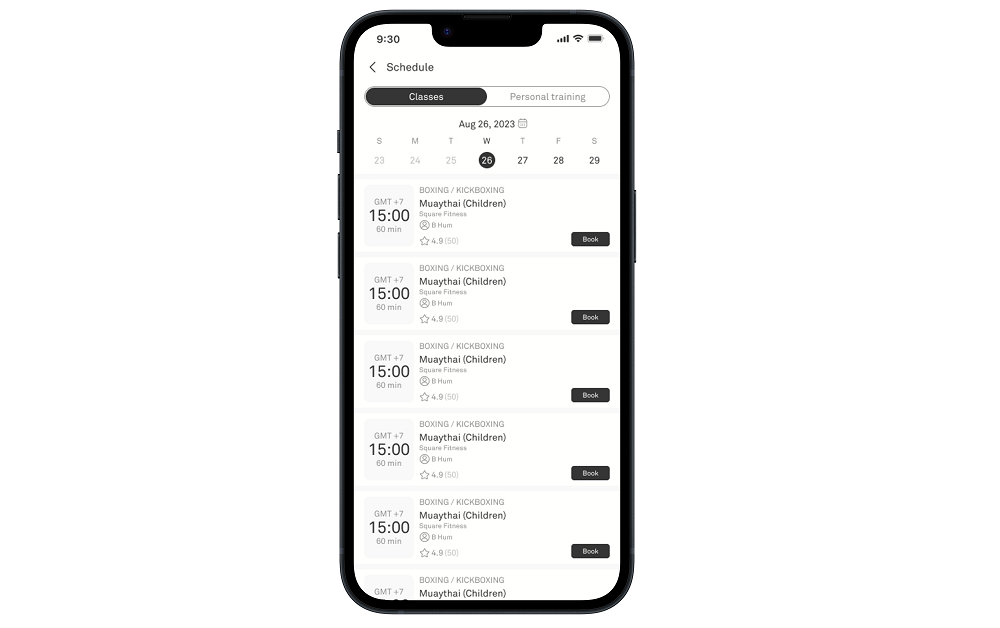
2.3. Scheduling and appointment booking
Scheduling may appear straightforward, but it often becomes one of the most complex components of a fitness platform. Fitness businesses frequently need to manage:
- Trainer availability
- Recurring appointments
- Group classes
- Waiting lists
- Cancellation policies
- Automated reminders
As the number of users grows, scheduling logic becomes increasingly difficult to manage, especially when multiple locations, trainers, and service types are involved.
2.4. Payment and subscription management
Many fitness businesses rely on recurring revenue models. A modern platform should support:
- Subscription plans
- Online payments
- Membership renewals
- Promotional campaigns
- Invoices and receipts
Payment processes need to be reliable and frictionless. Even minor issues during checkout or subscription renewal can negatively impact customer retention.
3. Why user engagement is often the biggest challenge
Many fitness businesses focus heavily on attracting new users. While acquisition is important, retaining users is often the greater challenge. Unlike many other digital products, fitness applications depend on long-term behavioral change. Users may begin with strong motivation, but maintaining that commitment over weeks or months is far more difficult. As a result, many fitness platforms experience declining engagement after the initial onboarding period.
This challenge has a direct impact on business performance. Low engagement often leads to lower subscription renewals, reduced customer lifetime value, and higher churn rates. To address this issue, successful fitness platforms typically invest in features that encourage consistency and habit formation, such as:
- Progress tracking dashboards that help users visualize improvements
- Achievement systems that reward milestones and accomplishments
- Personalized recommendations based on user goals and activity
- Push notifications and reminders that encourage regular participation
- Activity streaks and challenges that motivate continued engagement
However, retention is not simply a feature problem. Users rarely stay active because an application offers more functionality than its competitors. They remain engaged when the platform helps them build sustainable habits and achieve meaningful results.
For this reason, businesses should view engagement and retention as core product goals rather than optional enhancements added later in the development process.

Source: searchenginejournal.com
4. The growing role of AI in fitness software
Artificial intelligence is becoming increasingly common in fitness and wellness platforms. However, its value depends on how it is applied. Many organizations are moving beyond basic workout recommendations and exploring AI-powered solutions that help users and staff make better decisions.
For examples:
- Personalized fitness recommendations
- Automated health reporting
- Risk assessment and trend analysis
- Intelligent scheduling
- Virtual coaching assistance
For businesses operating at larger scales, AI can also help process large amounts of health and activity data more efficiently.
That said, AI should support the user experience rather than replace it. The most successful implementations typically focus on solving specific operational or engagement challenges instead of introducing AI simply because it is a popular technology.
5. Planning for integrations from the start
Most fitness platforms do not operate as standalone systems. Depending on the business model, they often need to connect with multiple third-party services and data sources. Common integrations include:
- Payment gateways
- Wearable devices
- Health records
- Scheduling systems
- Communication platforms
- Analytics tools
While these integrations can significantly improve user experience and business operations, they also introduce additional complexity. Different systems may use different data formats, security standards, and authentication methods, making data synchronization more challenging as the platform grows.
For fitness businesses expanding into wellness or healthcare services, interoperability becomes even more important. Health assessments, coaching data, telehealth services, and reporting systems often need to work together seamlessly. This is why integration requirements should be considered early in the development process rather than being treated as a later-stage enhancement.
6. Security and compliance cannot be treated as an afterthought
Fitness platforms often collect and process sensitive user data, ranging from health metrics and activity records to payment details and personal information. As many fitness businesses expand into wellness and digital health services, security and compliance requirements become increasingly important. Key areas that require attention include:
- Secure authentication
- Data encryption
- Access control
- Audit logging
- Regulatory compliance
Rather than being added later, these requirements should be considered from the beginning of the development process. Addressing security early helps reduce risk, protect user trust, and support future growth.
7. Lessons from real-world fitness software projects
While every fitness business has unique requirements, several common challenges appear repeatedly across real-world implementations.
1. One lesson is that operational efficiency matters just as much as user-facing features.
PowerGate Software partnered with a leading health and fitness technology company operating across Hong Kong and Japan to develop an AI-powered health management platform serving more than 100,000 users. The client needed an alternative to existing systems that relied heavily on manual processes and lacked interoperability.
The resulting solution incorporated AI-driven analytics, automated reporting, telehealth capabilities, scheduling automation, and secure health data management. By improving operational workflows and supporting remote health services, the platform helped the client scale its operations more efficiently while maintaining a strong user experience.
2. Another lesson is that fitness professionals need business management tools, not just workout features.
In a separate project, PowerGate Software worked with a New Zealand-based fitness partner to continuously develop a platform for personal trainers. The solution included appointment scheduling, payment processing, reporting, workout planning, and client management capabilities. Trainers could manage their daily operations through a single platform while tracking client progress and maintaining communication. Following its release, the application achieved an 80% satisfaction rate among users.
These projects reinforced a consistent finding: successful fitness software balances customer engagement with operational efficiency. Businesses that focus exclusively on one side often struggle to achieve long-term growth.
Successful fitness software development requires more than a collection of features. Businesses must understand their users, design sustainable engagement strategies, build scalable architectures, and support efficient day-to-day operations. As fitness and digital health continue to evolve, companies that invest in thoughtful, user-centered fitness software development will be better positioned to adapt to changing customer expectations and create lasting value.
>>> Contact PowerGate Software today to discuss your fitness software projects!