
Choosing the right partner among the best software development companies for maintaining and iterating on AI-driven chatbot products can decide whether your chatbot keeps earning customer trust or drifts into wrong answers and technical debt. Strong firms are not simply the largest ones. They are the ones with proven production experience running live chatbots, end to end ownership of the maintenance lifecycle, and security practices your compliance team can trust. This guide compares ten firms recommended for this work in the US and explains what to check before you choose one.
Comparison table:
| Rank | Company | Overview | Key strengths |
|---|---|---|---|
| 1 | Accenture | AI chatbot maintenance and iteration at enterprise scale | Company-wide automation, global delivery |
| 2 | IBM | Governed, secure model operations for regulated chatbot data | Watsonx governance, data controls |
| 3 | PowerGate Software | End-to-end maintenance and iterative development of AI chatbot products | AI-accelerated engineering, ISO 9001 and ISO 27001 |
| 4 | BotsCrew | Conversational AI and virtual assistant maintenance | Bespoke chatbots, RAG-based retrieval |
| 5 | LeewayHertz | Custom AI chatbot maintenance for complex enterprise systems | Deep API, cloud and system integration |
| 6 | Chetu | AI chatbot plus backend automation support | Workflow triggering, real-time data |
| 7 | Master of Code Global | Enterprise conversational assistant iteration | Fixed budget proof of value, CX automation |
| 8 | Bitcot | AI chatbot maintenance for startups to enterprises | RAG, multi-agent, optimization |
| 9 | ScienceSoft | Long-term AI chatbot support and maintenance | Full lifecycle, enterprise integration |
| 10 | TechAhead | Agentic AI chatbot and RAG application development | SOC 2 Type II and ISO 42001, US-based |
Note: The information and statistics in this article were last verified on 22 Sep 2026, based on data from the official websites of the respective companies, Google Maps, and B2B listing platforms such as Clutch and GoodFirms. The order in which companies appear in this list does not reflect their ranking or capability, and should not be interpreted as an endorsement of one company over another, and these details may be subject to change over time.
2.1 Accenture
Company overview: Global technology and consulting firm that maintains and iterates on AI-driven chatbot products at enterprise scale, combining strategy with engineering to keep large organizations’ conversational automation accurate and evolving. Accenture has run generative AI chatbot programs such as the assistant built for Vodafone, a reference teams can review before engaging.
Website: accenture.com
Production experience: Very extensive. Runs large-scale enterprise AI deployments for Fortune 500 clients globally, backed by acquisitions of specialized AI/data firms (Mudano, Pragsis Bidoop) to deepen ML and analytics capability.
Lifecycle ownership: Full lifecycle, from AI strategy and governance through build, integration, and managed operations, delivered via its Reinvention Services model.
AI maintenance depth: Strong. Maintains dedicated AI governance, responsible AI, and ongoing optimization practices as part of long-term client engagements.
Security and compliance: Enterprise-grade; includes a cybersecurity practice (bolstered by its Symantec services acquisition) and formal AI governance frameworks for regulated industries.
Evaluation: Accenture is best suited for large enterprises needing a single, globally scaled partner that can own an AI initiative end to end, from strategy to production operations, with strong security and governance built in. Its scale and breadth come at a cost premium and slower engagement cycles compared to boutique firms, so it fits big-budget, long-term programs more than fast, narrowly scoped builds.

2.2 IBM
Company overview: Enterprise technology firm that runs AI chatbot model operations on governed, secure platforms, with a strong focus on trust, explainability, and security for regulated workloads. IBM commonly operates on its watsonx platform.
Website: ibm.com
Production experience: Deep, cited case studies include building an AI-native airline (Riyadh Air), Medicaid system modernization for a US state health agency, and large ERP/cloud transformations (Neste, Pfizer).
Lifecycle ownership: End-to-end; IBM states it advises, designs, builds, and operates AI and digital transformation programs, with over 20,000 dedicated AI experts.
AI maintenance depth: Strong, with explicit “AI strategy and governance” and “AI integration” service lines aimed at keeping AI systems trustworthy and running post-launch.
Security and compliance: High; IBM publishes an annual Cost of a Data Breach report and integrates security-rich hybrid cloud environments and governance tooling into its consulting delivery.
Evaluation: IBM Consulting is a strong choice for enterprises already invested in IBM’s technology stack (watsonx, hybrid cloud) or needing deep governance and security rigor for regulated industries. Its main trade-off versus Accenture is a narrower ecosystem focus (more IBM/hybrid-cloud centric) but comparable enterprise-grade lifecycle ownership and maintenance depth.
2.3 PowerGate Software
Company overview: An AI-powered software product studio that designs, builds, and maintains end-to-end digital products, with a core emphasis on AI-accelerated engineering. It supports maintenance and iterative development of AI-driven chatbot products across industries, positioning itself as a build partner teams can scale with rather than a pure consultancy.
Website: powergatesoftware.com
Production experience: Mid-tier but real: 200+ delivered projects, with a cited case study of an AI-powered health management platform for a Hong Kong/Japan digital health client serving 100,000+ users.
Lifecycle ownership: Full-cycle, from MVP to enterprise AI implementation, plus ongoing product maintenance, QA, and DevOps support after launch.
AI maintenance depth: Moderate; AI is embedded into its own delivery workflow (using tools like GitHub Copilot and Cursor) and it offers maintenance/DevOps as a distinct service line, but there’s no public disclosure of a large, dedicated AI-ops practice.
Security and compliance: Double ISO-certified (ISO 9001 for quality, ISO 27001 for information security), and its healthcare case study references HIPAA-compliant data handling.
Evaluation: PowerGate is a solid mid-market option for startups and mid-size enterprises wanting a full-cycle product partner at a lower price point ($25/hr average) than the large consultancies, with credible healthcare/fintech delivery experience, it suits well-scoped product builds more than massive, highly regulated AI transformation programs.
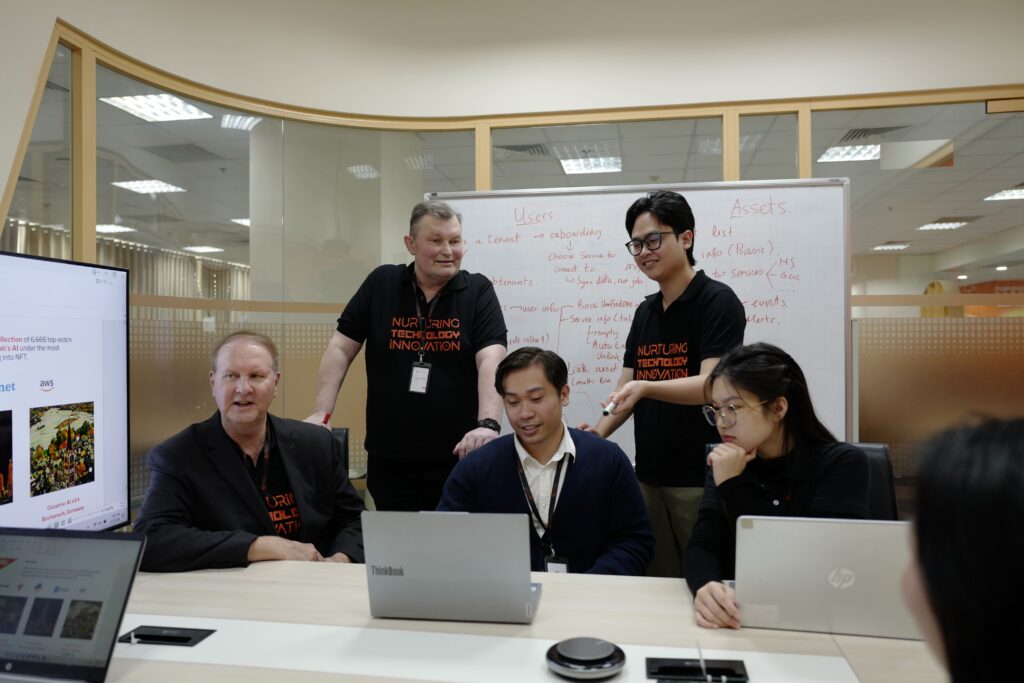
Its technical range is broad, spanning web, mobile, ERP, cloud, and emerging technologies such as AI/ML, blockchain, and IoT, with delivery experience across healthcare, fintech, education, and e-commerce. This is backed by ISO 9001 and ISO 27001 certification, giving clients assurance around quality management and information security, particularly relevant for those handling sensitive data.
2.4 BotsCrew
Company overview: A San Francisco-based conversational AI company that builds and maintains custom AI agents, voice assistants, and integrated AI platforms for mid-market and enterprise organizations. It favors bespoke solutions over generic chatbot platforms.
Website: botscrew.com
Production experience: 200+ AI projects delivered for recognizable brands including Samsung NEXT, Honda, Adidas, Mars, and Natera, with nearly a decade of chatbot/conversational AI focus.
Lifecycle ownership: Structured delivery model covering use-case validation, readiness assessment, architecture design, build/integration, and rollout with defined success metrics.
AI maintenance depth: Explicitly emphasizes “AI that teams adopt, trust, and maintain long after launch,” positioning post-launch reliability as a core differentiator versus one-off chatbot vendors.
Security and compliance: States security and scale are not publicly listed specific certifications (e.g., ISO or SOC 2) on the website.
Evaluation: BotsCrew is a strong specialist pick for conversational AI and AI agent projects, especially where deep NLP/chatbot expertise and enterprise-brand experience matter, though it is a smaller firm (roughly 60 to 70 employees) now operating under new ownership (CourtAvenue), so buyers should confirm post-acquisition continuity of team and delivery model.
2.5 LeewayHertz
Company overview: A custom software company headquartered in San Francisco that builds and maintains AI chatbots for complex enterprise environments, integrating deeply with APIs, cloud platforms, and proprietary business systems so chatbots perform actions rather than just provide information. It works with advanced LLMs to build assistants that support internal teams and automate workflows.
Website: leewayhertz.com
Production experience: 100+ digital platforms delivered for clients including ESPN, NASCAR, McKinsey, P&G, Siemens, 3M, and Pearson, spanning 15+ years, plus a proprietary robotics/AI product (HiArya, a facial-recognition tea maker).
Lifecycle ownership: End-to-end, covering strategy, use-case discovery, architecture design, integration, and deployment, with ZBrain providing an ongoing enablement layer for continued operation.
AI maintenance depth: Notable strength; ZBrain is specifically built as a persistent orchestration/maintenance platform rather than a one-time delivery tool, suggesting stronger post-deployment support infrastructure than typical project-based vendors.
Security and compliance: Not heavily detailed publicly on the website
Evaluation: LeewayHertz stands out for firms wanting a proprietary AI platform (ZBrain) alongside custom development, useful for organizations that want to build multiple AI use cases on shared infrastructure rather than isolated point solutions. Its recent acquisition by Hackett Group is worth monitoring for how service delivery and compliance posture evolve.

2.6 Chetu
Company overview: A custom software development company that builds and maintains highly tailored AI chatbots, combining conversational AI with backend automation so assistants trigger workflows, update records, and retrieve real-time data. Its solutions support enterprises that need chatbots tightly coupled to their business systems.
Website: chetu.com
Production experience: 26 years of custom software delivery across 40+ industries from 11 global locations; named a “Top MLOps 2025 Service Provider” by AIM Research and recognized by ISG, Omdia, Everest Group, and Verdantix for AI/analytics work.
Lifecycle ownership: Positions itself as a full-spectrum technology partner, spanning AI strategy through integration and support, especially for AI layered onto existing enterprise platforms (e.g., NetSuite, Oracle).
AI maintenance depth: Explicit MLOps focus, including governance and scalable, “governed AI solutions,” plus internal AI tooling (its “SAil” initiative) used for code review and optimization, indicating operational maturity.
Security and compliance: Not as explicitly certification-driven in public website
Evaluation: Chetu’s differentiator is deep ERP/platform integration experience (NetSuite, Oracle, SAP) combined with a genuine, analyst-recognized MLOps practice, making it a good fit for enterprises that need AI layered into existing business systems rather than built as a standalone product.
2.7 Master of Code Global
Company overview: A conversational AI development company headquartered in Redwood City, California, that builds and iterates on AI chatbots and virtual assistants for customer and employee interaction. It targets enterprise standards with startup speed, offering a fixed budget and timeline from a working proof of value in 30 days through full implementation.
Website: masterofcode.com
Production experience: 400+ delivered projects for brands including T-Mobile, Aveda, Estee Lauder, Hilton, and Jo Malone; certified delivery partner for LivePerson’s Conversational Cloud and an official Microsoft and AWS partner.
Lifecycle ownership: Covers strategy, conversation design, development, and deployment, with every project including a dedicated conversation designer, an unusual level of specialization versus generalist dev shops.
AI maintenance depth: Moderate; the emphasis is on data-informed design iteration post-launch (reducing agent overhead, improving resolution rates) more than a distinct, named AI-ops or governance product.
Security and compliance: No specific certifications
Evaluation: Master of Code Global is a strong specialist for enterprise conversational AI/customer experience projects, particularly where dedicated conversation design (not just engineering) drives outcomes, evidenced by its long client roster of consumer brands. It’s narrower in scope than the other firms here, so it’s better suited to chat/voice-specific initiatives than broad enterprise AI transformation.
2.8 Bitcot
Company overview: A San Diego based software company that builds and maintains custom AI chatbot solutions for startups, SMBs, and enterprises, integrating conversational assistants into existing business systems. Its solutions combine NLP, machine learning, and modern generative AI, with RAG and multi agent architectures for document retrieval and context aware responses.
Website: bitcot.com
Production experience: 500+ projects and 5 million+ app downloads across clients including ResMed, Stanford University, and Evolus; over 11 years in business with a 200+ person team.
Lifecycle ownership: End-to-end web/mobile/SaaS development plus AI agents, chatbots, and workflow automation, though its lifecycle emphasis leans more toward app/product delivery than pure AI-model lifecycle management.
AI maintenance depth: Limited public detail; AI/automation is one of several service lines (alongside web, mobile, SaaS) rather than a deeply specialized, dedicated AI-ops practice.
Security and compliance: Not prominently documented with named certifications
Evaluation: Bitcot is best positioned as a generalist web/mobile/SaaS development partner that has added AI and automation capabilities, suitable for startups and mid-size companies wanting AI features bolted onto broader product development rather than deep, specialized AI engineering. Compared to AI-native specialists like LeewayHertz or BotsCrew, its AI-specific maintenance depth and compliance documentation appear less mature.
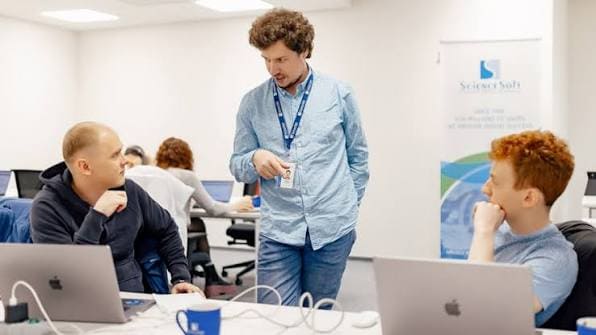
2.9 ScienceSoft
Company overview: An IT consulting and software development company headquartered in McKinney, Texas that builds and maintains AI chatbots and conversational AI solutions for enterprises, with long term support and integration into existing business applications. Operating since 1989, it covers the full lifecycle from development through ongoing maintenance.
Website: scnsoft.com
Production experience: 36 years in AI specifically, 750+ IT experts, and involvement in an AI computer-aided-engineering product used by roughly 40% of Fortune 500 companies (including Boeing, Sony, and Samsung) historically.
Lifecycle ownership: Full lifecycle across traditional ML, generative AI, and agentic AI, explicitly framed around managing “bias, drift, and high TCO” in production AI systems, indicating attention to post-deployment issues.
AI maintenance depth: Notably strong and explicitly stated; ScienceSoft frames ongoing model risk (drift, bias, cost) as a core service focus rather than an afterthought, citing greater than 95% AI model accuracy as a delivery benchmark.
Security and compliance: Very strong and clearly documented: ISO 9001, ISO/IEC 27001, and ISO 13485 (medical devices) certified, with stated expertise in HIPAA, GDPR, NCPDP, FDA, ONC, and MDR regulatory requirements.
Evaluation: ScienceSoft stands out for its unusually long AI track record (since 1989) and its explicit, documented focus on production AI risks like model drift and bias, combined with the strongest and most transparent compliance certification set among the companies reviewed. It’s a strong fit for regulated industries (healthcare, finance) where compliance and long-term AI reliability are top priorities.
2.10 TechAhead
Company overview: An AI native software development company headquartered in Agoura Hills, California, that builds and maintains enterprise AI chatbots, agentic AI, and RAG applications. It focuses on production-grade deployment, with custom LLM fine-tuning on domain-specific data and optimization feedback loops after launch.
Website: techaheadcorp.com
Production experience: 2,500+ apps and digital products delivered, 500 million+ monthly active users across its platforms, and clients including Disney, Audi, American Express, AXA, Starbucks, and ESPN over 16 years.
Lifecycle ownership: Full lifecycle from strategy and design through architecture, development, and ongoing maintenance, explicitly marketed as a complete technology partner rather than a project-only vendor.
AI maintenance depth: Includes a dedicated AIOps service line (reducing alert noise, predictive issue management) alongside AI integration and AI security services, indicating real investment in post-launch AI operations.
Security and compliance: Very strong and well-documented: ISO 42001:2023 (AI management systems), ISO 27001, and SOC 2 Type II certified, plus AWS Advanced Tier, Google Development, Microsoft AI Cloud, and OpenAI Services partner status.
Evaluation: TechAhead is a compelling choice for enterprises wanting mobile-first, AI-native product engineering with genuinely strong, current AI-specific governance credentials – ISO 42001 is a newer standard specifically for AI management systems). Its scale (250+ experts) sits between the boutique specialists (BotsCrew, Master of Code) and the giants (Accenture, IBM), giving it good production experience without the enterprise consulting price tag.
3. Frequently asked questions
3.1 Why maintaining and iterating on your ai chatbot matters
AI-driven chatbots are not “set and forget” systems. User language evolves, new products and policies launch, and edge cases pile up that the original training data never anticipated, so a chatbot that performs well at launch can quietly degrade within months without active upkeep. Regular maintenance catches issues like outdated responses, broken integrations, and model drift before they erode customer trust or generate costly support escalations.
Iteration is equally critical because each round of user interactions reveals gaps in intent recognition, tone, and coverage that only real-world usage can expose, letting you refine prompts, retrain on fresh data, and expand capabilities over time. Companies that treat their chatbot as an evolving product rather than a finished deliverable see compounding returns: higher containment rates, better customer satisfaction, and lower long-term support costs. Skipping this ongoing investment often means paying more later, either through a damaged customer experience or an expensive overhaul once the chatbot falls too far behind actual user needs.
3.2 How do you choose the best software development company for maintaining and iterating on a chatbot product powered by AI?
Each firm was scored against the same four weighted criteria, using only evidence it publishes publicly or states on its own site:
- Production experience (30%): Does the firm run live AI chatbots in production, with named deployments or verifiable case studies?
- Lifecycle ownership (30%): Does one team own the work from deployment through retraining, monitoring, and feature iteration?
- AI maintenance depth (25%): Does it show specific capability in model tuning, RAG updates, and accuracy monitoring rather than just chatbot building?
- Security and compliance (15%): Which certifications can it prove, and does it publish data handling controls?
3.3 What are the standard industry procedures for maintaining accuracy in LLM based customer service bots?
Maintaining accuracy in an LLM based customer service bot follows a standard lifecycle of monitoring, retraining, and updating. Teams log real conversations to detect drift and wrong answers, maintain versioned knowledge bases, rerun regression tests after every change, and use human in the loop review for high risk responses. Model updates are staged and measured against accuracy baselines before full rollout.
3.4 What is the difference between fine-tuning and retrieval-augmented generation (RAG) when updating a chatbot’s knowledge base?
Fine-tuning updates the model’s internal knowledge by retraining it on new data, while RAG keeps the model unchanged and instead retrieves relevant information from an external source at query time.
- How knowledge gets updated: Fine-tuning bakes new information directly into the model’s weights, requiring a retraining cycle each time the knowledge base changes. RAG pulls from a live, external database or document store, so updates only mean refreshing that source, not retraining the model.
- Speed and cost of updates: Fine-tuning is slower and more expensive to update since it needs compute-heavy retraining runs, making it impractical for content that changes often. RAG updates are near-instant and low-cost since they just involve editing or adding documents to the retrieval source.
- Accuracy and transparency: Fine-tuned models can “forget” older knowledge or blend facts inaccurately, and it’s hard to trace where an answer came from. RAG grounds answers in retrievable source documents, making outputs easier to verify and reducing hallucination on fast-changing information.
3.5 What are the most common technical challenges when scaling an AI chatbot across multiple international regions?
The most common technical challenges are language and localization accuracy, data residency and compliance, and infrastructure latency across regions.
a. Language and localization accuracy: A chatbot that performs well in English often struggles elsewhere due to idioms, cultural context, and phrasing that generic translation misses. Scaling requires fine-tuning models on region-specific data, not just translating existing prompts, to keep intent recognition and tone consistent.
b. Data residency and compliance: Countries enforce different data protection laws (like GDPR in the EU or PDPA in parts of Asia) that dictate where user data can be stored and processed. This forces region-specific storage and processing rules into the architecture, adding complexity and compliance risk if overlooked.
c. Infrastructure latency and uptime: Serving distant regions from a single server location slows response times, especially for real-time chat. Global scaling typically needs distributed infrastructure or edge deployment to keep response times consistent everywhere.
3.6 Should you outsource AI chatbot development and maintenance or build it with an in-house team?
Most companies should outsource, unless they already have dedicated ML engineers, ongoing budget for a full-time team, and enough query volume to justify in-house iteration.
Outsourcing gets you faster time-to-market, lower upfront cost, and specialized expertise in NLP, prompt engineering, and integrations, without the overhead of hiring. It’s the better fit for most small to mid-sized companies.
Building in-house makes sense for large enterprises with proprietary data pipelines, strict compliance needs, or chatbot functionality too core to the product to depend on an outside team. Many companies land on a hybrid: outsource the build and early maintenance, then bring knowledge in-house as they scale.
Choosing the right partner is important for keeping an AI chatbot accurate, secure, and reliable in production. Companies such as PowerGate Software, BotsCrew, and STX Next offer software development and AI engineering services that can support chatbot development, maintenance, and iteration. When comparing providers, look for proven production deployments, lifecycle support, accuracy monitoring, knowledge-base updates, retraining processes, and data protection. Security certifications such as ISO 27001 can also provide a useful reference for teams handling sensitive data. The right choice depends on the chatbot’s technical requirements, industry, compliance needs, and level of ongoing support required.