
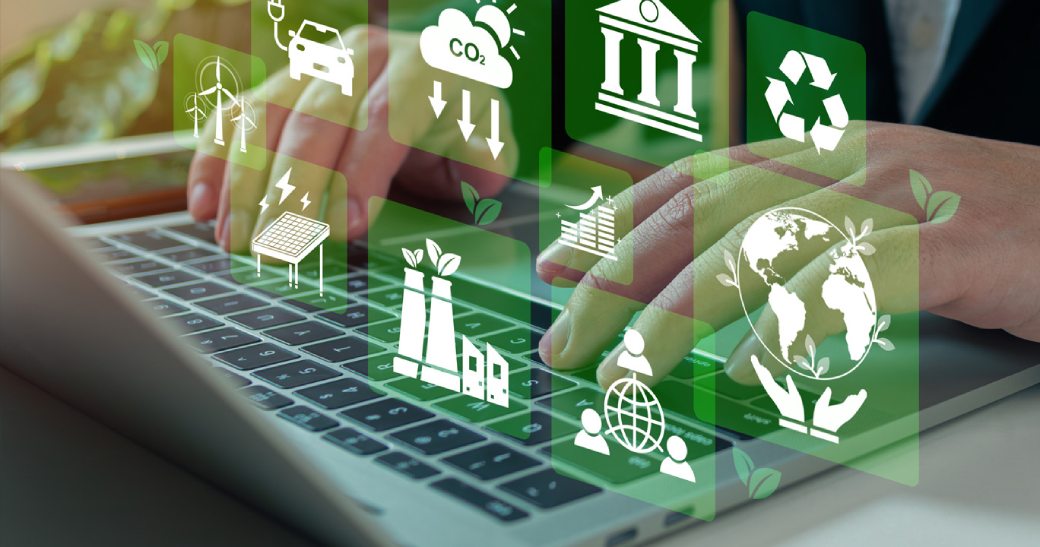
Green software development is quickly becoming a critical priority as businesses face rising cloud costs, growing AI workloads, and increasing pressure to meet sustainability goals. What used to be a niche concern is now directly tied to performance, scalability, and long-term profitability. In simple terms, green software development is about building systems that deliver the same value while consuming fewer resources.
1. What is green software development?
Green software development refers to the practice of designing, building, and running software in a way that minimizes energy consumption and reduces carbon emissions, without compromising performance. It operates across three main layers:
- Code level: Writing efficient logic that avoids unnecessary computation
- Architecture level: Designing systems that scale without waste
- Infrastructure level: Using cloud and hardware resources intelligently
The key idea is straightforward. Every inefficient query, redundant API call, or over-engineered system leads to more compute usage. More computers mean higher costs and higher carbon output. In that sense, green software is not a separate discipline. It is simply good engineering, done with awareness of its environmental impact.
Source: instandart.com
2. Why green software development matters in 2026
The importance of green software is not driven by trends alone. It is a direct response to several shifts happening in the industry.
2.1. Rising cloud costs
As businesses scale, infrastructure expenses often grow faster than expected. Poorly optimized systems can increase cloud bills significantly. Improving efficiency reduces both cost and environmental impact at the same time.
2.2. AI is energy-intensive
AI adoption is accelerating, but it comes with a trade-off. Training and running large models requires substantial computing power. Without optimization, AI systems can become both expensive and unsustainable.
2.3. ESG and enterprise expectations
Sustainability is no longer limited to corporate reporting. Many enterprise clients now expect transparency in how digital systems are built and operated. Software is part of that conversation.
2.4. Competitive advantage
Efficiency is becoming a differentiator. Companies that build lean, scalable systems can deliver better performance at lower cost. Sustainability is not just a moral choice, it is a strategic one.
In this context, sustainability is slowly turning into a technical KPI, alongside performance and reliability.
3. Core principles of green software development
To build sustainable systems, teams need to follow a set of guiding principles. These are not new concepts, but they are now viewed through a different lens.
- Energy efficiency: Efficient code reduces CPU usage, memory consumption, and network activity. Even small improvements at this level can have a large impact at scale.
- Carbon awareness: Workloads can be scheduled or distributed based on energy sources. Running processes in regions or time slots with lower carbon intensity can reduce environmental impact.
- Resource optimization: Over-provisioning infrastructure is common, especially in early-stage systems. Right-sizing resources ensures that systems use only what they actually need.
- Data efficiency: Data processing is one of the biggest hidden costs in software systems. Reducing unnecessary storage, transfer, and duplication can significantly lower resource usage.
- Hardware efficiency: Choosing the right infrastructure matters. Not every workload requires high-performance machines. Matching the workload to the right hardware avoids waste.
A simple way to think about it: The most sustainable request is the one that never happens.
4. Key green software development practices
While principles provide direction, real impact comes from practical implementation. Below are some of the most effective ways teams can apply green thinking in their daily work.
4.1. Write energy-efficient code
Developers should focus on optimizing logic where it matters most.
- Avoid redundant loops and repeated computations
- Optimize database queries to prevent full-table scans
- Use efficient data structures and algorithms
These improvements are often small in isolation, but they add up quickly in production environments.
4.2. Optimize architecture design
System design decisions have long-term consequences.
- Avoid unnecessary microservices if a simpler architecture works
- Reduce inter-service communication overhead
- Design for scalability without over-engineering
A complex system is not always a better system. In many cases, simplicity leads to both better performance and lower resource usage.
4.3. Adopt cloud efficiency strategies
Cloud platforms offer flexibility, but they can also lead to waste if not managed properly.
- Use autoscaling to match demand in real time
- Consider serverless architectures for variable workloads
- Choose regions based on both latency and energy profile
Cloud optimization is one of the fastest ways to reduce both cost and carbon footprint.
4.4. Reduce data footprint
Data is often over-collected and under-optimized.
- Compress data where possible
- Implement caching to reduce repeated processing
- Limit unnecessary logging and data retention
Managing data more efficiently not only improves sustainability but also enhances system performance.
4.5. Build sustainable AI systems
AI systems require special attention due to their high resource demands.
- Use smaller, task-specific models instead of large general models
- Reuse trained models instead of retraining from scratch
- Optimize inference to reduce runtime costs
A thoughtful approach to AI can significantly reduce operational expenses while maintaining effectiveness.
5. Measuring software sustainability
One of the biggest challenges in green software development is measurement. Without clear metrics, it is difficult to track progress or justify improvements. Some emerging approaches include:
- Energy consumption tracking at the application or service level
- Carbon per request to understand the impact per transaction
- Software Carbon Intensity (SCI) as a standardized metric
The principle is simple. What gets measured gets optimized. As tools and frameworks evolve, sustainability metrics will likely become part of standard engineering dashboards.
6. Challenges in adopting green software development
Despite its benefits, adopting green practices is not always straightforward.
- Lack of awareness: Many teams are still unfamiliar with the concept
- Trade-offs: Short-term performance gains may conflict with long-term efficiency
- Limited tooling: Measurement and optimization tools are still evolving
- Mindset shift: Teams need to think beyond features and deadlines
These challenges are real, but they are also temporary. As the industry matures, green practices will become part of standard development workflows.
7. The future of green software development
Looking ahead, green software development will continue to evolve alongside new technologies.
Several trends are already emerging:
- GreenOps: Integrating sustainability into DevOps pipelines
- Carbon-aware cloud platforms: Enabling smarter workload distribution
- AI optimization frameworks: Reducing the cost of intelligent systems
- Sustainability as a core KPI: Alongside performance and reliability
In the near future, inefficient software will not just be seen as a technical issue. It will be viewed as a business risk.
8. How PowerGate Software applies green software principles
In practice, sustainability is rarely implemented as a separate initiative. It is embedded in how systems are designed and built from the start. At PowerGate Software, the focus is on engineering efficiency, which naturally leads to greener outcomes.
- A strong product mindset helps avoid building unnecessary features or over-complicated systems
- Lean architecture design ensures scalability without excessive resource usage
- AI-powered development workflows improve productivity while reducing redundant effort
- Continuous optimization ensures systems remain cost-effective as they grow
Rather than treating sustainability as an add-on, it becomes a byproduct of building software the right way. Efficient systems are not only better for the environment, but they are also easier to scale and maintain.
Green software development is no longer a niche concept. It sits at the intersection of performance, cost efficiency, and sustainability. By focusing on smarter design and efficient execution, businesses can build systems that scale without unnecessary waste. In a world where both resources and expectations are increasing, green software development offers a practical path toward building better, more future-ready digital products.