
Mental health applications handle some of the most sensitive personal information, making security and regulatory compliance essential from the beginning of development. Choosing an experienced HIPAA-compliant mental health app development company helps reduce compliance risks, accelerate product delivery, and improve long-term scalability. This guide compares leading software development companies based on healthcare expertise, compliance capabilities, mental health experience, and client reputation.
1. Top HIPAA-compliant mental health app development companies
An overview of top HIPAA-compliant mental health app development companies
| Company | Founded | Reviews on Clutch | Typical services |
|---|---|---|---|
| PowerGate Software | 2011 | 40+ | Custom healthcare software, AI, telehealth |
| Arkenea | 2011 | 40+ | Healthcare product development |
| Orangesoft | 2011 | 85+ | Healthcare and wellness apps |
| IT Craft | 2006 | 50+ | Healthcare product development |
| Citrusbug | 2013 | 60+ | Healthcare software engineering |
| Taction Software | 2008 | 70+ | Enterprise healthcare solutions |
Note: Ratings and review counts are up to date as of 1 July 2027, and they may change over time. Verify the latest information on Clutch or each company’s official website before making a purchasing decision.
1.1 PowerGate Software
Founded in 2011, PowerGate Software is an AI-powered software product studio specializing in healthcare, AI, and digital transformation. The company has delivered more than 200 software projects globally and has experience developing secure healthcare platforms that require HIPAA and GDPR compliance.
Mental health app development capabilities: PowerGate Software provides:
- HIPAA-compliant iOS and Android application development
- Teletherapy and virtual consultation platforms
- AI-powered mood tracking and behavioral analytics
- Therapist dashboards and patient portals
- Electronic Health Record integration using FHIR and HL7
- Secure cloud infrastructure with encryption, audit logging, and role-based access control
- Multi-tenant SaaS platforms for mental health providers
Relevant project experience: One representative project is ANTSA, a digital mental health engagement platform developed for practitioners and patients. The platform includes:
- Secure messaging between therapists and clients
- Homework assignment and progress tracking
- Mood monitoring
- Educational mental health content
- Mobile and web applications for multiple user roles
The platform was designed to improve patient engagement between therapy sessions while supporting practitioners with digital care management.
Why consider PowerGate Software:
- More than 14 years of software development experience
- Healthcare and AI engineering expertise
- ISO-certified quality and information security management
- Experience building products for startups and healthcare organizations
- Competitive offshore development model

1.2 Arkenea
Arkenea focuses exclusively on healthcare software development and medical startups. The company has extensive experience helping digital health businesses build HIPAA-compliant applications from MVP through enterprise deployment.
Core strengths:
- Digital therapeutics
- Mental health applications
- Remote patient monitoring
- Telemedicine platforms
- FDA and HIPAA awareness
- Healthcare product consulting
Arkenea is often selected by healthcare startups that require product strategy alongside software development.
1.3 Orangesoft
Orangesoft develops healthcare, wellness, and fitness applications for startups and established organizations. The company combines product design with software engineering and has delivered multiple digital health products involving protected health information.
Core strengths:
- Mobile healthcare applications
- Mental wellness platforms
- AI integration
- Cloud-native architecture
- Wearable integrations
- HIPAA-aware engineering practices
Orangesoft is suitable for organizations seeking strong UX together with healthcare software expertise.
1.4 IT Craft
IT Craft is a healthcare technology partner with 20+ years of experience, building mental health apps for clinics, therapy practices, telehealth providers, and wellness startups. It covers teletherapy platforms, CBT and mood-tracking tools, and psychiatric care management, delivered full-cycle, with HIPAA-compliant, privacy-focused architecture, HL7/FHIR-based EHR integration, and AI-powered personalization.
One of the cases in IT Craft’s portfolio is a secure patient portal built for a provider supporting patients with complex mental and medical needs. It delivers condition-specific resources and connects patients directly with certified doctors and therapists, centralizing care coordination and significantly improving the patient experience.
Core strengths:
- HIPAA compliance and secure handling of sensitive patient data
- Teletherapy, CBT, and psychiatric care management expertise
- HL7/FHIR-based EHR/EMR integration
- AI-powered personalization for mood insights and support
IT Craft is most suitable for clinics, therapy practices, and telehealth startups that want a compliant, fully custom mental health app built end-to-end.
1.5 Citrusbug
Citrusbug develops custom healthcare software for organizations requiring scalable cloud platforms and modern application architecture. The company has experience with healthcare interoperability and enterprise integrations.
Core strengths:
- Healthcare software engineering
- HIPAA-compliant web and mobile development
- API development
- AI-powered healthcare solutions
- Cloud migration
- Enterprise integrations
Its engineering capabilities make it suitable for complex healthcare ecosystems.
1.6 Taction Software
Taction Software specializes in enterprise healthcare software development. Its portfolio includes hospital management systems, patient engagement platforms, telemedicine solutions, and healthcare analytics.
Core strengths:
- Enterprise healthcare applications
- Telehealth systems
- EMR and EHR integration
- FHIR and HL7 implementation
- HIPAA compliance consulting
- Healthcare cloud modernization
The company is a suitable choice for larger healthcare organizations requiring enterprise-scale implementations.
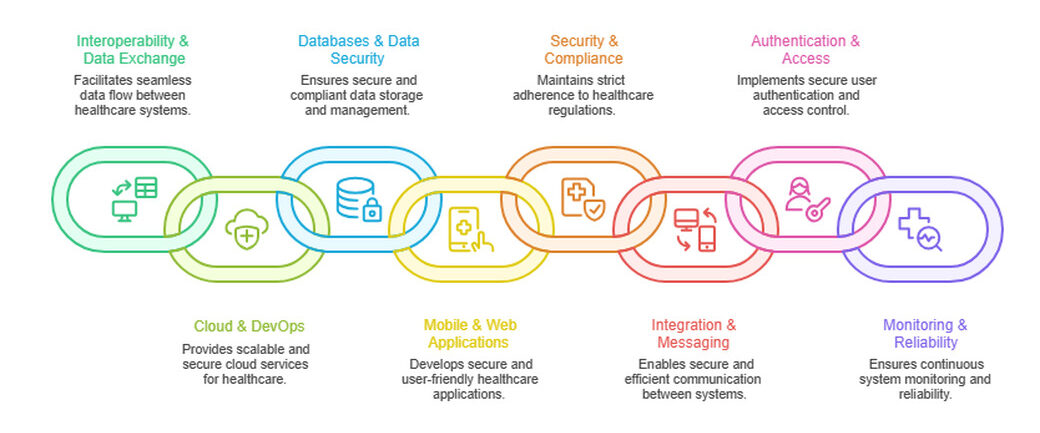
2. 5 Key criteria for choosing a HIPAA-compliant mental health app development company
2.1 Demonstrated HIPAA implementation experience
Many software companies mention HIPAA compliance, but implementation experience matters more than marketing claims. Look for experience with:
- Business Associate Agreements (BAA)
- Encryption at rest and in transit
- Audit logs
- Role-based access control
- Disaster recovery
- Secure authentication
2.2 Mental health domain knowledge
Developers familiar with behavioral healthcare understand workflows such as:
- Therapy scheduling
- Patient journaling
- Mood tracking
- Crisis support workflows
- Medication reminders
- Therapist documentation
Industry knowledge reduces project risk and shortens development time.
2.3 Healthcare interoperability
Modern mental health platforms often connect with external healthcare systems. Important standards include:
- FHIR
- HL7
- SMART on FHIR
- OAuth 2.0
- Electronic Health Records
2.4 Security certifications
Although certifications do not automatically guarantee HIPAA compliance, they demonstrate mature security processes. Common certifications include:
- ISO 27001
- SOC 2
- ISO 9001
2.5 Long-term engineering support
Mental health products continue evolving after launch. Evaluate whether the development partner provides:
- Maintenance
- Security updates
- Cloud optimization
- Performance monitoring
- Feature enhancements
- Dedicated engineering teams
3. Estimated cost of HIPAA-compliant mental health app development
Costs vary depending on functionality, compliance requirements, AI features, integrations, and development location. Major cost drivers include:
- HIPAA security implementation
- Video consultation
- AI-powered recommendations
- EHR integration
- Third-party healthcare APIs
- Compliance documentation
- Testing and validation
Offshore development teams can reduce engineering costs while maintaining quality when managed appropriately.
4. FaQ
1. Do mental health apps need to be HIPAA-compliant?
Not every mental health app falls under HIPAA. HIPAA generally applies when the application handles Protected Health Information (PHI) on behalf of covered entities or business associates in the United States. If your platform works with healthcare providers, insurers, or healthcare organizations, HIPAA compliance is typically required.
2 How much does HIPAA-compliant mental health app development cost?
A simple MVP generally costs between $20,000 and $50,000. More advanced platforms with teletherapy, AI features, EHR integration, and enterprise security commonly range from $60,000 to over $500,000, depending on complexity.
3 How long does it take to build a HIPAA-compliant mental health app?
A basic MVP typically requires four to six months. A production-ready platform with healthcare integrations, security validation, and compliance documentation often takes eight to twelve months or longer.
4 Can I hire a dedicated offshore development team?
Yes. Many healthcare organizations work with offshore software development teams to access experienced engineers while reducing development costs. Before selecting a partner, verify its healthcare experience, security practices, communication process, and compliance capabilities.
Selecting the right HIPAA-compliant mental health app development company requires more than comparing hourly rates. Evaluate each partner’s healthcare expertise, security practices, compliance experience, and successful mental health projects. Companies such as PowerGate Software, Arkenea, Orangesoft, Citrusbug, and Taction Software each offer different strengths depending on your product goals. If you are planning a secure mental health platform, consult with experienced healthcare software specialists early to define your compliance strategy, technical architecture, and development roadmap.