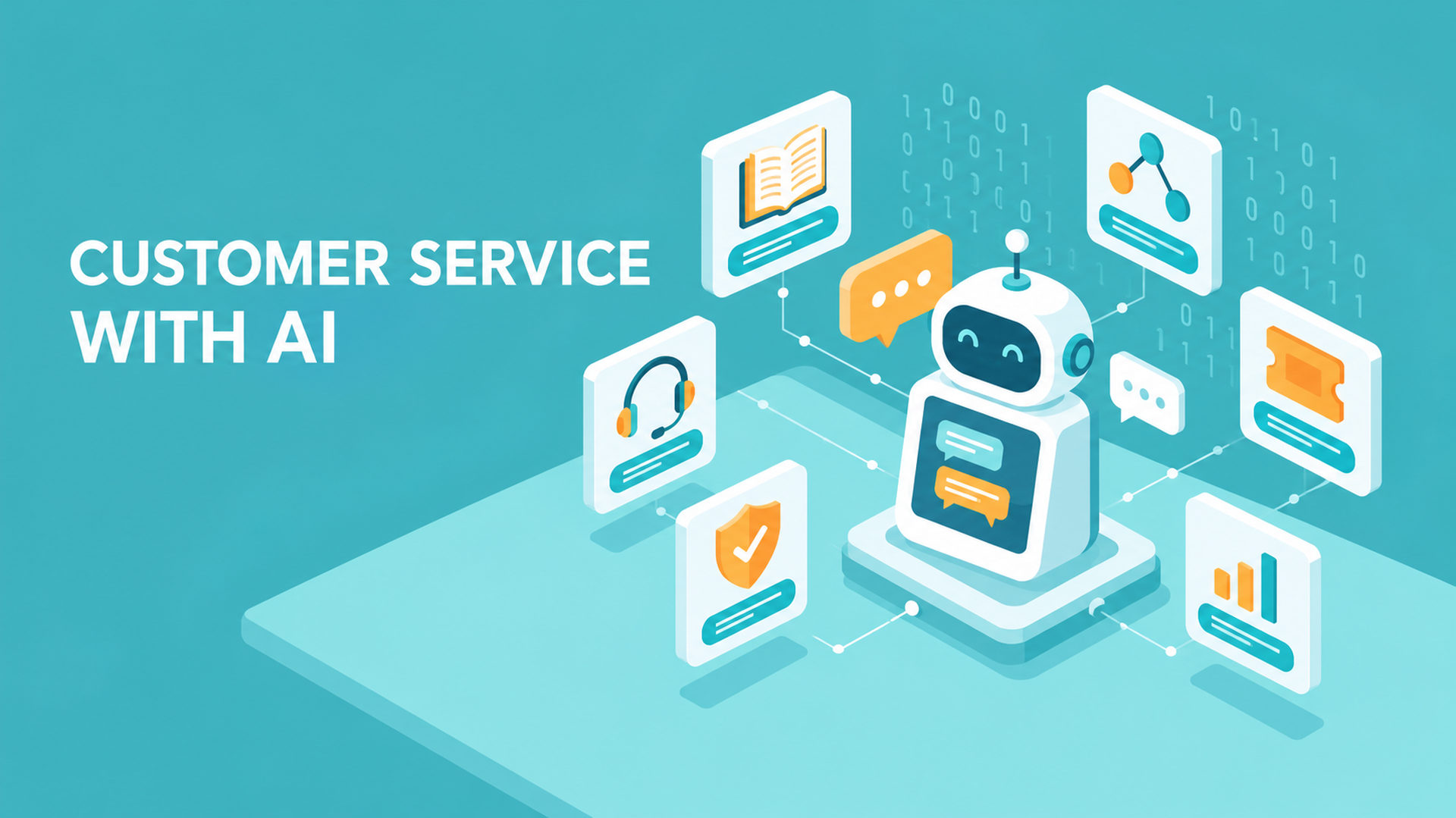

Software development companies experienced in deploying LLM-based customer service solutions help businesses build AI-powered support systems that understand customer queries, provide relevant answers, and handle routine requests. If you are looking to improve customer service with LLMs, here are five companies worth considering. This guide analyzes their capabilities and experience to help you find the right development partner.
1. What to check before analyzing companies for LLM-based customer service solutions
To find the right partner, this guide analyzes each company against three criteria drawn from public information. The aim is to match a company to your needs, not to rank them.
- Main services: The services the company offers, such as chatbot and agent development, RAG and fine-tuning, and integration with ticketing and CRM tools. This also shows whether it builds the product, extends your team, or maintains a running service.
- Experience deploying LLMs for customer service: Whether the assistant serves real users, not a demo or prototype. Look at the scope and timeline of the project, the results reported after launch, and how complex cases are handed to a human agent.
- Certifications: The security and quality certifications the company holds, such as ISO 27001 and 9001.
2. Five companies to evaluate for deploying LLM-based customer service solutions
The table compares the five companies by fit, public evidence, and certifications.
|
Company |
Best for |
Notable case studies |
Certifications |
|---|---|---|---|
|
EPAM Systems |
Large enterprises with phone and digital support |
1&1 case study with 20+ AI agents, 100K+ calls handled weekly |
ISO 27001, ISO 9001 and ISO/IEC 42001 |
|
PowerGate Software |
A team to build and maintain an LLM support assistant, including startups |
Phenikaa University advising assistant built on LLM and RAG |
ISO 27001:2022 and ISO 9001:2015 |
|
Cognizant |
Contact centre transformation with business process services |
Resort chatbot: Containment up from 25% to 60% |
ISO 27001 and ISO 22301 |
|
DreamzTech |
Custom LLM chatbots with a choice of models |
Customer service chatbot: 75% of inquiries handled autonomously |
ISO 27001 |
|
ApTask |
Adding LLM engineers to an existing team |
Not publicly disclosed |
Not verified |
Note: The information and statistics in this article were last verified on 30 October 2026, based on data from the official websites of the respective companies, vendor case studies and press releases, a UK government G-Cloud listing, and public business profiles such as Google Map, Clutch, Goodfirm etc. The order in which companies appear on this list does not reflect their ranking or capability and should not be interpreted as an endorsement of one company over another.
2.1 EPAM Systems
Founded in 1993, EPAM Systems is a global engineering company that builds enterprise software and AI platforms. Its best-documented customer service project is for 1&1, a German telecom provider.
Best for: Large enterprises that need agentic AI across phone and digital support.
Main services
- Generative AI and agentic AI engineering, including its AI/Run. Transform approach
- Platform and product development
- Cloud and API integration
- Customer service solutions on platforms such as Salesforce and ServiceNow
Experience deploying LLMs for customer service: 1&1’s AI voice agents went from concept to handling real customer calls in about six months, with the agents live by July 2025:
- 20+ AI agents deployed within six months
- 100K+ calls handled weekly
- 1&1 keeps ownership of its strategy layer, including prompt layering
Certifications: ISO 27001, ISO 9001 and ISO/IEC 42001
Web: https://www.epam.com/
2.2 PowerGate Software
PowerGate Software is a global software development company founded in 2011 and headquartered in Hanoi, Vietnam, with offices in the United States, Canada, the United Kingdom, and Australia. It builds products end-to-end, and clients can also hire dedicated engineers or have it maintain an existing product.
Best for: Companies that want a team to design, build, and maintain LLM-based customer service solutions, including startups building a first version.
Main services
- AI chatbot, AI agent and AI application development
- Help desk, CRM and ERP software development
- Web and mobile app development
- Software maintenance
Experience deploying LLMs for customer service
- Phenikaa University advising assistant: A chatbot built on an LLM and RAG, using LlamaIndex and a FastAPI backend. It answers student questions and gives recommendations based on academic records and preferences. PowerGate says it reduced advisors’ workload but publishes no figures.
- AI Tax Copilot for Australian tax professionals: An assistant built on a customized ChatGPT model, for which PowerGate delivered the front end, back end and API. It placed third in Australia’s inaugural AI Sprint.
Certifications: ISO 27001:2022 and ISO 9001:2015
Web: https://powergatesoftware.com/
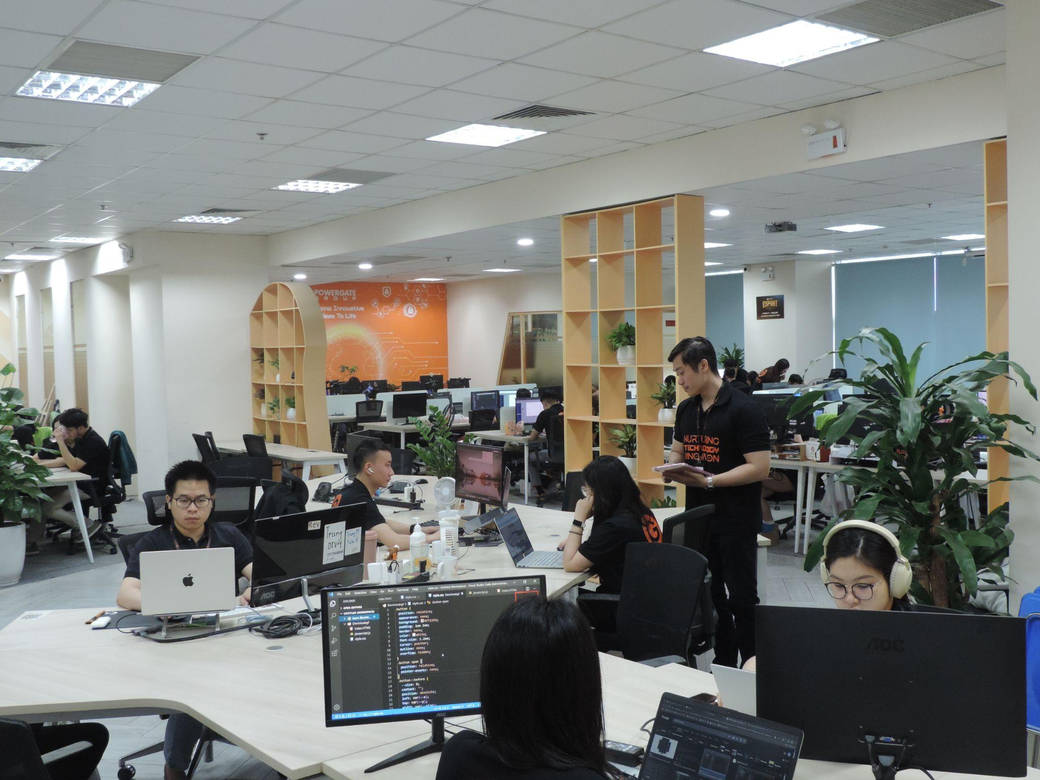
PowerGate Software is a global AI-powered software product studio based in Vietnam
2.3 Cognizant
Cognizant is a global IT services company. On 18 June 2025, Cognizant Autonomous Customer Engagement launched with Google Cloud. The product is an AI-led contact centre solution that follows an AI-first, human-assist approach across digital and voice channels.
Best for: Large enterprises that want contact centre transformation combined with business process services.
Main services
- Contact centre transformation
- Microsoft Dynamics 365 Contact Center implementation
- Autonomous Customer Engagement on Google Cloud
- Business process services
Experience deploying LLMs for customer service: Cognizant built an SMS chatbot on Copilot Studio and Azure OpenAI for an international resorts company, connected to housekeeping systems through APIs:
- Containment rose from 25% to 60%
- Housekeeping integration produced a 50% deflection rate
Certifications: ISO 27001 and ISO 22301
Web: https://www.cognizant.com/
2.4 DreamzTech
DreamzTech is a software development company headquartered in Tempe, Arizona, with an office in Las Vegas and development hubs in India, the United Kingdom, South Africa, and Bahrain. It reports 40+ LLM and chatbot projects, and its services include LLM fine-tuning (GPT, Llama, Mistral), GPT and Claude API integration, and RAG systems.
Best for: Businesses that want a custom LLM chatbot with a choice of models, including fine-tuning or RAG systems.
Main services
- Custom LLM development and fine-tuning
- AI chatbot development and GPT integration
- RAG systems and LLM infrastructure
- Custom software and SaaS development
Experience deploying LLMs for customer service: DreamzTech built a customer service chatbot for an enterprise client in 10 weeks on GPT-4 with RAG and a fine-tuned intent classification model, connected to Salesforce and Zendesk:
- 75% of inquiries handled autonomously across email, chat, and WhatsApp
- 91% intent recognition accuracy from the fine-tuned model
- 40% lower support costs in the first quarter
- Confidence-scored handoff to human agents with full conversation context
DreamzTech also built an internal IT support chatbot for a 5,000-employee enterprise in 14 weeks, working with ServiceNow, Slack, and Teams.
Certifications: ISO 27001
Web: https://www.dreamztech.com/
2.5 ApTask
ApTask is a workforce solutions company based in Iselin, New Jersey. Its core business is staffing and staff augmentation, and its public profiles also list IT consulting and managed services. It appears here as a staffing option, not as a delivery partner for a finished LLM support product.
Best for: Companies that already have an AI product plan and need to add LLM engineers.
Main services
- Staff augmentation and contingent workforce management
- Direct hire and recruitment
- IT and engineering consulting
- Managed services
Experience deploying LLMs for customer service: Not publicly disclosed. ApTask advertises roles for AI engineers with LLM and RAG experience on behalf of clients.
Certifications: Not verified
Web: https://www.aptask.com/
3. Frequently asked questions
3.1 Can a startup get an LLM customer service tool built, and what does the engagement look like?
Yes. The five companies cover three engagement models:
- Build from scratch: PowerGate Software and DreamzTech design and build the assistant with you. DreamzTech offers custom AI chatbot development for clients from startups to large brands, and PowerGate lists startups among its clients.
- Team extension: ApTask supplies engineers to an existing team rather than delivering a finished product. PowerGate Software also offers dedicated engineers.
- Enterprise programme: EPAM and Cognizant have published large-scale customer service AI case studies, so they are better suited to enterprises than to early-stage startups.
3.2 Should an LLM support agent use fine-tuning or RAG?
RAG is a practical starting point for customer service agents because it draws on up-to-date information, such as pricing, policies, and product documentation. Fine-tuning can help when responses need to follow a specific brand voice or format, and some projects use both approaches. Among the five companies, PowerGate Software uses RAG in its Phenikaa University advising assistant, while DreamzTech combines RAG with a fine-tuned intent classification model in its customer service chatbot.
3.3 What security, compliance and escalation controls should an LLM support tool have?
- Security: Check for encryption in transit and at rest, role-based access, and audit logs. Ask whether personal data is removed before it reaches the model and whether the contract prohibits using your data to train third-party models.
- Compliance: HIPAA is a legal requirement, not a certificate, so healthcare projects may need a signed Business Associate Agreement (BAA). EPAM, PowerGate Software, Cognizant, and DreamzTech all list ISO 27001, and EPAM has announced ISO/IEC 42001 for AI management. Request each certificate and its scope.
- Escalation: Ask to see the human handoff rules and confirm whether the full transcript passes to the agent. Cognizant describes an AI-first, human-assist model, while DreamzTech describes a confidence-scored handoff with full context. The EPAM and PowerGate pages reviewed do not detail their escalation design.
3.4 How long does it take to launch an AI support agent, and how is success measured?
Published timelines are scarce. EPAM’s 1&1 programme went from concept to live voice agents in about six months, by July 2025. DreamzTech reports timelines of 10 weeks for a customer service chatbot and 14 weeks for an internal IT chatbot. The other pages reviewed do not provide standard launch timelines, so ask for an estimate after defining the project scope.
Agree on the measures before development starts: The share of conversations resolved without human intervention, first-contact resolution, customer satisfaction, escalation rate, answer accuracy based on sampled reviews, and cost per resolved case. Compare these measures with your pre-launch baseline at 30, 60, and 90 days.
Each company experienced in deploying LLM-based customer service solutions mentioned above serves a different need. Before shortlisting, ask each provider for a deployed reference, certificate scope and post-launch metrics to assess its fit for your LLM-based customer service solutions.