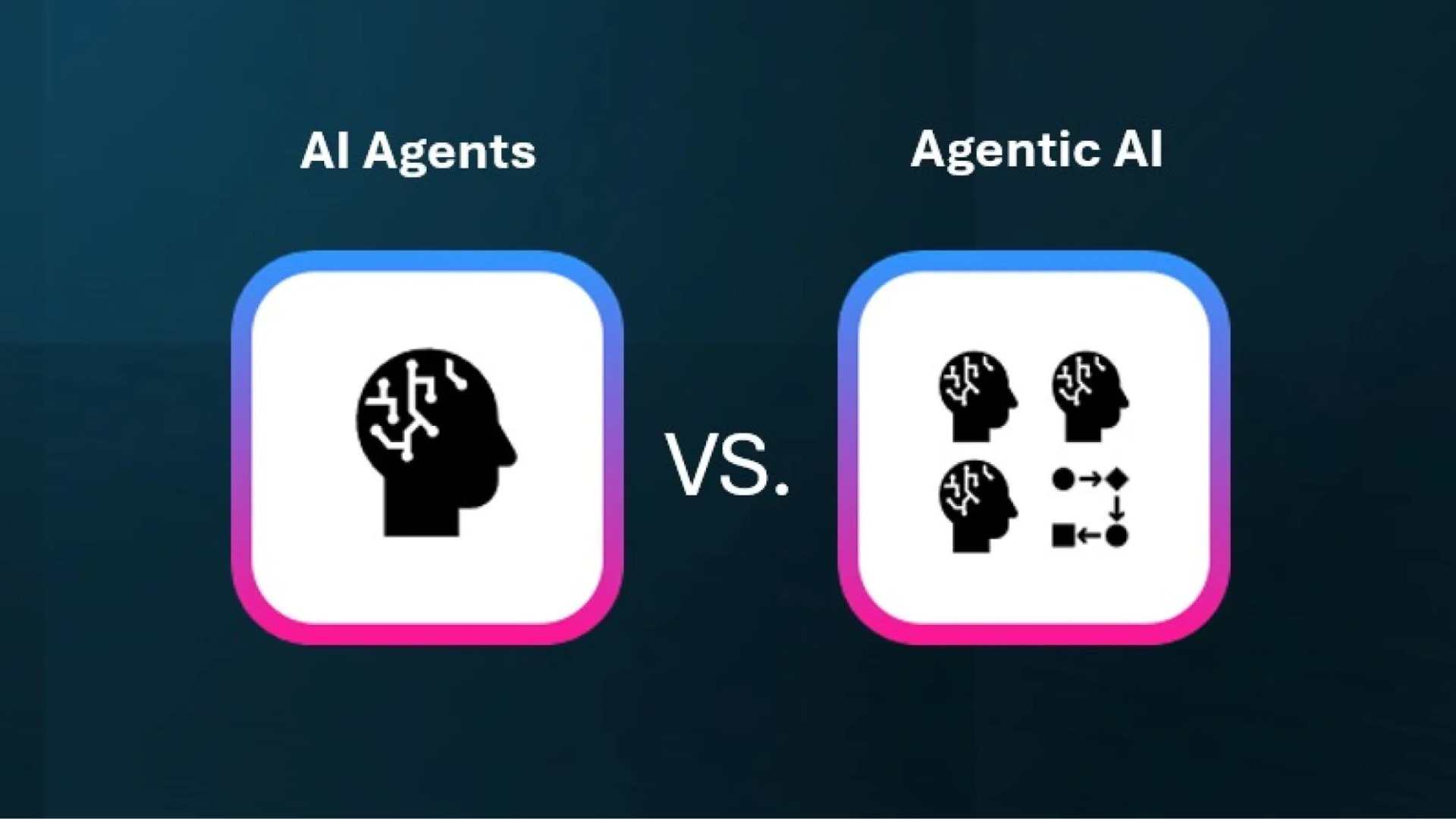

When comparing MedusaJS vs Vendure, many businesses focus only on features and overlook the bigger question: which framework actually fits their commerce model and long-term growth plans. Both platforms are strong choices for modern headless commerce development, but they are built with different priorities in mind. In this article, we will compare MedusaJS and Vendure from a technical and practical perspective, while also sharing real implementation insights from ecommerce and marketplace projects delivered by our team.
| Criteria | MedusaJS | Vendure |
|---|---|---|
| Architecture style | Modular and flexible | Structured and opinionated |
| API approach | REST-first | GraphQL-first |
| Best use cases | Custom commerce platforms, fast-moving product teams | Complex commerce systems, B2B, and multi-channel operations |
| Engineering focus | Fast iteration and flexibility | Structure and maintainability |
| Multi-store support | Good | Strong |
| Customization | Very flexible | Flexible with more structure |
| Learning curve | Moderate | Moderate to high |
| Best fit for | Product-focused teams | Large engineering teams |
1. A detailed comparison between MedusaJS and Vendure
1.1. Architecture style
MedusaJS focuses on flexibility: MedusaJS is designed for teams that want to build custom commerce experiences without being restricted by predefined workflows. Its modular architecture allows developers to replace or extend core commerce logic relatively easily. This makes MedusaJS attractive for projects such as subscription commerce, fashion ecommerce, custom checkout flows, marketplace platforms, and rapidly evolving digital products.
The framework also integrates well with third-party services and modern frontend frameworks. For startups or product teams that need to move quickly, this flexibility can help teams iterate faster during early product development.
However, that flexibility also comes with trade-offs. If customization is not managed carefully, projects can become difficult to maintain as the codebase grows.
Vendure focuses on structure and scalability: Vendure takes a more structured approach. Built on top of NestJS and GraphQL, it provides a clearer architecture for teams managing larger or more complex commerce systems. Vendure is particularly well-suited for multi-vendor marketplaces, B2B commerce, multi-channel operations, and systems that require centralized inventory or role-based access control.
| PowerGate Software’s insight: Compared to MedusaJS, Vendure may require more upfront planning. But for organizations dealing with long-term scalability and operational consistency, that structure can become an advantage rather than a limitation. |
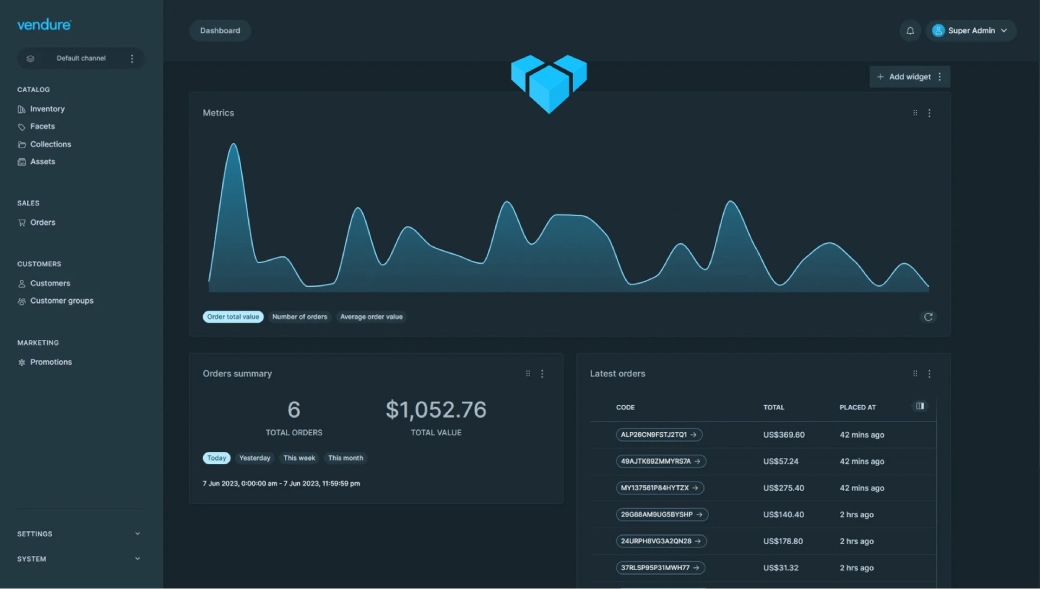
Vendure focuses on structure and scalability – Source: funkyton.com
1.2. API approach
One of the biggest technical differences between MedusaJS and Vendure is the API layer.
MedusaJS is REST-first: This usually makes onboarding easier for developers and simplifies integrations with external systems. REST APIs are also easier to debug for smaller engineering teams.
Vendure is GraphQL-first: This approach gives frontend teams more flexibility when querying data and helps reduce over-fetching. For larger ecommerce systems with multiple channels and interfaces, GraphQL can improve maintainability and frontend performance.
| PowerGate Software’s insight: Still, GraphQL introduces additional complexity. Teams need stronger API governance and a better understanding of schema design. In practice, the choice often comes down to team maturity rather than technology preference alone. |
1.3. Customization and maintainability
Both frameworks support customization, but they approach it differently.
MedusaJS favors workflow flexibility: MedusaJS encourages developers to modify workflows freely. Its modular structure works well for businesses with unique commerce requirements that do not fit standard ecommerce patterns.
Vendure prioritizes structured extensibility: Vendure relies more on plugins and structured extensions. While this may feel less flexible at first, it often leads to cleaner long-term architecture.
| PowerGate Software’s insight: At PowerGate Software, we have seen projects struggle not because the technology was weak, but because the architecture did not match the team’s ability to maintain it over time. |
2. When to choose MedusaJS vs Vendure?
Choosing between MedusaJS and Vendure is less about selecting the “better” framework and more about understanding which architecture fits your business model, operational complexity, and engineering workflow. While both platforms support modern headless commerce development, they are designed for different types of products and teams.
2.1. When Vendure is the better choice
Vendure is often a strong fit for businesses that operate complex commerce systems or expect operational complexity to grow over time. This is especially true for:
- Multi-vendor marketplaces
- B2B commerce platforms
- Multi-channel commerce operations
- Systems requiring centralized inventory and order management
- Organizations with multiple engineering teams
PowerGate Software’s case study: At PowerGate Software, we worked on a large-scale farmland marketplace platform in the United States using Vendure. The project aimed to solve a long-standing issue in the agricultural real estate market, where buyers and sellers had limited access to reliable and up-to-date land sale data.
The platform allowed growers and landowners to search farmland listings, access market insights, review land values, and manage transactions more efficiently.
From a technical perspective, Vendure helped support:
- Multi-vendor operations
- Complex product data management
- Customer management workflows
- Scalable order handling
- API-driven integrations
As the platform expanded, Vendure’s structured approach helped maintain consistency across the system while supporting future growth. The project later raised a $3 million seed round and was eventually acquired by one of America’s fastest-growing private companies.
In our experience, Vendure becomes particularly valuable when operational consistency and governance matter as much as development speed.
>>> More details about the case study: Innovative marketplace for farmland in the US

PowerGate Software’s innovative marketplace for farmland in the US
2.2. When MedusaJS is the better choice
MedusaJS is often a better fit for businesses that prioritize flexibility, rapid iteration, and highly customized commerce experiences. It works especially well for:
- Fast-moving ecommerce brands
- Fashion and lifestyle ecommerce
- Startups building custom commerce logic
- Businesses with evolving workflows
- Teams that need faster experimentation
PowerGate Software’s case study: PowerGate Software used MedusaJS 2.0 in a project for a Southeast Asian fashion brand that wanted to replace its outdated ecommerce platform with a more modern and scalable solution. The client needed better storefront flexibility, smoother third-party integrations, stronger scalability, and improved performance during seasonal campaigns.
The project was completed in four months, including one month for design and three months for development and release. Because MedusaJS supports modular commerce logic and flexible integrations, our team was able to build a system that remained easy to extend while supporting future enhancements. After launch, the platform achieved:
- An 18% increase in online revenue
- A 30% increase in holiday-season page visits
>> More details about the case study: Chic female fashion site for the Southeast Asia market

PowerGate Software’s chic female fashion site with Medusa.js ecommerce framework
| PowerGate Software’s insight: In practice, the decision between MedusaJS and Vendure often comes down to how a business expects its commerce operations to evolve. Some teams prioritize speed and experimentation early on, while others need stronger structure and governance from the beginning. Understanding those priorities is usually more important than comparing features alone. |
Choosing a commerce framework is rarely just a technical decision. It affects development speed, scalability, operational workflows, and long-term maintenance. MedusaJS and Vendure each solve different problems well. MedusaJS offers flexibility and fast customization, while Vendure provides a stronger structure for larger and more complex commerce environments. At PowerGate Software, we have worked with businesses across ecommerce, marketplaces, and custom digital platforms. Our experience has shown that successful commerce systems are not built by following trends alone. They are built by selecting technologies that fit both the product vision and the operational reality behind it.