
Several software engineering agencies have experience combining AI development with SaaS product engineering, including ScienceSoft, Netguru, PowerGate Software, InData Labs, and Simform. These providers differ in their strengths, from enterprise software and regulated industries to AI-first products, cloud-native SaaS, and rapid product scaling. For companies evaluating an external engineering partner, the key is to look beyond general AI capabilities and verify experience building secure, scalable SaaS products in production.
Note: The information and statistics in this article were last verified on August 13, 2026. Company information, figures, certifications, and service capabilities may change over time. Businesses should verify current information directly with each provider before making a vendor decision.
1. Why choosing the right AI-driven SaaS engineering agency matters
AI-driven SaaS products require more than connecting an application to an LLM API. They need a reliable SaaS architecture, secure customer-data isolation, scalable cloud infrastructure, AI model integration, and engineering processes that can support the product after launch.
A suitable software engineering partner should therefore demonstrate experience across both SaaS product development and AI engineering. Relevant capabilities may include multi-tenant architecture, LLM integration, RAG pipelines, AI agents, vector databases, subscription billing, cloud-native deployment, CI/CD, automated testing, and AI model evaluation.
The right partner can help reduce technical risk, accelerate product development, and establish an architecture that can support increasing customers, data volumes, and AI workloads.
2. Top 5 agencies with experience in AI-driven SaaS product engineering
2.1 ScienceSoft
Short introduction: ScienceSoft has decades of experience delivering enterprise software and digital transformation initiatives, with expertise across AI, cloud, cybersecurity, healthcare, finance, and other regulated industries.
Best for: Enterprise AI SaaS, complex integrations, and regulated industries.
Why it stands out: ScienceSoft has been in business since 1989 and reports more than 4,300 completed projects and a team of 750+ IT professionals. Its certifications include ISO 9001, ISO/IEC 27001, ISO/IEC 27701, and ISO 13485.
Its AI capabilities include machine learning, Generative AI, LLM applications, RAG, vector databases, and AI agents. ScienceSoft has also documented AI solutions for investment analysis, insurance claims, and healthcare.
On the SaaS side, the company has experience developing multi-tenant applications and enterprise platforms with different user roles, data controls, cloud infrastructure, and AI model monitoring.
Website: www.scnsoft.com

2.2 Netguru
Short introduction: Netguru is a digital consultancy that combines product strategy, UX, software engineering, cloud development, data engineering, and artificial intelligence.
Best for: AI SaaS products that combine product strategy, UX, and engineering.
Why it stands out: Netguru has more than 18 years of experience, a team of 400+ people, and more than 2,500 completed projects. Its AI capabilities include LLM applications, RAG systems, multi-agent architectures, AI integrations, fine-tuning, and MLOps.
The company works with major cloud platforms including AWS, Azure, and Google Cloud. Its SaaS engineering practice supports both multi-tenant and single-tenant architectures and includes experience developing AI-enabled platforms.
This combination of product design, UX, AI, and software engineering makes Netguru relevant for companies building customer-facing SaaS products where user experience is an important part of product differentiation.
Website: www.netguru.com
2.3 PowerGate Software
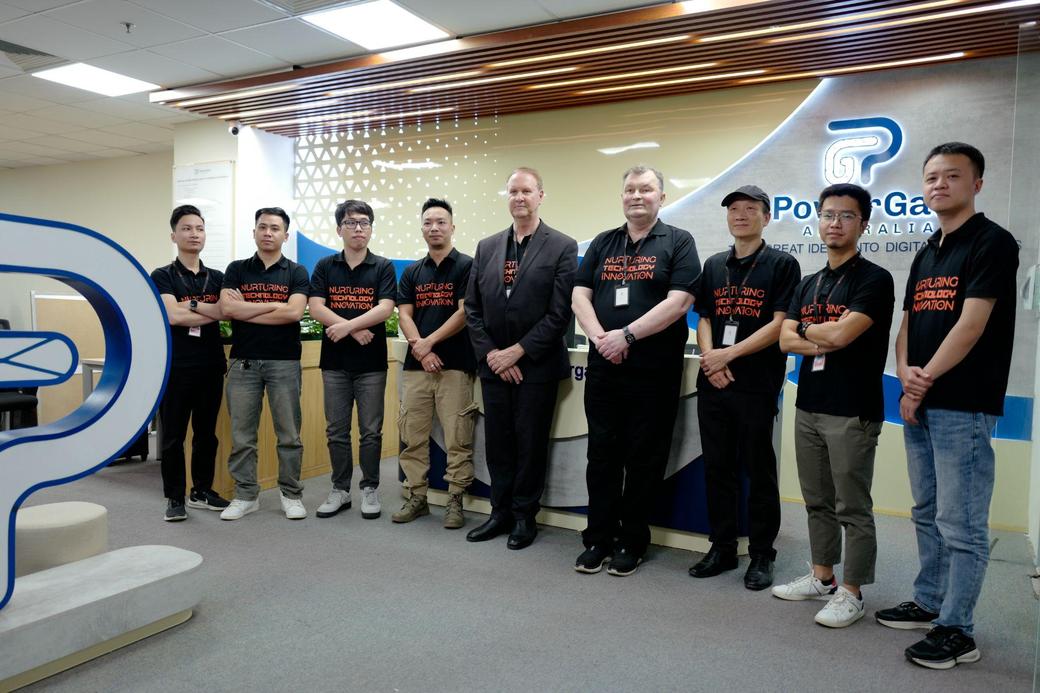
Short introduction: PowerGate Software is an AI-powered software product engineering company serving startups, scale-ups, and enterprises with SaaS development, AI integration, cloud engineering, and end-to-end product development.
Best for: Startups and scale-ups building AI-enabled SaaS products with flexible engineering teams.
Why it stands out: PowerGate Software was founded in 2011 and reports 15 years of experience, 250+ technology specialists, 200+ completed projects, and 180 global clients. The company holds ISO 9001 and ISO 27001 certifications.
PowerGate has experience across AI, SaaS, cloud development, and product engineering. Its AI portfolio includes AI-powered recommendation systems, AI/ML solutions, intelligent automation, and AI-powered testing.
Its SaaS capabilities include multi-tenant architecture, cloud deployment, API development, and SaaS re-engineering. The company can support product development across different stages, from initial development to ongoing product growth.
For companies specifically seeking advanced LLM, RAG, or autonomous-agent experience, these capabilities should be validated during technical due diligence rather than assumed from broader AI experience.
Website: https://powergatesoftware.com/
2.4 InData Labs
Short introduction: InData Labs specializes in AI and data engineering, supporting companies developing data-intensive software, AI applications, and SaaS products.
Best for: AI-first SaaS products where data, machine learning, and LLMs are central to the product.
Why it stands out: Founded in 2014, InData Labs reports more than 11 years of experience in AI and data science, 150+ delivered projects, and a team of 80+ engineers. The company is also an AWS Partner and works across SaaS, healthcare, fintech, retail, and logistics.
Its AI engineering capabilities include Generative AI, LLM applications, RAG, AI agents, predictive analytics, machine learning, data engineering, and MLOps.
InData Labs also addresses SaaS-specific data challenges, including secure multi-tenancy, data isolation, scalable data pipelines, and continuous model improvement. This makes the company particularly relevant when AI and data are core components of the SaaS product rather than additional features.
Website: www.indatalabs.com
2.5 eSparkBiz
Short Introduction: eSparkBiz works with businesses on AI-powered solutions and product engineering, with capabilities spanning SaaS development, cloud engineering, and AI/ML integration.
Best for: AI-enabled SaaS products requiring multi-tenant architecture, scalable infrastructure, and intelligent technology integration.
Why it stands out: eSparkBiz has more than 15 years of experience, with 400+ engineers and 1,000+ delivered projects. Its capabilities span SaaS platforms, cloud technologies, and digital product development. Its AI practice includes AI/ML engineering and intelligent automation. For SaaS, the company handles subscription and billing systems, API integrations, CI/CD, and production operations. eSparkBiz covers the delivery process from technical architecture and implementation to deployment and ongoing operations, working through a single delivery team.
Website: www.esparkinfo.com
2.6 Simform
Short introduction: Simform provides software engineering services across AI, cloud, SaaS development, application modernization, and enterprise technology.
Best for: Enterprise SaaS products requiring AI, cloud modernization, and scalable engineering.
Why it stands out: Simform has more than 15 years of experience and reports more than 500 completed projects. Its AI practice includes Generative AI, LLM integration, RAG, AI agents, data engineering, and MLOps.
Its SaaS engineering capabilities include multi-tenant architecture, subscription management, billing systems, and cloud-native development. Simform also has experience with enterprise cloud modernization, making it relevant for companies extending existing SaaS platforms with AI capabilities.
Website: www.simform.com
You may need: Top-rated firms that specialize in building custom AI agents for enterprise automation
3. Key factors when selecting an AI-driven SaaS engineering agency
Not every software development company with AI capabilities has the engineering experience required to build and operate a production SaaS platform. Businesses should evaluate several factors before selecting a partner.
- SaaS architecture: Look for experience with multi-tenant SaaS architecture, tenant-level data isolation, subscription billing, usage-based pricing, API integrations, and scalable cloud infrastructure.
- AI and LLM engineering: Verify experience with LLM integration, RAG pipelines, vector databases, AI agents, predictive analytics, and AI model evaluation.
- AI technology stack: Ask about practical experience with OpenAI, Azure/Azure OpenAI, AWS, Amazon Bedrock, and other relevant AI platforms.
- Security and customer-data isolation: Evaluate how the agency protects customer information across application databases, vector databases, APIs, AI models, and cloud infrastructure.
- Cloud and DevOps: Production SaaS products require cloud-native deployment, Kubernetes where appropriate, CI/CD, automated testing, monitoring, logging, and infrastructure automation.
- Compliance and security standards: For enterprise products, review certifications and processes such as ISO 27001, SOC 2, GDPR readiness, penetration testing, encryption, access controls, and audit logging.
- Long-term support: Confirm whether the engineering partner can provide maintenance, AI model monitoring, performance optimization, security updates, and feature development after launch.
4. Frequently asked questions
4.1 How do offshore and local agencies compare on cost and security?
Offshore software agencies generally provide lower engineering costs and access to broader technical talent. Local agencies can offer easier communication and closer timezone alignment.
Security should not be evaluated based on location alone. ISO 27001, SOC 2, GDPR readiness, secure SDLC practices, encryption, access controls, and audit logging are more meaningful indicators of security maturity.
4.2 What should I look for in an AI-driven SaaS engineering partner?
Look for proven experience with multi-tenant SaaS architecture, LLM and AI-agent integration, RAG pipelines with vector databases, customer-data isolation, subscription billing, Kubernetes or cloud-native deployment, CI/CD, automated testing, and AI model evaluation.
The agency should also be able to demonstrate practical experience with platforms such as OpenAI, Azure, and AWS.
4.3 How much does AI-driven SaaS product engineering cost?
Costs vary based on product complexity, AI functionality, integrations, security requirements, infrastructure, and team size. A focused AI SaaS MVP may cost tens of thousands of dollars, while a production-grade platform can require several hundred thousand dollars.
Enterprise platforms with advanced AI, compliance, integrations, and large-scale infrastructure can require substantially more investment. A detailed estimate should therefore be based on architecture, features, AI complexity, and delivery phases rather than hourly rates alone.
4.4 How should startups and enterprises choose an AI SaaS agency?
Startups should prioritize product-building speed, technical flexibility, and cost efficiency. They generally need an agency that can move from product concept to MVP and scale the engineering team as traction increases.
Enterprises should place greater weight on security, compliance, architecture, integration capabilities, scalability, and operational maturity. Before selecting a partner, ask:
- Can you show a production AI SaaS product you built?
- How have you implemented multi-tenancy and customer-data isolation?
- What OpenAI, Azure, or AWS AI projects have you delivered?
- How do you design and evaluate RAG systems?
- How do you monitor AI accuracy and hallucination risk?
- What support do you provide after the initial product launch?
If you are looking for agencies with experience in AI-driven SaaS product engineering, ScienceSoft, Netguru, PowerGate Software, InData Labs, and Simform are five providers worth evaluating. Each offers a different combination of AI engineering, SaaS development, cloud expertise, and product delivery capabilities. The right choice depends on your product stage, technical complexity, security requirements, and AI roadmap. Before selecting a partner, verify its production AI experience, SaaS architecture capabilities, security standards, and ability to support the product as it scales.