
AI is changing every stage of software development, and the design phase is no exception. While much of the conversation focuses on AI-assisted coding, design teams are also finding practical ways to use AI to improve productivity, reduce repetitive work, and make better decisions. Instead of replacing designers, AI is helping them move from ideas to validated designs more efficiently. As a result, software development teams can shorten delivery timelines while maintaining a strong focus on user experience.
1. Why the design phase has become a bottleneck in software development
Every successful software product starts with good design. Before developers write code, designers define user flows, create wireframes, build interfaces, and work closely with business analysts and stakeholders to shape the product experience. However, this phase often takes longer than expected.
Requirements evolve throughout the project. Clients request multiple revisions as new ideas emerge. Designers spend considerable time creating multiple versions of the same screen, maintaining consistency across dozens or even hundreds of interfaces, and preparing detailed documentation for developers. These activities are necessary, but many of them are repetitive rather than creative.
In addition, modern software products have become more complex. A healthcare platform, for example, may include patient portals, doctor dashboards, appointment scheduling, billing, reporting, and mobile applications. Every feature must follow the same design language while supporting different user journeys. Maintaining this level of consistency manually is increasingly difficult.
This is where AI brings meaningful value. Rather than replacing creative thinking, AI reduces the workload associated with repetitive production tasks, allowing designers to spend more time solving user problems and improving product experiences.
Read more: Designing for speed: How to optimize UX/UI for retention
Source: freelancervietnam.vn
2. How AI transforms the design phase of software development
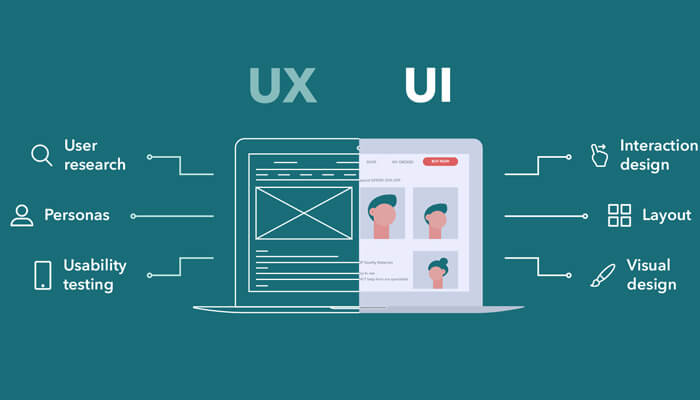
2.1. Accelerating UI and UX concept creation
Creating the first version of a design is often one of the most time-consuming parts of a project. Designers usually begin with rough ideas, discuss them with stakeholders, revise the layouts, and repeat the process several times before reaching a direction that everyone agrees on. AI can significantly shorten this cycle.
By using natural language prompts or existing product requirements, AI tools can generate wireframes, interface layouts, navigation structures, and alternative design concepts within minutes. These outputs are rarely ready for production, but they provide a valuable starting point for designers to explore multiple ideas without beginning from a blank canvas.
This faster exploration is particularly useful during product discovery, when teams need to evaluate different approaches before committing to a single solution. The result is not simply faster design work. It also encourages broader exploration, helping teams compare more options before making important product decisions.
2.2. Turning user feedback into actionable design insights
Understanding users is one of the most valuable responsibilities of a design team. Yet collecting insights is only part of the process. Designers must also review interview notes, analyze customer feedback, organize survey responses, and identify recurring usability issues. This work can quickly become overwhelming, especially for products with thousands of users.
AI helps by processing large volumes of qualitative data much faster than humans. It can summarize user interviews, group similar comments together, identify common pain points, and highlight patterns that might otherwise be overlooked.
AI does not replace user research or product thinking. Designers still need to interpret findings and understand the context behind user behavior. However, AI reduces the time required to organize information, allowing teams to focus on solving problems rather than sorting through data.
2.3. Maintaining consistency across large design systems
As software products grow, maintaining visual consistency becomes increasingly challenging. AI is becoming an effective assistant for design system management. Modern design tools can detect inconsistent components, suggest improvements, identify duplicate styles, and recommend reusable patterns based on existing design libraries.
Instead of manually reviewing every screen before development begins, designers can use AI to identify potential issues early in the design process. This helps teams maintain higher design quality while reducing the effort required for quality assurance. For organizations building multiple products, consistent design systems also improve collaboration between designers and developers, making future projects easier to scale.
2.4. Automating repetitive design tasks
Not every design task requires creativity. Many daily activities involve generating icons, creating placeholder content, resizing assets, organizing design files, preparing mock data, or producing multiple variations of similar screens. Although these tasks are important, they often consume valuable time that could be spent improving user experiences. AI can automate much of this production work.
Designers can generate illustrations, create reusable assets, populate realistic sample data, remove image backgrounds, or resize graphics for different devices within seconds. Some AI tools can even generate multiple visual variations while following predefined design guidelines.
Automation does not reduce the importance of designers. Instead, it shifts their focus toward higher-value activities such as interaction design, usability improvements, accessibility, and collaboration with product teams.
2.5. Improving collaboration between designers and developers
Design quality depends not only on creative work but also on effective communication. Even well-designed interfaces can lead to implementation issues if developers do not fully understand interaction details, component behaviors, or design decisions. AI is helping reduce this communication gap.
Many AI-powered tools can generate design documentation, explain interaction logic, summarize design updates, and assist with developer handoff. Instead of manually writing repetitive documentation, designers can create detailed specifications more efficiently while keeping information consistent across the project.
AI can also answer implementation-related questions by referencing existing design files and design systems, making collaboration smoother throughout development. This benefits the entire software team. Developers spend less time requesting clarification, designers receive fewer repetitive questions, and projects move forward with fewer misunderstandings.
>>> Read more: How AI is helping software developers work smarter, not harder
3. What AI still cannot replace in a design phase
Despite its rapid progress, AI should not be viewed as a replacement for professional designers.
AI is excellent at generating options, recognizing patterns, and automating repetitive work. However, it does not fully understand business strategy, customer expectations, or the broader context behind product decisions.
For example, AI cannot independently decide which feature should be prioritized to increase customer retention, how to balance usability with regulatory requirements, or when a simpler interface is better than a visually impressive one. These decisions require experience, collaboration, and an understanding of both users and business goals.
Empathy also remains a uniquely human strength. Great user experiences come from understanding how people think, what frustrates them, and what motivates them. While AI can analyze user behavior, it cannot replace conversations with customers or the judgment that experienced designers develop over years of practice.
The most successful design teams are therefore unlikely to become fully automated. Instead, they will combine human creativity with AI-powered efficiency, allowing each to contribute where it performs best.
4. How PowerGate applies AI throughout the design process
At PowerGate Software, AI is integrated into the design workflow as part of our broader vision of becoming an AI-Powered Software Product Studio. Rather than treating AI as a standalone tool, we use it to improve efficiency across the entire software development lifecycle, including product discovery, design, engineering, testing, and project delivery.
For our design team, AI supports several key activities throughout a project:
- AI-assisted design ideation: During the early stages of product design, AI helps generate initial UI and UX concepts, allowing designers to explore multiple interface directions before refining the final experience. This speeds up stakeholder discussions and helps teams validate ideas earlier.
- Design system consistency: As products grow, AI helps identify visual inconsistencies across design systems, including components, typography, spacing, and layouts. This allows designers to maintain a more consistent user experience while reducing manual review effort.
- Design automation: AI automates repetitive production tasks such as generating reusable design assets, supporting content creation, and preparing design materials for development. Designers can spend less time on production work and more time improving usability and user journeys.
- Better cross-functional collaboration: AI supports smoother collaboration between designers, business analysts, developers, and QA engineers by improving documentation, clarifying design decisions, and enabling faster feedback throughout the project.
At PowerGate Software, we see AI as a productivity multiplier rather than a replacement for human creativity. Designers continue to lead product thinking, validate user needs, and make strategic design decisions, while AI helps them work faster and focus on higher-value activities.
AI is transforming the design phase of software development by reducing repetitive work, improving collaboration, and helping teams make better design decisions more quickly. While technology continues to evolve, successful products will still depend on experienced designers who understand users, business objectives, and product strategy. Companies that combine human creativity with AI-powered workflows will be better positioned to deliver high-quality software efficiently.
At PowerGate Software, this philosophy is central to how we build digital products and why AI remains an essential part of our software development process. Read more about how PowerGate Software utilizes AI in software development.