A staggering percentage of software initiatives falter well before the inaugural line of code is ever committed, primarily due to conceptual misalignment. The root cause is rarely poor engineering. More often, it is a lack of shared understanding between business goals, user needs, and technical constraints. This gap is exactly what the discovery phase in software development is designed to close.
This article explains what the discovery phase in software development is, when it is needed, what activities and deliverables it includes, and why skipping or rushing it often leads to expensive rework later.
1. What is the discovery phase in software development?
The discovery phase is the early stage of a software project where teams focus on understanding the problem before designing or building a solution. Instead of jumping straight into features and technology, discovery clarifies business objectives, user expectations, technical feasibility, and project scope.
In practical terms, the discovery phase answers three fundamental questions. What problem are we trying to solve? Who are we solving it for? What is the most realistic and valuable way to solve it with the resources available? Most discovery phases last between two and six weeks. The exact duration depends on several factors: Project complexity, number of stakeholders involved, Industry regulations and compliance requirements
A discovery phase is especially valuable in the following scenarios:
- Startups building an MVP with limited time and budget
- Enterprises modernizing or replacing legacy systems
- SaaS platforms involving multiple departments or user groups
- AI, FinTech, or healthcare projects with high compliance and data sensitivity
- Any project where requirements are unclear or stakeholders are not aligned
If you are unsure whether your project needs discovery, that uncertainty itself is a strong signal that it does.
2. Why the discovery phase matters in software development projects
There are five key reasons why the discovery phase matters.
- Prevent scope creep and feature bloat: By defining priorities early, teams can focus on what truly delivers value instead of reacting to ad hoc requests during development.
- Reduces the risk of building the wrong solution: User research and stakeholder interviews surface real needs rather than assumptions made in meeting rooms.
- Saves money over the long term: While it adds upfront cost, it significantly reduces rework, change requests, and post-launch fixes.
- Aligns business goals, technical decisions, and user expectations: This alignment makes trade-offs easier when constraints arise.
- Improves estimation accuracy: Timelines and budgets based on validated requirements are far more reliable than those based on high-level ideas.
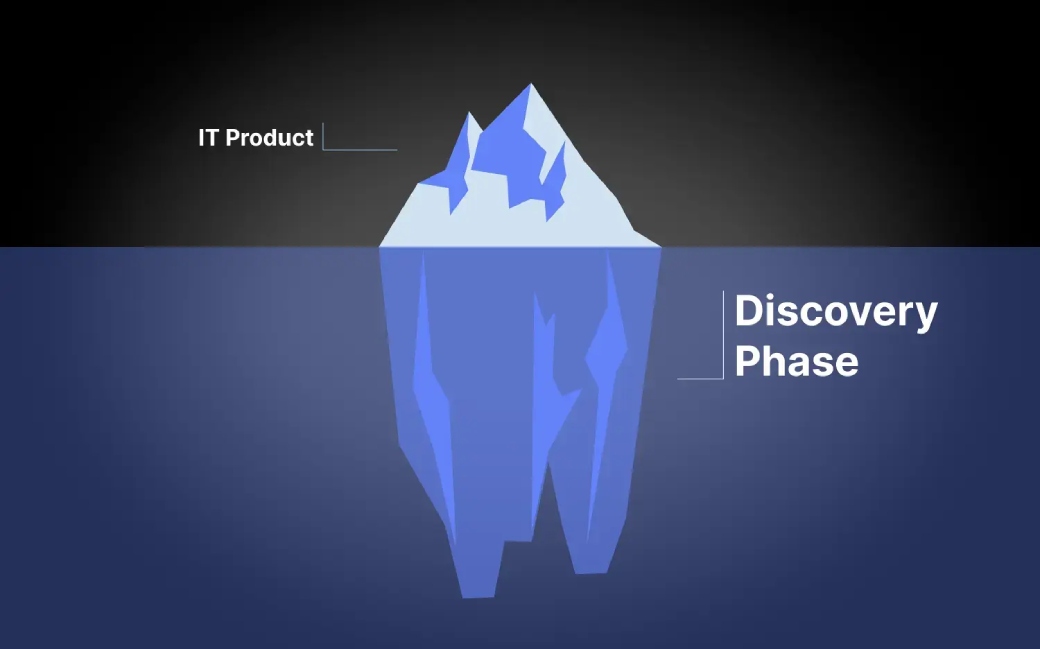
A common pattern emerges when comparing projects with and without discovery. Teams that skip discovery often move faster at the start but slow down once problems appear. Teams that invest in discovery tend to progress more steadily and deliver more predictable outcomes.
Source: jointoit.com
3. Key activities in the discovery phase of software development
The discovery phase is not a single workshop or document. It is a structured set of activities designed to build shared understanding across disciplines.
3.1. Stakeholder interviews and requirement analysis
Discovery usually starts with conversations. Stakeholder interviews help teams understand business objectives, operational constraints, and success metrics.
Typical discussion points include business goals, key pain points, and how success will be measured after launch. These conversations often reveal conflicting priorities that need to be resolved early.
3.2 User research and UX discovery
User research grounds the project in reality. Teams define user personas, map user journeys, and identify friction points in existing workflows.
This step often exposes gaps between what stakeholders believe users want and what users actually need. Addressing these gaps early prevents costly redesigns later.
3.3. Technical discovery and feasibility assessment
Technical discovery evaluates how the product can be built within existing constraints. This includes reviewing system architecture, exploring technology options, and assessing integration with legacy systems.
For regulated industries, security and compliance requirements are also assessed at this stage. Ignoring these factors until development often results in significant delays.
3.4. Scope definition and MVP planning
The final part of the discovery focuses on defining what will and will not be built. Teams agree on scope boundaries, prioritize features, and determine what belongs in the MVP versus later phases.
This clarity makes it easier to protect the project from uncontrolled expansion once development begins.
4. Deliverables of a software discovery phase
A well-executed discovery phase produces tangible outputs that guide the rest of the project. Common deliverables include:
- A clear product vision and high-level roadmap
- Functional and non-functional requirements
- UX wireframes or interactive prototypes
- A proposed technical architecture
- Project estimation covering timeline, budget, and resources
- Risk assessment and mitigation strategies
These deliverables serve as a shared reference point for all stakeholders throughout development.
5. 5 common mistakes in the discovery phase and how to avoid them
Even experienced teams can undermine discovery if it is treated as a checkbox exercise.
- One common mistake is skipping user research entirely. Relying solely on internal opinions increases the risk of building features that users do not value.
- Another mistake is focusing on technology too early. Choosing a tech stack before understanding the problem often leads to over-engineered solutions.
- Overloading discovery with unnecessary detail is also risky. The goal is clarity, not perfection.
- Lack of stakeholder alignment can quietly derail discovery. If key decision-makers are not involved, assumptions remain unchallenged.
- Finally, failing to validate assumptions with real users leaves teams vulnerable to surprises during development.
Avoiding these pitfalls requires discipline and a willingness to slow down before speeding up.

Source: Mike Dixon
How PowerGate Software approaches the discovery phase
At PowerGate Software, discovery is treated as a strategic phase rather than a preliminary formality. The focus is on understanding the business context as deeply as the technical requirements. Discovery engagements are led by cross-functional teams that include business analysts, UX specialists, and technical leads. This structure ensures that decisions consider feasibility, usability, and long-term maintainability.
With experience across FinTech, healthcare, and education, PowerGate Software places particular emphasis on compliance, data security, and scalability. The goal is not to define a long list of features, but to design a solution that supports real business outcomes.
FaQ
1. What is the difference between the discovery phase and the development phase?
Answer: The discovery phase focuses on understanding and planning. Its outputs include requirements, prototypes, and architecture proposals. The development phase focuses on building, testing, and deploying the software based on those decisions.
Discovery involves broader stakeholder participation and higher flexibility. Development involves execution within agreed constraints.
2. How does the discovery phase work in Agile versus Waterfall projects?
Answer: In Agile projects, discovery often happens iteratively. Initial discovery sets direction, followed by continuous refinement during development; In Waterfall projects, discovery is usually more comprehensive upfront. Some teams combine both approaches by conducting a focused initial discovery and refining details in later iterations.
The right approach depends on project complexity and organizational context.
3. Is a discovery phase worth the investment?
Answer: When comparing the cost of discovery with the cost of rework, discovery is almost always the cheaper option. Fixing misunderstandings after development has started is significantly more expensive than addressing them early.
Discovery acts as a form of risk management. It reduces uncertainty and increases the likelihood that the final product meets both business and user expectations.
The discovery phase in software development is not about slowing projects down. It is about creating the conditions for sustainable progress. By investing time in understanding the problem, teams gain the confidence to move faster during development. For organizations building complex software systems, discovery is often the difference between delivering a usable product and managing constant corrections.
>>> If you are planning a new software initiative and want to reduce uncertainty early, a structured discovery phase is a practical place to start. PowerGate Software works closely with clients to design discovery engagements that turn ideas into well-defined, build-ready solutions. Contact PowerGate Software today!