
Healthcare app development with HIPAA compliance has become a critical requirement for companies entering the US healthcare market. As digital health solutions continue to grow, so does the need to protect sensitive patient data. Building a healthcare app today is not just about features or user experience. It is about ensuring security, trust, and regulatory compliance from the very beginning.
1. What is HIPAA?
HIPAA, or the Health Insurance Portability and Accountability Act, is a US regulation designed to protect sensitive patient information, commonly referred to as Protected Health Information (PHI). This includes data such as medical records, treatment history, insurance details, and any information that can identify a patient.
For any healthcare app that stores, processes, or transmits PHI, HIPAA compliance is not optional. It is a legal requirement. Failing to comply can result in severe penalties, legal consequences, and long-term damage to a company’s reputation.
More importantly, compliance is not just about avoiding fines. It is about building trust with users. Patients expect their data to be handled with care, and healthcare providers need assurance that the systems they use are secure and reliable.
In this context, HIPAA becomes a foundation for responsible healthcare app development.
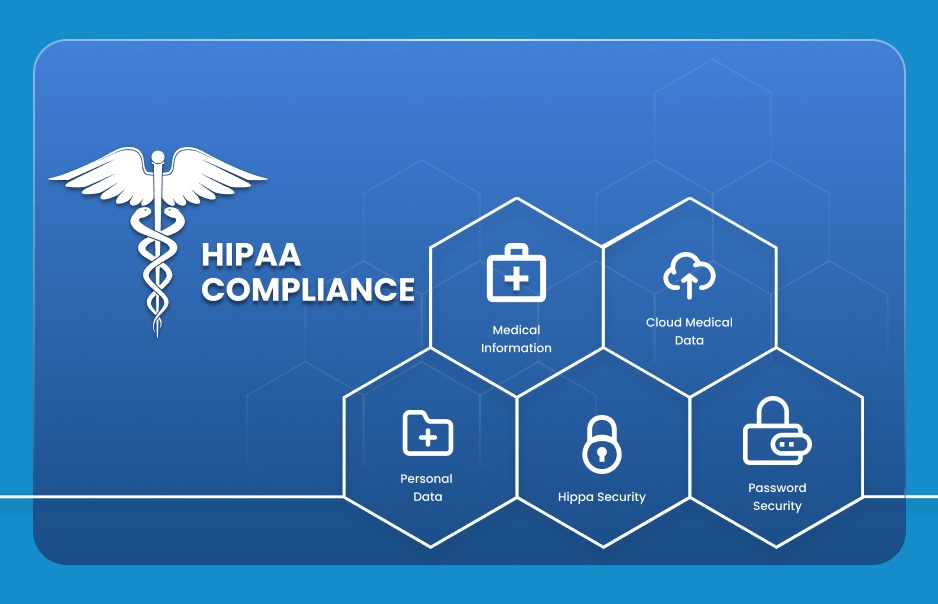
Source: dewsolutions.in
2. What makes an app HIPAA compliant
A common misconception is that HIPAA compliance can be achieved by adding a few security features at the end of development. In reality, compliance must be built into the system architecture from the start. Several core elements define a HIPAA-compliant application.
- Data security is essential: All sensitive data must be encrypted both at rest and in transit. This ensures that even if data is intercepted or accessed without authorization, it cannot be easily read or misused.
- Access control plays a critical role: Only authorized users should be able to access specific types of information. This is typically implemented through role-based access control and multi-factor authentication, which adds an extra layer of protection.
- Audit and monitoring mechanisms are required: The system must track who accessed what data and when. This level of transparency is necessary for detecting suspicious activity and ensuring accountability.
- Data integrity must be maintained: Systems need to ensure that information is not altered or tampered in unauthorized ways.
- There is the concept of a Business Associate Agreement (BAA): Any third-party service provider involved in handling PHI must also comply with HIPAA regulations. This means that compliance extends beyond your application to the entire ecosystem you rely on.
In short, HIPAA compliance is not a single feature. It is a combination of security, process, and infrastructure decisions.
3. Key features of a HIPAA-compliant healthcare app
While HIPAA compliance is rooted in architecture and processes, it is ultimately reflected through key features within the application. Below is a clearer, more skimmable breakdown of the most important ones:
Secure user authentication: Reduces the risk of unauthorized access to sensitive data.
- Strong login mechanisms to verify user identity
- Multi-factor authentication (MFA) for added security
Encrypted communication: Ensures that all data exchanges remain confidential.
- End-to-end encryption for messaging
- Secure channels for doctor–patient interactions
Telehealth functionality (with security built-in): Prevents interception or unauthorized recording of medical interactions.
- Secure video consultations
- Protected remote care sessions
Secure data storage and backup: Protects patient data from loss, breaches, or system failures.
- Encrypted data storage (at rest)
- Reliable backup systems with redundancy
Audit logs and activity tracking: Supports accountability and helps identify potential security issues.
- Record of all user actions and system access
- Monitoring tools to detect unusual behavior
Consent and data access management: Ensures compliance with privacy regulations and builds user trust.
- Clear user consent mechanisms
- Control over how data is shared and used
👉 👉👉 These features represent the visible layer of a HIPAA-compliant healthcare app. Behind them lies a deeper system of secure architecture and processes that ensure full regulatory compliance.
4. Best practices for building a HIPAA-compliant healthcare app
Building a compliant system requires more than technical knowledge. It requires a disciplined approach throughout the development lifecycle.
- Design for security from day one: Trying to add compliance at a later stage often leads to costly rework and potential gaps in protection.
- Choosing the right infrastructure: Cloud providers such as AWS or Google Cloud offer HIPAA-compliant services, but only if configured correctly and supported by a signed BAA. Simply using a cloud platform does not automatically guarantee compliance.
- The concept of least privilege: Users should only have access to the data and features they absolutely need. This reduces the risk of accidental or intentional misuse.
- Encryption should be applied consistently across all layers of the system, including databases, APIs, and communication channels. Partial implementation can create vulnerabilities.
- Regular security testing: This includes penetration testing, vulnerability scanning, and continuous monitoring to identify and address potential risks.
- Teams must be trained to understand compliance requirements: Human error remains one of the biggest causes of data breaches, so awareness and proper processes are critical.
5. Common mistakes to avoid
Despite good intentions, many teams make avoidable mistakes when building healthcare applications.
- Assuming that basic security measures, such as HTTPS, are enough. While necessary, they are far from sufficient for full compliance.
- Failing to establish proper agreements with third-party providers. Without a valid BAA, even a secure system can become non-compliant.
- Inadequate logging. Without detailed audit trails, it becomes difficult to detect and investigate security incidents.
- Some applications store more data than necessary, increasing both risk and complexity. Minimizing data collection can significantly reduce exposure.
- Integrating third-party APIs without proper validation can introduce vulnerabilities. Every external component must be carefully evaluated to ensure it meets compliance standards.
Most HIPAA violations do not happen because teams are unaware of the rules. They happen because implementation is incomplete or inconsistent.
6. Challenges in HIPAA-compliant app development
Developing a HIPAA-compliant healthcare app is not without challenges.
- Complexity: Compliance requirements add multiple layers of consideration, from infrastructure to user experience. This can make the development process more demanding.
- Cost: Implementing secure systems, conducting testing, and maintaining compliance all require additional investment. However, this cost should be seen as part of building a reliable product rather than an optional expense.
- Time-to-market: Ensuring compliance may extend development timelines, especially if teams are not familiar with the requirements.
- A shortage of expertise: Not all development teams have experience in healthcare or regulatory environments, which can increase the risk of mistakes.
Despite these challenges, companies that invest in compliance often gain a competitive advantage. They are better positioned to work with healthcare providers and operate in regulated markets.
7. The future of healthcare apps and compliance
As healthcare technology continues to evolve, compliance requirements are becoming more complex. The rise of AI in healthcare introduces new challenges, particularly around data usage and privacy. At the same time, telehealth and remote care solutions are expanding rapidly, increasing the volume of sensitive data being processed. Regulations are also expected to become stricter, with greater emphasis on transparency and accountability.
In this environment, compliance will no longer be a differentiator. It will be a baseline requirement. Companies that fail to meet these standards will struggle to compete, while those that do will be better positioned for long-term success.
How PowerGate Software builds HIPAA-compliant healthcare apps
At PowerGate Software, HIPAA compliance is approached as part of a broader commitment to building secure and scalable systems. Instead of treating compliance as a separate checklist, it is integrated into every stage of the development process. The team focuses on designing secure architectures that align with regulatory requirements from the beginning. This includes selecting appropriate infrastructure, implementing strong access controls, and ensuring data protection at all levels.
A product-oriented mindset also plays an important role. By understanding the end users and business goals, the team can build solutions that are not only compliant but also practical and user-friendly. In addition, experience in working with modern technologies allows for seamless integration with compliant cloud services and third-party systems. This ensures that the entire ecosystem meets the necessary standards.
The result is a balanced approach that combines compliance, performance, and scalability.
You can read more about PowerGate Software’s case study: HIPAA-compliant communication platform empowers the transplant professional
Healthcare app development with HIPAA compliance is essential for building secure, trustworthy, and scalable digital health solutions. By integrating compliance into every stage of development, businesses can reduce risks, protect patient data, and create systems that are ready for growth in regulated markets.