
Most custom mobile app projects stall in the handoffs between a design agency, a development shop, and a maintenance vendor. Each handoff adds delay, repeats context, and leaves someone unclear about who owns a defect or a decision. The strongest company for a concept-to-launch build owns every phase under one team, from discovery and UI/UX design through development, testing, launch, and ongoing support. To narrow your shortlist, look for three things: Matching app experience in your category, verified certifications that you can confirm with the issuing body, and a clear post-launch plan that states response times, update cadence, and who pays for ongoing work.
1. Why choosing the right company for a custom mobile app matters
A custom mobile app is not a website in a smaller frame. It has to be designed for touch, tested across many devices, approved for the Apple App Store and Google Play and kept working as operating systems change. The company you choose decides how much of that work you carry yourself.
The companies in this guide differ widely. Typical project sizes on Clutch run from under $49,999 to $200,000 or more, hourly rates from under $25 to $199, and mobile app development makes up between 15% and 55% of the services each company lists. A mismatch between your budget, the stage of your idea and a company’s focus is the first thing to check, so every company below is compared against the same criteria.
2. What counts as a custom mobile app from concept to launch
Before you shortlist companies, define the scope. A concept-to-launch partner takes an idea through four stages:
- Discovery and strategy: clarifying goals, users, scope and a roadmap before any build starts.
- UX/UI design and prototyping: turning the roadmap into screens and a clickable prototype that real users can test.
- Development and testing: building the app for iOS, Android or both, and checking it before release.
- Release and support: submitting to the app stores, then maintaining and updating the app after launch.
Not every stage is documented for every company, and where a stage is not documented, the entry says so. For each company we checked minimum project size, hourly rate, most common project size, the share of its work that is mobile, platforms, stage coverage and what is known about support after launch.
3. Top 7 companies worth considering for building a custom mobile app
The companies below are mapped against the stages and criteria above, using their Clutch profiles and, where noted, their own websites and press releases.
Comparison table
| Company | Founded | Best for | Mobile capabilities (Clutch) | Pricing on Clutch |
|---|---|---|---|---|
| Goji Labs | 2014 | Strategy and design-led MVPs for funded teams | Mobile is 50% of work; 40% hybrid, 40% iOS, 10% Android, 10% iPad | $50,000+ minimum; $150–$199/hr; most projects $50,000–$199,999 |
| PowerGate Software | 2011 | Concept to support on a smaller budget | Mobile is 30% of work; iOS, Android, React Native and Ionic on its site | $10,000+ minimum; under $25/hr; most projects under $49,999 |
| Designli | 2013 | Testing an idea with a prototype first | Mobile is 50% of work; 55% hybrid, 20% iOS, 15% Android, 10% iPad | $10,000+ minimum; $50–$99/hr; most projects under $49,999 |
| Thoughtbot | 2003 | Mobile apps built alongside a web product | Mobile is 25% of work; 50% hybrid, 40% iOS, 10% Android | $10,000+ minimum; $150–$199/hr; most projects under $49,999 (all project types) |
| Atomic Object | 2001 | Long-term US-based software partnership | Mobile is 50% of work; a reviewed project covers iOS and Android | $25,000+ minimum; $150–$199/hr; most projects $50,000–$199,999 |
| TELUS Digital | 2005 | Enterprises with a validated idea | Mobile is 15% of work; 35% Android, 35% iOS, 20% hybrid, 10% smart TV | $50,000+ minimum; $100–$149/hr; most projects $50,000–$199,999 |
| Fueled | 2007 | Design-focused consumer apps | Mobile is 55% of work; 55% iOS, 20% Android, 15% iPad, 10% hybrid | $75,000+ minimum; $150–$199/hr; most projects $200,000–$999,999 |
Note: The information in this article was last verified on 14 Oct 2026, based on data from the official websites of the respective companies, Google Maps, and B2B listing platforms such as Clutch and GoodFirms. The order in which companies appear in this list does not reflect their ranking or capability, and should not be interpreted as an endorsement of one company over another; these details may be subject to change over time.
3.1 Goji Labs
Overview
Goji Labs is a digital product agency founded in 2014 and based in Los Angeles, with an office in New York. On Clutch its work is 50% mobile app development, 25% AI development, 15% custom software and 10% web. Named clients include WWF and Mitsubishi’s AnyMile.
Best for
Funded startups and product teams that want a strategy and design-led MVP and can commit $50,000 or more.
Capability against the criteria
Its website describes a product strategy sprint that “turns an idea into a sequenced, costed plan”, starting with a discovery session, followed by product design and UX research and mobile and web development. QA and store release are not described there, so ask about them.
Clutch lists its mobile work as 40% hybrid or cross-platform, 40% iOS, 10% Android and 10% iPad. It holds 5.0 on Clutch from 91 reviews, 85 of them verified, and reviews report outcomes such as a 38% lift in quote-to-policy conversion for Root Insurance.
Pricing and support after launch
Goji Labs lists a $50,000+ minimum and $150 to $199 an hour, with most projects at $50,000 to $199,999 (72 reviews). On support, the company says most clients begin with 10 to 30 maintenance hours a month and scale down to 3 to 10 once the product is stable (company FAQ, dated 11 August 2026).
Web: https://gojilabs.com
3.2 PowerGate Software
Overview
PowerGate is a software company founded in 2011 and headquartered in Hanoi, Vietnam, with an office in Melbourne, Australia. On Clutch, mobile app development and web development are each 30% of its work. Its website lists six published mobile projects, including an IoT-powered micro-mobility app for Asia Pacific, a music marketplace and streaming app, a career orientation app and an electronic logging device app for the US.
Best for
Startups and mid-size companies that want design and development from one vendor on a smaller budget.
Capability against the criteria
Its website says its services cover concept development, UI/UX design, prototyping, programming, testing and support. It does not state that one team handles every stage, so confirm this in the proposal. The site lists iOS, Android, React Native and Ionic, while Flutter appears only as a menu item with no supporting content.
PowerGate holds 5.0 on Clutch from 41 reviews, of which 26 are verified, the largest gap between total and verified reviews in this group.
Pricing and support after launch
PowerGate lists a $10,000+ minimum and under $25 an hour, with most projects below $49,999 (34 reviews). Rates depend on team location, so compare total estimates rather than hourly rates. Clutch lists “Application Management & Support” as a pricing category and some reviews mention ongoing development, but terms and costs are not published, so confirm them in writing.
Web: https://powergatesoftware.com
3.3 Designli
Overview
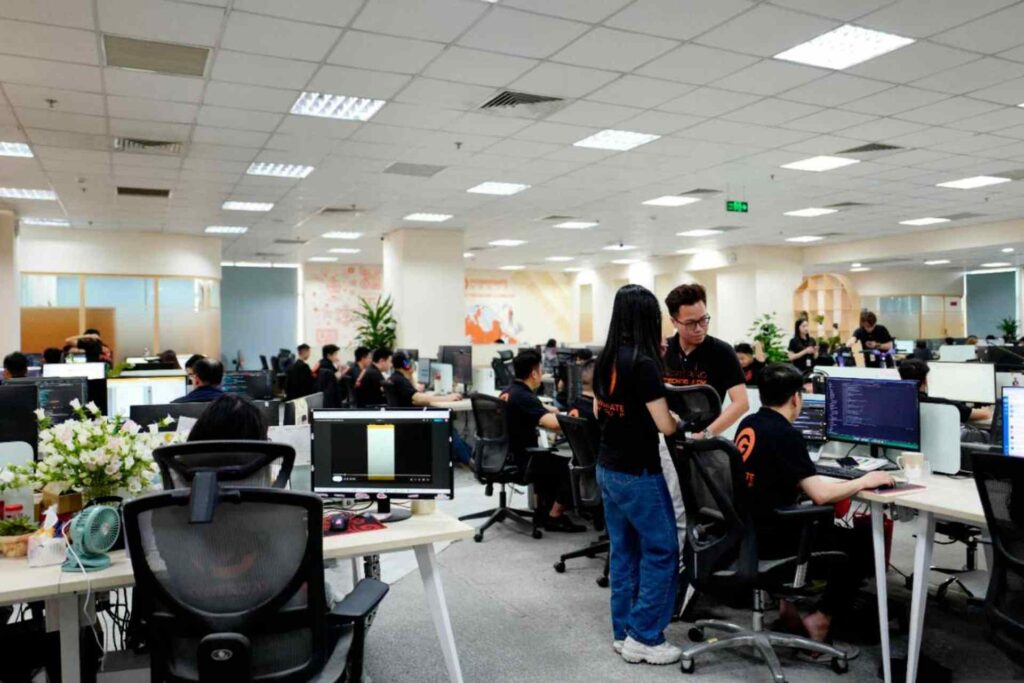
Designli is headquartered in Greenville, South Carolina, with offices in San Francisco, Dallas, Buenos Aires and Mexico City, and was founded in 2013 according to Clutch. Its Clutch service lines are 50% mobile app development, 30% custom software, 10% AI development and 10% UX/UI design.
Best for
Non-technical founders who want to test an idea with a prototype or a short design engagement before committing to a full build.
Capability against the criteria
Clutch reviews describe clickable Figma prototypes and two-week “SolutionLab” sprints, alongside UX/UI design and development. Testing is listed in its Medium and Large fixed packages but not the Small one, and store release is not described, so ask about both.
Clutch lists JavaScript, Swift and Kotlin, and React Native, with mobile work split 55% hybrid or cross-platform, 20% iOS, 15% Android and 10% iPad. It holds 5.0 on Clutch from 83 reviews, 78 of them verified.
Pricing and support after launch
Designli lists a $10,000+ minimum and $50 to $99 an hour, with most projects below $49,999 (69 reviews). Its TractionLab fixed packages range widely: Small is $1,700 for a one-week design engagement, while Medium is $93,450 for a 30-day build that includes a hybrid app and testing. The company also says that if a real user is not in the product by day 30, month two is free, which is a company claim. Support is not described as a service on its profile, but reviewers mention maintenance plans and monthly check-ins, and one says post-MVP support would normally cost about $6,000 a month but was provided at no cost. Ask what support costs before you sign.
Web: https://designli.co
3.4 thoughtbot
Overview
thoughtbot is a product design and development company founded in 2003, headquartered in New York with an office in London. On Clutch its work is 30% web development, 25% mobile app development, 15% UX/UI design and the rest cloud, custom software and low-code. It is certified in Ruby on Rails.
Best for
Product teams that want a design and engineering partner for a mobile app that sits next to a web product.
Capability against the criteria
Its website says it designs and builds iOS, Android and React Native apps and helps “go from idea to launch to scale”. Mobile-tagged Clutch reviews mention roadmapping, discovery, design, feature testing and development.
Clutch lists its mobile work as 50% hybrid or cross-platform, 40% iOS and 10% Android. It holds 4.9 on Clutch from 39 reviews, 38 of them verified, but only a small number are tagged mobile, so most of the rating reflects web and other work.
Pricing and support after launch
thoughtbot lists a $10,000+ minimum and $150 to $199 an hour. The most common project size, under $49,999 (31 reviews), covers all project types, and two of the three mobile-tagged reviews report budgets of $1 million to $9.99 million, so do not treat the $10,000 minimum as a typical mobile app budget. Its mobile services page does not mention support, although reviewers on other projects describe ongoing maintenance, so ask what it offers for mobile.
Web: https://thoughtbot.com

3.5 Atomic Object
Overview
Atomic Object was founded in 2001 and is headquartered in Grand Rapids, Michigan, with offices in Ann Arbor, Chicago and Raleigh. Its Clutch work is split evenly between custom software and mobile app development.
Best for
Companies that want a US-based team and a long-term software partner, and that agree scope and budget in writing first.
Capability against the criteria
One reviewer, a real estate technology company, has used it since November 2023 to build the front end of a tenant leasing app for iOS and Android, with a team of about 40 people over the project’s life. The profile does not lay out a stage-by-stage process.
Atomic Object holds 4.9 on Clutch from 52 reviews. The profile does not state how many are verified.
Pricing and support after launch
Atomic Object lists a $25,000+ minimum and $150 to $199 an hour, with most projects at $50,000 to $199,999 (37 reviews), so its minimum is lower than its usual project size. Clutch lists “Application Management & Support” without pricing, and one reviewer says it continues to support feature development and maintenance of a web tool. Mobile support terms are not published.
Web: https://atomicobject.com
3.6 TELUS Digital
Overview
TELUS Digital was formerly WillowTree and is based in Charlottesville, Virginia. TELUS International completed its acquisition of WillowTree on 4 January 2023, and said at the time that WillowTree had shipped over 700 native mobile applications, websites and other digital products. Clutch lists more than 10,000 employees and shows mobile at only 15% of its service lines, behind generative AI at 25%.
Best for
Large brands and enterprises with a validated idea and a budget for a larger engagement.
Capability against the criteria
Clutch reviews describe ongoing production support, app store release management and continuous modernization for a state lottery app, and one review describes migrating from cross-platform frameworks to fully native apps where appropriate.
Clutch lists its mobile work as 35% Android, 35% iOS, 20% hybrid or cross-platform and 10% smart TV, with React Native at 80% and Flutter at 20% of its frameworks. It holds 4.9 on Clutch from 36 reviews, 34 of them verified.
Pricing and support after launch
TELUS Digital lists a $50,000+ minimum and $100 to $149 an hour, with most projects at $50,000 to $199,999 (24 reviews). Its post-launch support is the most documented in this group: the state lottery review mentions incident response within agreed service levels, and other reviews describe ongoing support and enhancements. Pricing is not published.
Web: https://telusdigital.com

3.7 Fueled
Overview
Fueled is a New York agency founded in 2007. On Clutch its work is 55% mobile app development, 20% UX/UI design, 15% web development and 10% web design. Its website describes award-winning iOS and iPadOS apps.
Best for
Brands with a larger budget that want a design-focused consumer app.
Capability against the criteria
Clutch lists no dedicated stage-by-stage process. Reviews cover app development and design work, including an iOS MVP for an event planning startup.
Clutch splits its mobile work into iOS (55%), iPad (15%), Android (20%) and hybrid or cross-platform (10%). Fueled holds 4.9 on Clutch from 38 reviews, 37 of them verified.
Pricing and support after launch
Fueled lists a $75,000+ minimum and $150 to $199 an hour. Clutch says projects range from $10,000 to over $2 million, with most at $200,000 to $999,999 (31 reviews). Clutch lists no support package, but one reviewer describes Fueled helping staff an internal team to maintain the app and another describes advice on maintaining it, so ask what it offers directly.
Web: https://fueled.com
4. How to evaluate and budget for a custom mobile app
Match the company to your budget and the stage of your idea before you compare anything else, because a low minimum can sit far below what a mobile app actually costs.
Key factors when choosing a custom mobile app company:
- Budget fit: compare your budget with each company’s most common project size, not only its minimum. thoughtbot’s $10,000 minimum, for example, sits far below the budgets in its mobile reviews.
- Stage of your idea: if the idea is unproven, choose a company that runs discovery or builds a prototype first, such as Designli or Goji Labs.
- Stage coverage: check whether design, testing and store release are included in the quote. Several profiles do not document all three.
- Platforms and technology: match the company’s platform mix to your users, and ask whether it recommends native or cross-platform for your features.
- Review quality: look at verified review counts and how many reviews are about mobile projects specifically.
- Support after launch: ask what support costs and what it includes. TELUS Digital documents the most, and most others publish no terms.
- Contract terms: ask for a written scope with milestones and a launch date, two references from projects of similar size, who owns the code and store accounts, and how future changes will be priced.
The development costs and budgeting
On Clutch, most projects at PowerGate Software and Designli fall below $49,999. Goji Labs, Atomic Object and TELUS Digital report $50,000 to $199,999 as their most common range, and Fueled reports $200,000 to $999,999. Check Designli’s package scope before you assume it is the cheapest, because its Medium build package is $93,450. Cost and time move together: MobiLoud estimates 2 to 4 months for a simple MVP, 4 to 9 months for a standard custom app and 9 to 18 months or more for a complex one. Ask each company for a total estimate based on the same features, because the hourly rate alone does not show the final cost.
5. Frequently asked questions
5.1 Which companies are best for building a custom mobile app from concept to launch?
Goji Labs, PowerGate Software, Designli, thoughtbot, Atomic Object, TELUS Digital and Fueled are evaluated in detail above. Under $50,000, PowerGate Software and Designli are the two companies whose most common Clutch projects fall in that range, and Designli is the stronger fit if you want to test an idea first. From $50,000, Goji Labs suits a strategy and design-led MVP, Atomic Object a long-term US-based partnership and TELUS Digital larger engagements.
5.2 How long does a custom mobile app take?
MobiLoud, which sells a service for turning websites into apps, estimates 2 to 4 months for a simple MVP, 4 to 9 months for a standard custom app and 9 to 18 months or more for a complex app (page updated 23 July 2026). Treat these as a rough guide from a vendor. The timeline depends mainly on how strictly the scope is controlled, the number of features, whether an existing backend can be reused, third-party integrations, native versus cross-platform development, and testing and app store review.
5.3 Should I build for iOS, Android or both?
It depends on your target users and product requirements. Build for both platforms if your users are split across iOS and Android, and consider React Native or Flutter when you want one shared codebase. Launch on one platform first if most of your target users are concentrated there, and consider native development when the app needs deep platform-specific device features.
5.4 Is the lowest hourly rate the best choice?
Not by itself. Total cost depends on the hourly rate and the number of hours required, and rates vary with team location. Compare total estimates for the same feature list, including testing, store release, support after launch and likely rework.
For a custom mobile app, the best company is the one whose typical project size, stage coverage and support terms match yours. Under $50,000, PowerGate Software and Designli are the two companies here whose most common Clutch projects fall in that range. From $50,000, Goji Labs suits a strategy and design-led MVP, Atomic Object a long-term US-based partnership and TELUS Digital larger engagements with documented post-launch support. Fueled suits larger consumer apps, and Thoughtbot suits mobile apps built alongside a web product. Before you sign with any of them, ask for a written scope, a timeline with milestones, ownership of the code and store accounts, and the cost of support after launch.