
Learning Management Systems (LMS) have become a core part of modern education, enabling schools, universities, and training providers to deliver, manage, and track learning online. As digital learning environments continue to evolve, organizations increasingly need LMS platforms that connect seamlessly with student information systems, content repositories, communication tools, and other business applications. Choosing the right integration partner is essential for creating a scalable, efficient, and user-friendly learning ecosystem. This guide highlights the top custom software engineering firms for LMS integration, evaluating their technical expertise, integration capabilities, and experience in delivering tailored learning solutions.
Note: The company information, figures, and official website links in this article were last verified and updated on June 26, 2026. Actual details may vary over time.
1. Pearson
Pearson is one of the most established names in education technology, serving learners, educators, and institutions worldwide through its extensive portfolio of learning content, assessments, and digital learning solutions. While the company is widely recognized for its educational products, it also offers mature LMS integration capabilities designed to simplify how institutions deliver and manage learning experiences.
Through its Access Pearson solution, the company enables seamless integration between Pearson courseware and major learning management systems, including Canvas, Blackboard, Moodle, Brightspace, Schoology, and Sakai. Its integration framework supports key features such as single sign-on (SSO), grade synchronization, assignment linking, and LTI-certified interoperability. These capabilities help reduce administrative effort while creating a more consistent experience for both instructors and students.
Pearson’s strength lies in its deep understanding of academic workflows and large-scale educational environments. Rather than treating LMS integration as a technical add-on, the company focuses on ensuring that course content, assessments, and grading processes work naturally within existing institutional systems. For universities and educational organizations seeking a proven partner with extensive LMS integration experience, Pearson remains a strong option, particularly when learning content and platform interoperability are equally important priorities.
Website: https://www.pearson.com/
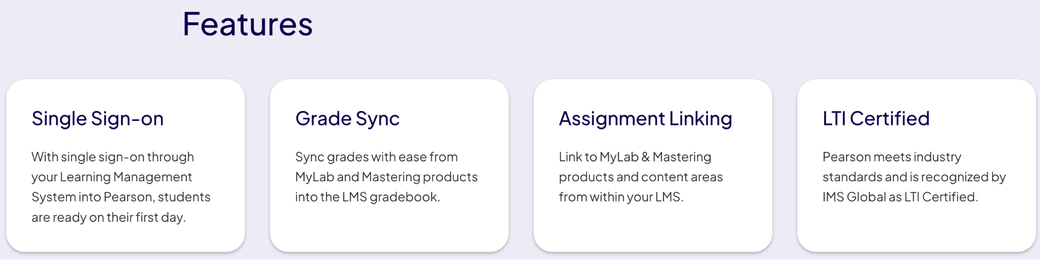
4 features of the Pearson tool for LMS
2. iSpring
iSpring is a learning technology provider focused on helping organizations manage employee onboarding, training, compliance, and professional development through a single platform. Unlike solutions that primarily serve academic institutions, iSpring is designed with corporate learning in mind, making it particularly relevant for companies seeking to integrate training into their day-to-day operations.
The platform combines LMS functionality with course creation, performance tracking, knowledge management, and employee development tools. Its workflow emphasizes automation, allowing organizations to streamline user enrollment, training assignments, reporting, and certification management. Features such as AI-assisted course creation, real-time analytics, individualized learning paths, and competency tracking make it suitable for businesses managing training at scale.
One of iSpring’s key strengths is its ability to support diverse learning scenarios, from onboarding and compliance training to customer education and sales enablement. The platform also offers deployment flexibility through cloud-based, white-label, and on-premise options, making it easier to align with different security and infrastructure requirements.
For organizations evaluating LMS integration solutions, iSpring stands out for its practical approach to workforce training and its focus on connecting learning activities with measurable business outcomes. Its broad industry coverage, including healthcare, manufacturing, retail, and automotive sectors, further demonstrates its ability to support complex training environments across distributed teams.
Website: https://www.ispring.com/
3. PowerGate Software
Founded in 2011, PowerGate Software is an AI-powered software product studio that helps businesses build, modernize, and scale digital products through end-to-end software engineering services. Rather than offering a standalone LMS platform, the company focuses on developing custom learning solutions and integrating LMS capabilities into broader enterprise ecosystems.
PowerGate supports organizations throughout the entire product lifecycle, from business analysis and solution architecture to development, system integration, deployment, and long-term maintenance. This end-to-end approach makes it well-suited for businesses that need more than a standard LMS implementation, such as integrating learning platforms with HR systems, CRM software, identity management solutions, analytics platforms, or AI-powered applications.
The company combines expertise from engineering teams across Asia and North America, enabling close collaboration with clients while supporting distributed product development. In addition to LMS integration, PowerGate has experience building AI-powered software, enterprise applications, SaaS products, and digital transformation solutions across industries such as healthcare, fintech, education, and retail. For organizations looking to build a scalable learning ecosystem rather than simply deploy an LMS, PowerGate Software offers the software engineering expertise to support long-term business growth.
Website: https://powergatesoftware.com/

PowerGate Software is a global AI-Powered software product studio
4. Geniusee
Founded in 2017, Geniusee is a software engineering company that specializes in helping organizations build, scale, and maintain digital products through custom development, consulting, and AI-driven solutions. Unlike LMS vendors that primarily offer off-the-shelf platforms, Geniusee approaches LMS integration from a software engineering perspective, focusing on connecting learning systems to an organization’s broader technology ecosystem.
The company provides custom LMS integration services that enable seamless data exchange between learning platforms and critical business systems, including HR software, content management systems, analytics tools, and single sign-on solutions. This approach helps organizations automate user provisioning, centralize learning data, and reduce administrative overhead while creating a more connected learning environment.
A notable strength of Geniusee is its focus on AI-powered learning experiences. The company supports integrations that enable personalized learning paths, intelligent content recommendations, AI tutoring capabilities, and automated assessment workflows. These features can help organizations move beyond basic course delivery and create more adaptive training programs.
Geniusee also brings experience across industries, including fintech, edtech, retail, and real estate. This cross-industry expertise allows the company to tailor LMS integration strategies to specific business requirements, whether the goal is compliance training, employee development, customer education, or performance improvement. For organizations seeking a custom-built integration approach rather than a standard LMS implementation, Geniusee offers a strong combination of software engineering and learning technology expertise.
Website: https://geniusee.com/
5. Folio3
Folio3 is a software development company that provides specialized LMS integration services for organizations looking to connect learning platforms with the broader business systems they rely on. Rather than focusing solely on LMS implementation, the company emphasizes integration engineering, helping businesses create a connected learning ecosystem that supports data sharing, automation, and operational efficiency.
Its integration capabilities cover a wide range of business applications, including student information systems (SIS), CRM platforms, HRM systems, ERP solutions, payment gateways, video conferencing tools, and single sign-on providers. Folio3 supports integrations with platforms such as Salesforce, Microsoft Dynamics, NetSuite, SAP, Shopify, Stripe, Zoom, WebEx, and Active Directory, allowing organizations to centralize learning workflows and reduce manual administration.
The company also offers Learning Tools Interoperability (LTI) integration, LMS API integration, SCORM implementation, and Integration Platform as a Service (iPaaS) solutions. These capabilities make it easier for organizations to connect third-party learning tools, synchronize user and course data, and maintain interoperability across multiple systems.
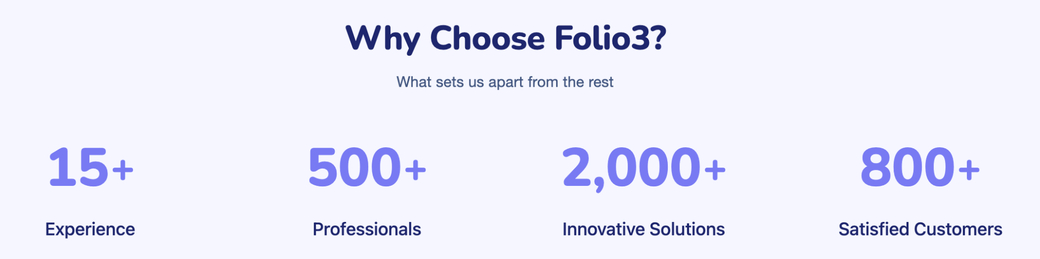
With more than 15 years of experience and a portfolio spanning hundreds of customers, Folio3 has developed expertise in handling complex integration requirements across different learning environments. Its broad range of supported integrations makes it a suitable choice for organizations that need to connect LMS platforms with multiple enterprise applications while maintaining a consistent learning experience for both administrators and learners.
Website: https://folio3.com/
How to choose the right LMS integration partner?
Not all LMS integration projects have the same requirements. Some organizations only need to connect a learning platform with a single application, while others need to integrate LMS functionality into a larger digital ecosystem that includes HR systems, CRM platforms, analytics tools, and custom business applications.
When evaluating potential partners, consider these factors:
- Integration complexity: Simple integrations may only require an LMS specialist, while complex environments often need a software engineering partner with custom integration expertise.
- Existing technology stack: Look for vendors with experience integrating LMS platforms with your current HRIS, ERP, CRM, identity management, and analytics systems.
- Scalability: Choose a partner that can support future needs such as onboarding, compliance training, customer education, and workforce development.
- Security and compliance: Ensure the provider can meet industry-specific security, privacy, and compliance requirements, particularly in regulated sectors.
- Customization capabilities: Organizations with unique workflows, AI-driven learning initiatives, or proprietary systems may benefit from a partner that offers custom software development alongside LMS integration services.
Ultimately, the best LMS integration partner depends on your business objectives. If LMS is only one component within a larger digital transformation initiative, organizations should prioritize partners that combine LMS expertise with strong software engineering and system integration capabilities.
Choosing the right partner for LMS integration can significantly impact the success of your learning and development initiatives. The best custom software engineering firms for LMS integration go beyond connecting systems, they help organizations create unified learning ecosystems that improve operational efficiency, user experience, and long-term scalability. By evaluating your technical requirements, integration complexity, and business goals, you can identify the partner best suited to support your digital learning strategy.
>>> For organizations that require custom LMS integrations, AI-powered learning experiences, or seamless connectivity across enterprise systems, PowerGate Software provides end-to-end software engineering services to help businesses build scalable and future-ready learning ecosystems. Contact PowerGate Software today to discuss your next LMS integration project!